
How multilingual AI singing works
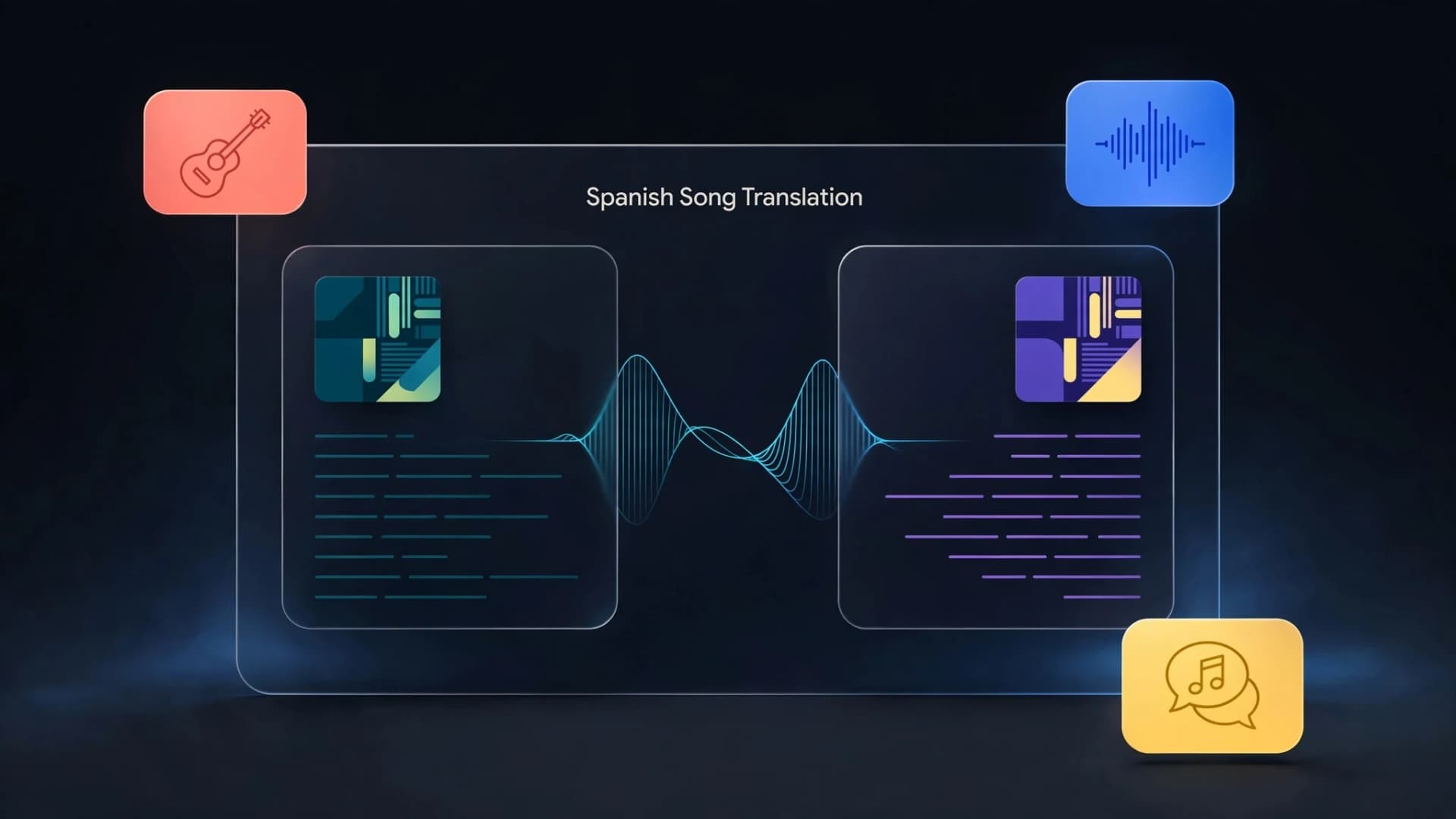
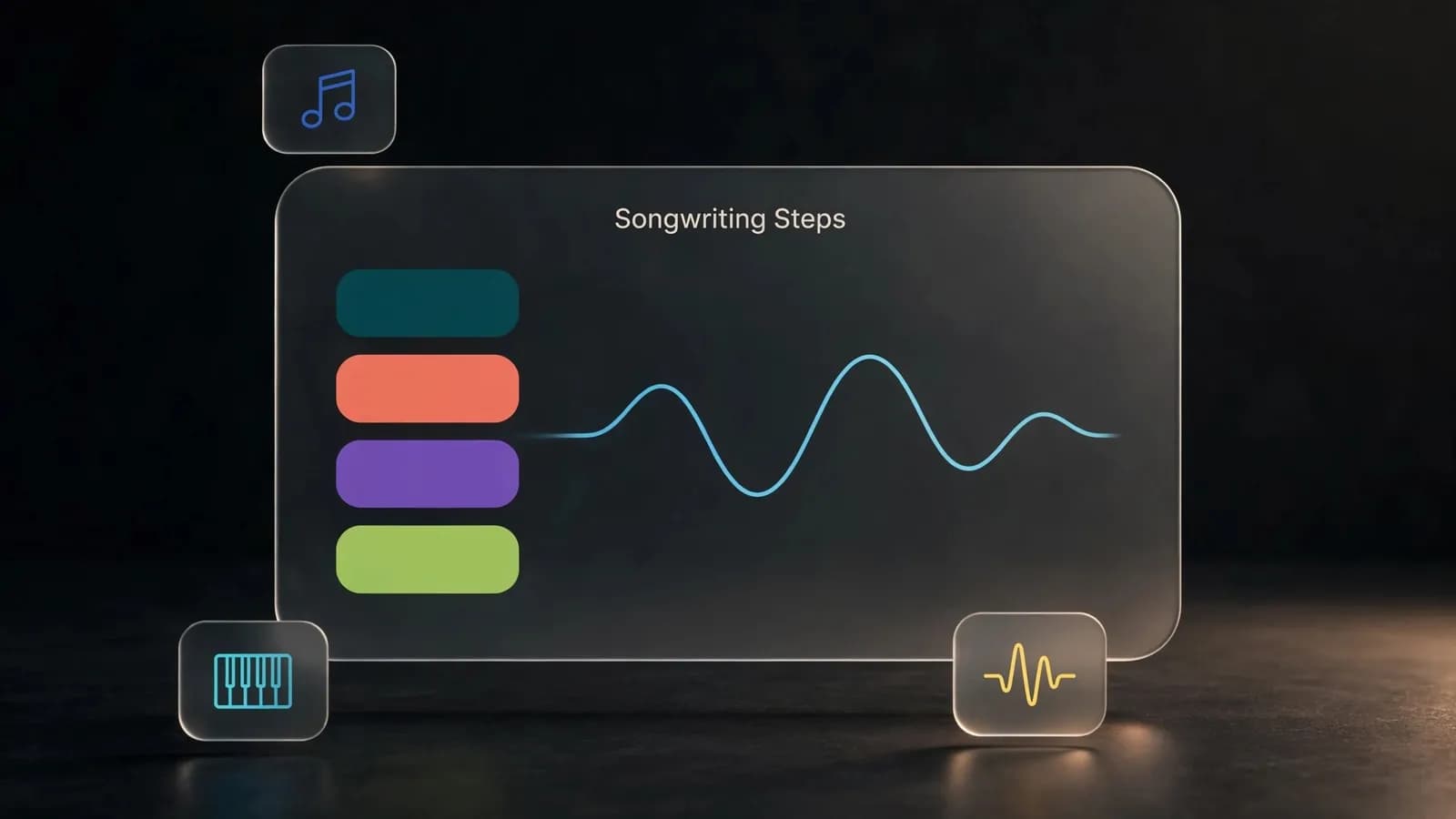
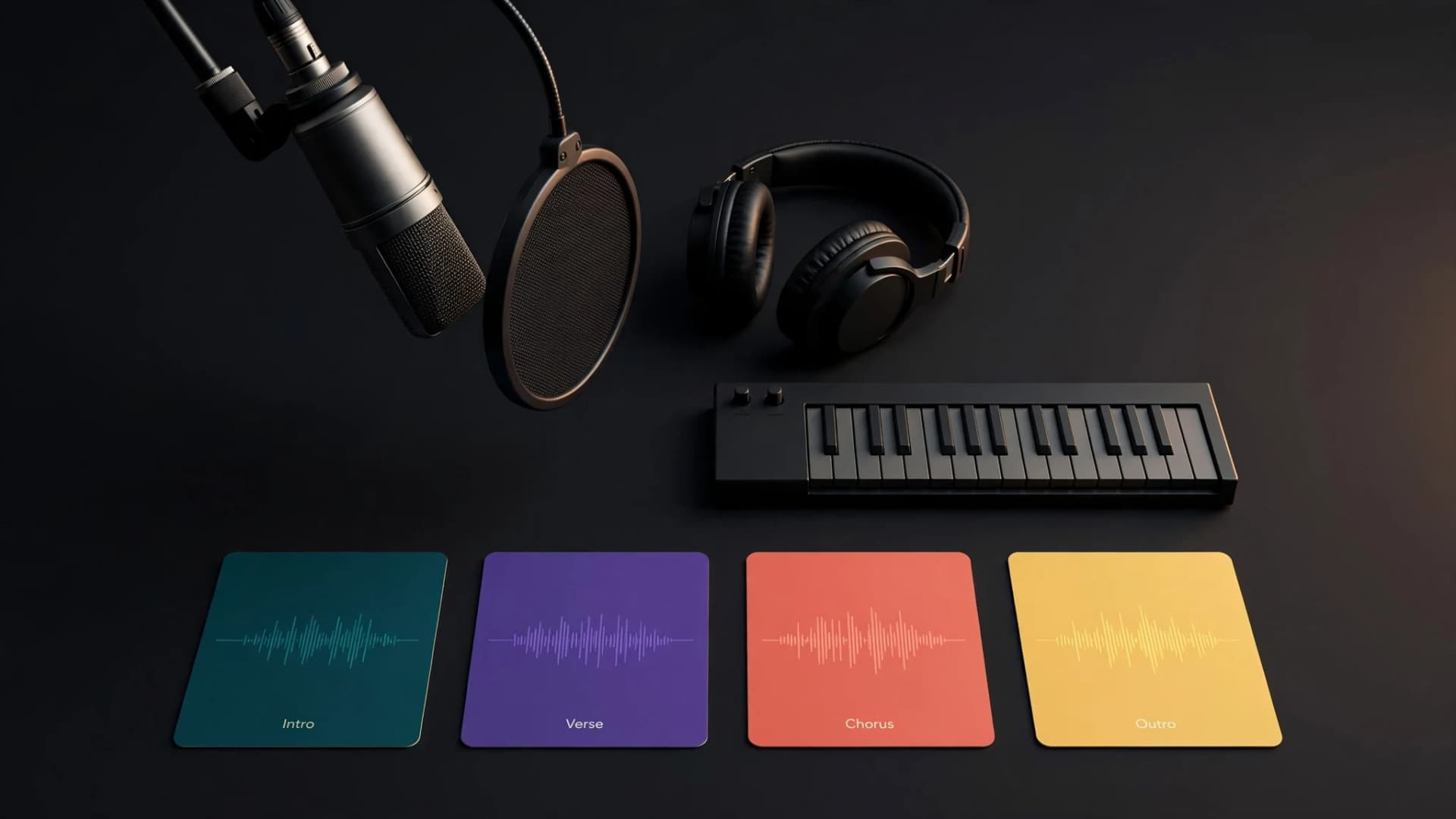
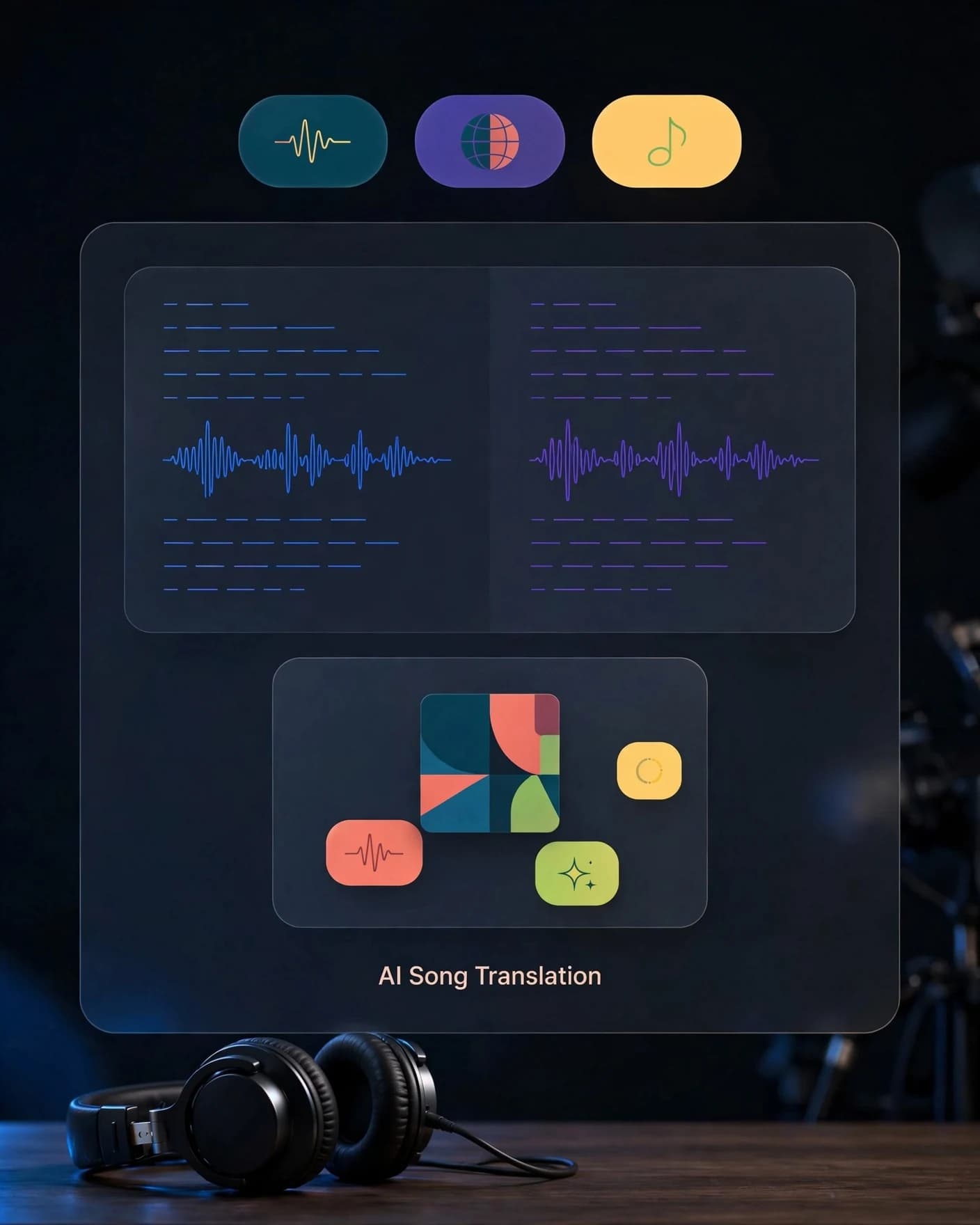
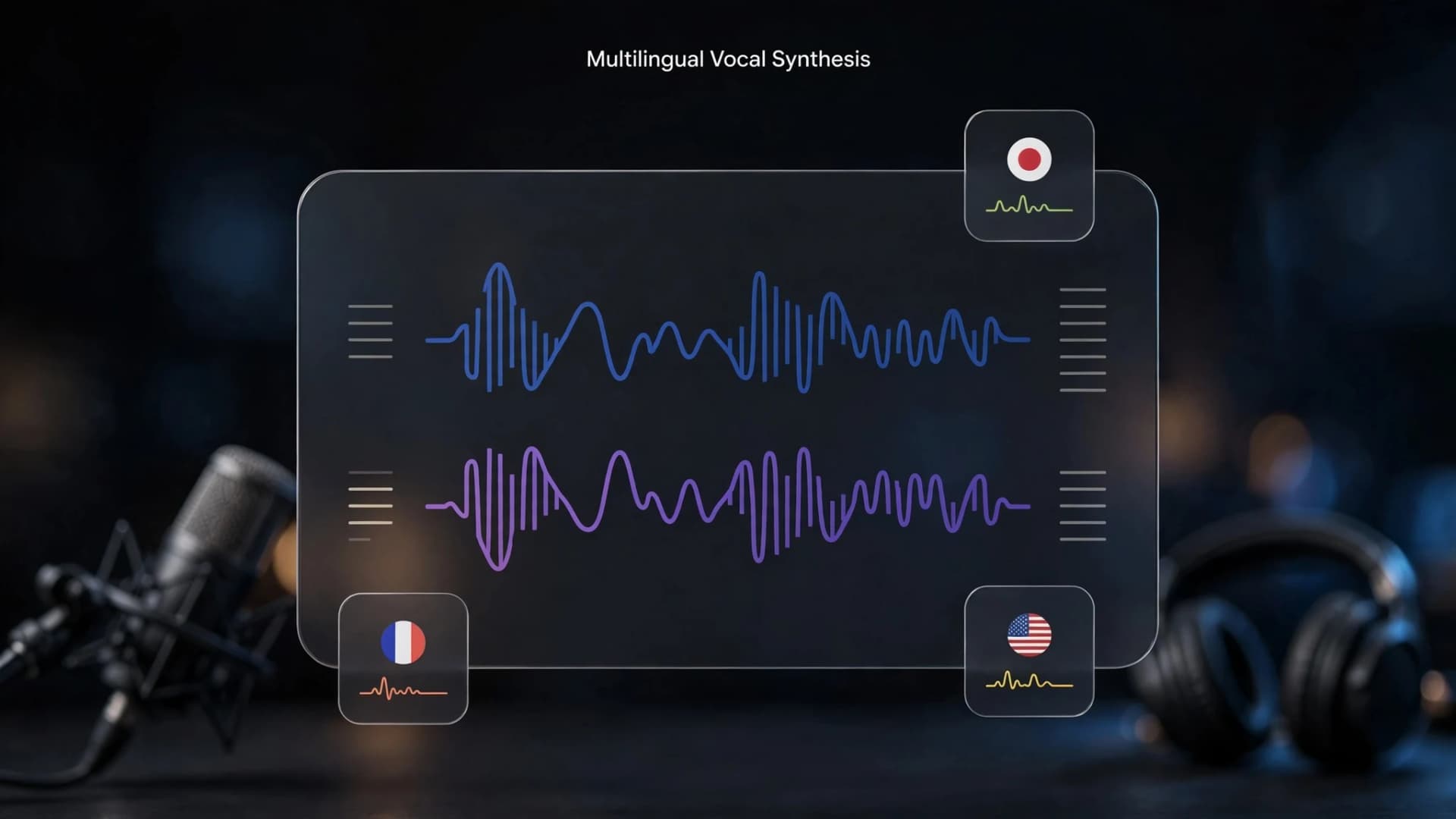
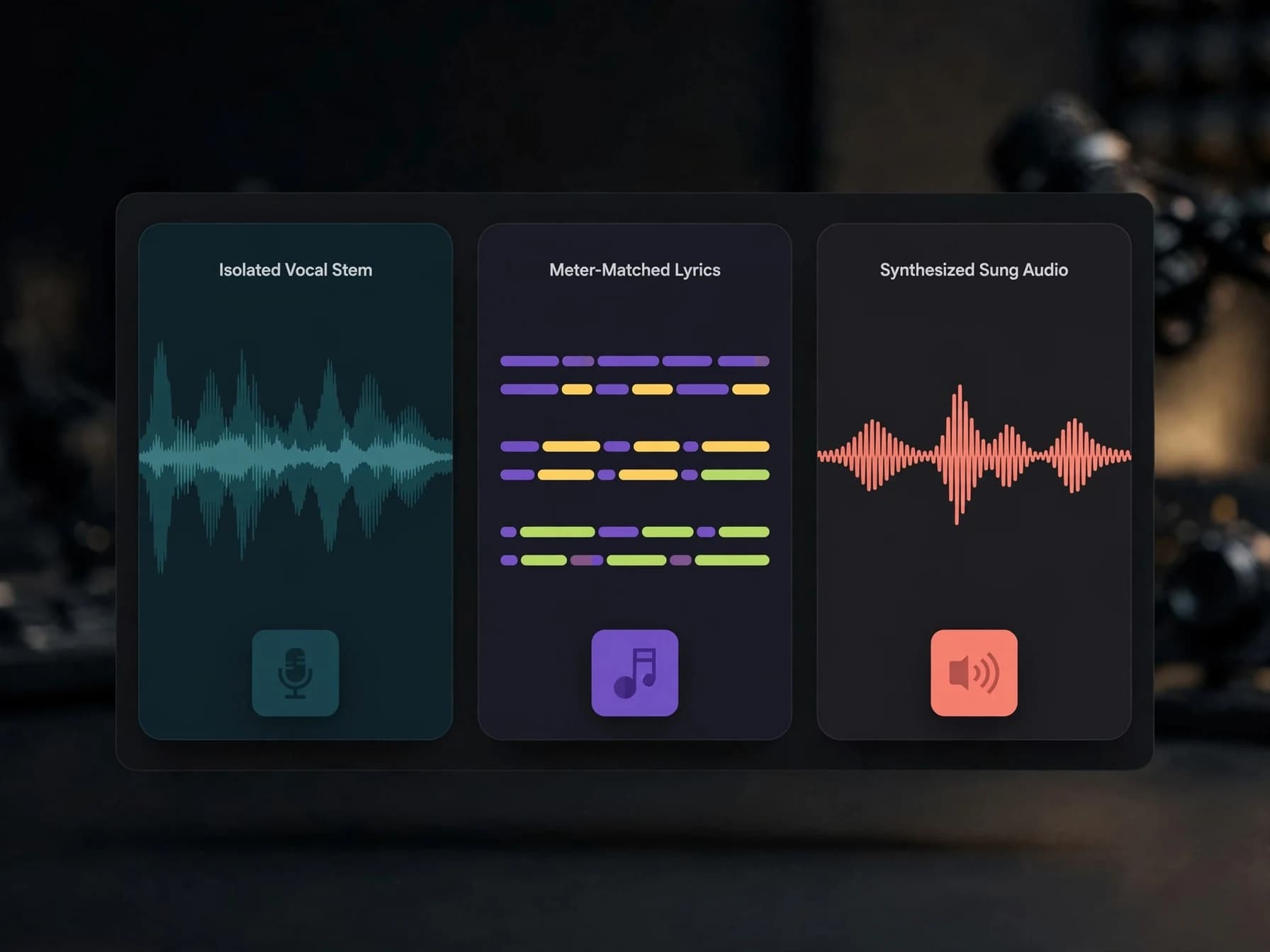
Can AI sing in another language on its own? Behind the scenes it is not one model but a chain of steps, each one handing its output to the next:
- Vocal separation. The vocals are pulled away from the instruments, the same way an AI vocal remover works.
- Reading the lyrics with timings. The sung words are transcribed, and each line gets a start and end time, so the system knows how long every phrase lasts.
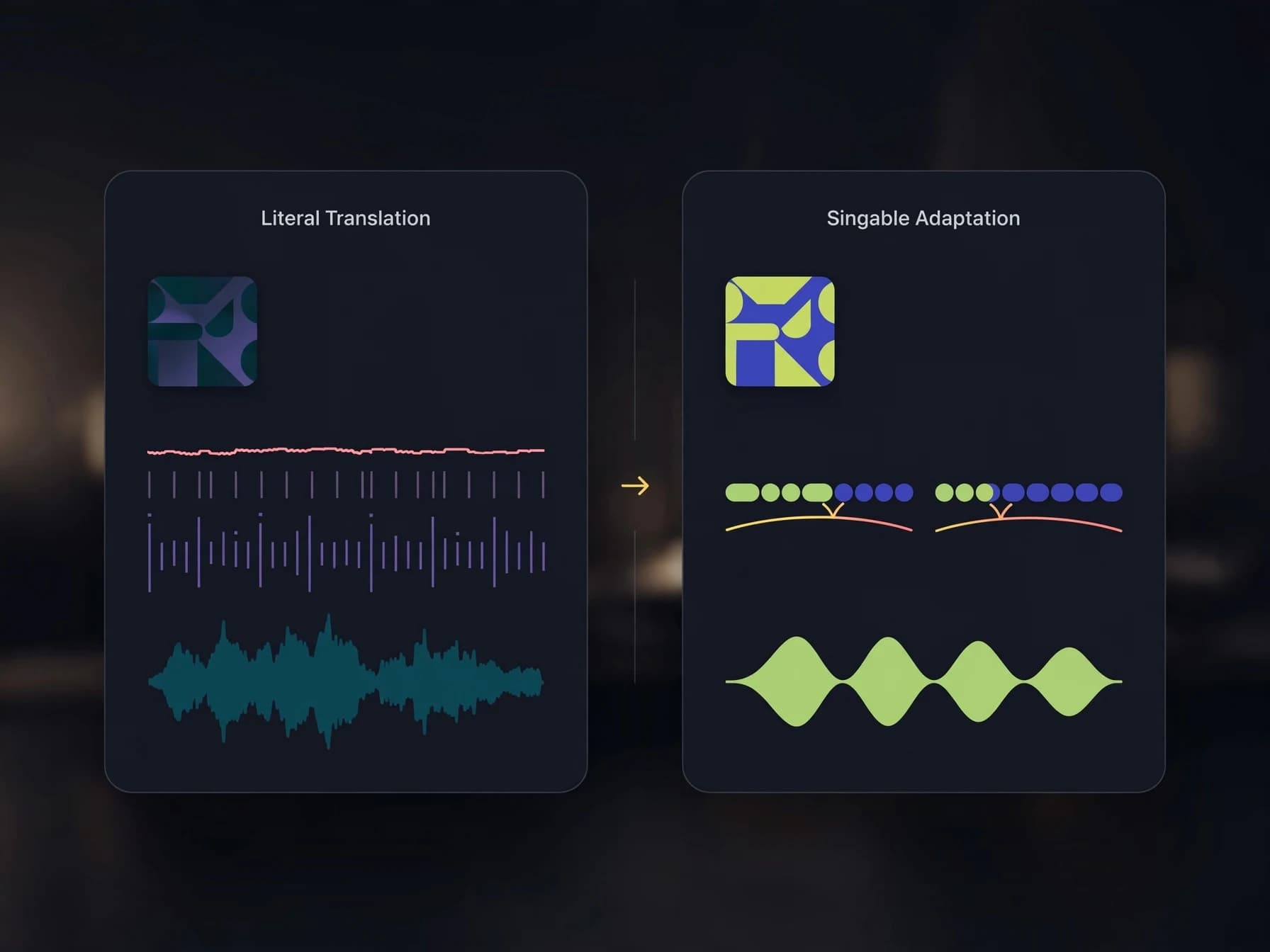
- Singable translation. Each line is translated with a limit: it must fit the same notes. A plain machine translation is not enough here; the new line has to match the length and rhythm of the old one.
- Re-singing. A singing voice model sings the new lines on the original melody, then the new vocals are mixed back over the instrumental.
When all four steps go well, you hear the same song, with the same melody and a similar voice, in a new language. When one step goes wrong (a misheard word, a line that is too long), you hear it right away. That is why the best tools let you check and edit the translated lines before they are sung.
What it keeps: melody, timing and voice style
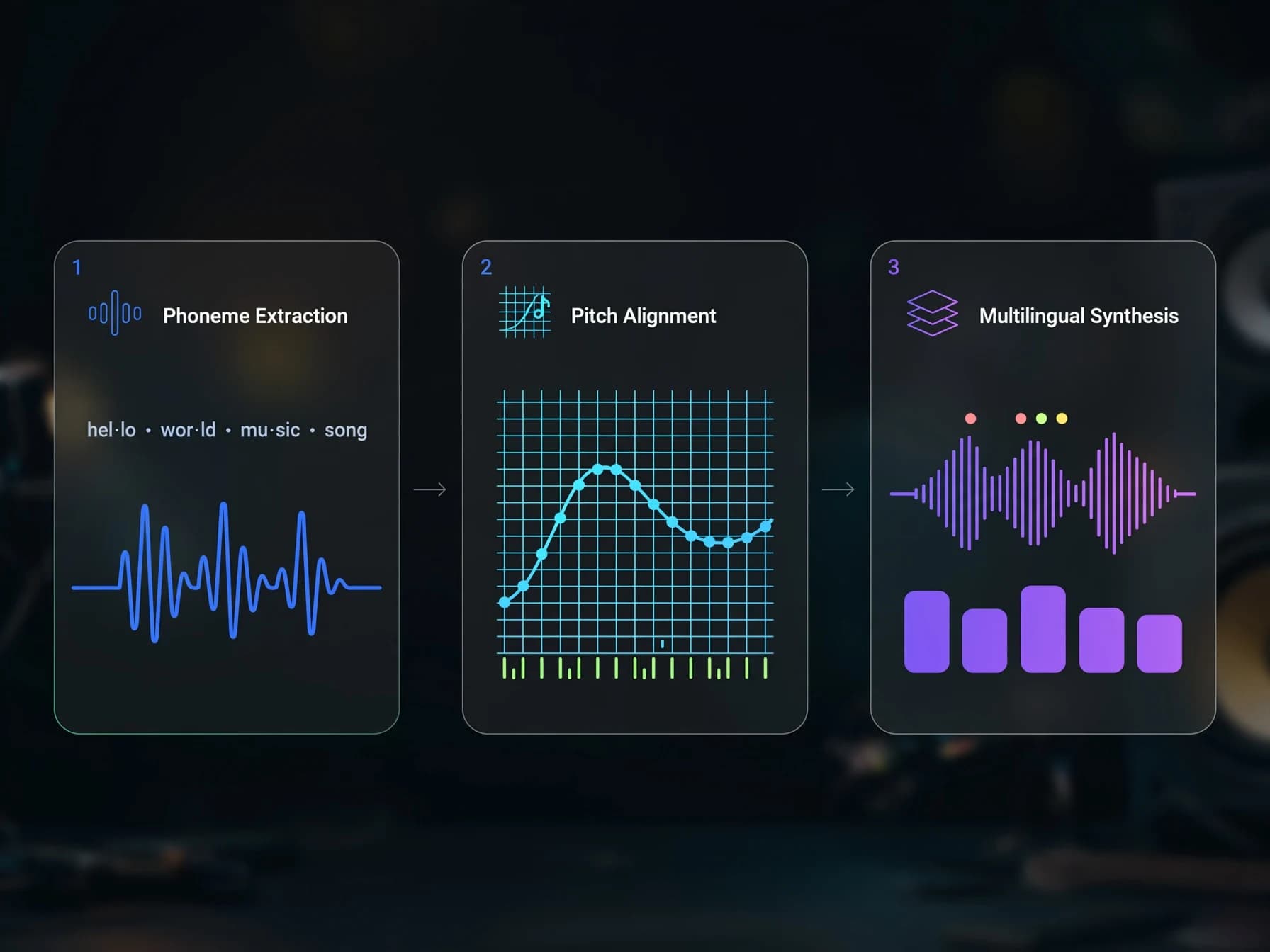
Good multilingual AI singing keeps a lot of the original:
- The melody. The notes stay the same. Only the words change.
- The timing. Each new line is sung where the old line was, so the song still lines up with the beat, the video or the dance.
- The voice style. Many tools aim to keep the original singer's tone, or let you pick a different voice instead.
- The arrangement. The instruments come from the original track, so the song still sounds like itself.
What it cannot promise is an exact copy. The voice may sound close rather than identical, and in the sung parts the backing music can change slightly, because it has to be separated and mixed back. Emotion is the other open question. AI singing has become far more expressive, but a big emotional moment (a cracked note, a whisper) does not always carry over. Listen to the chorus and the bridge first; if those land, the rest usually does too.
How to get AI to sing your song in another language
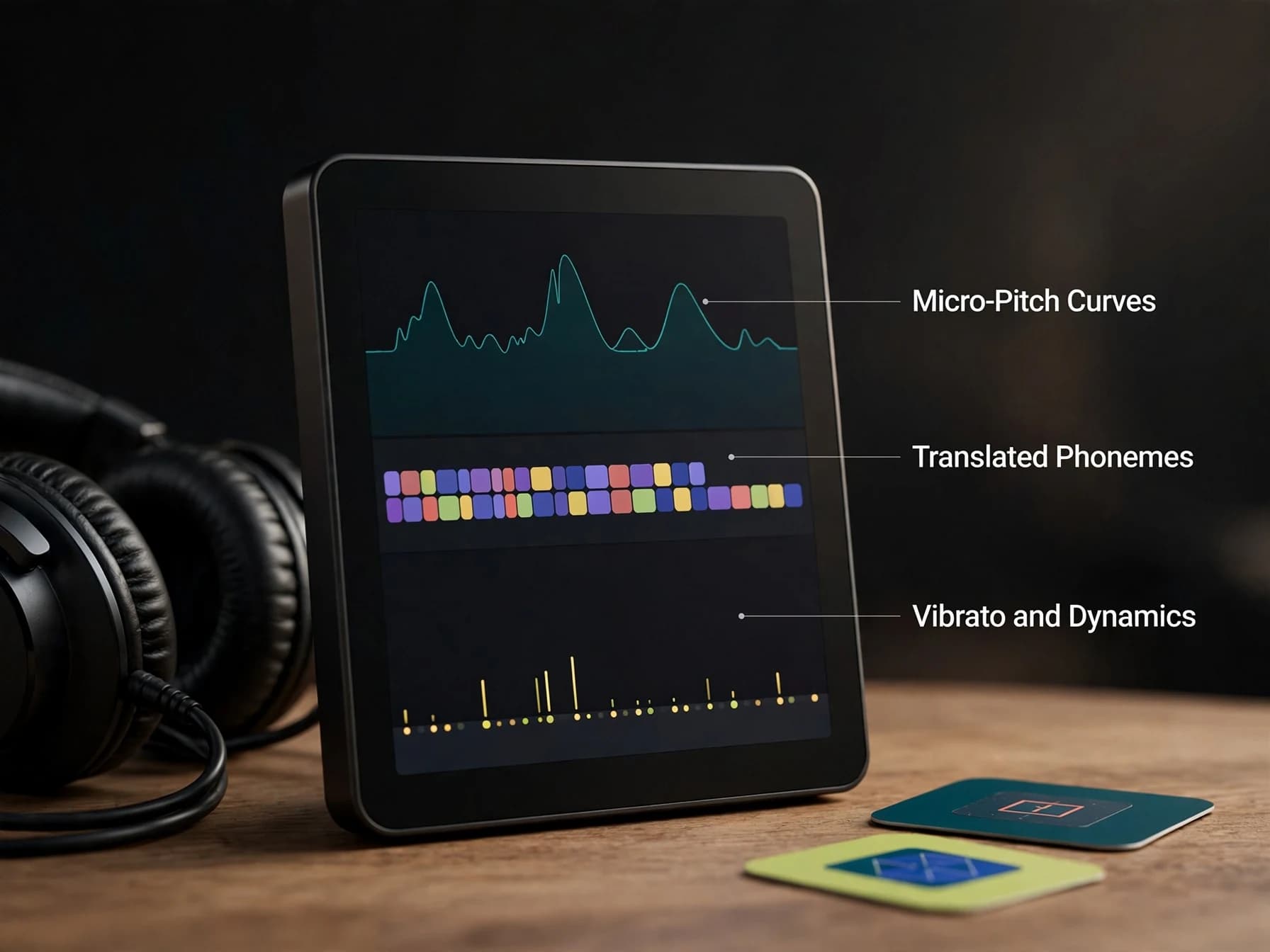
Here is a simple workflow with the OnMusic Song Translator:
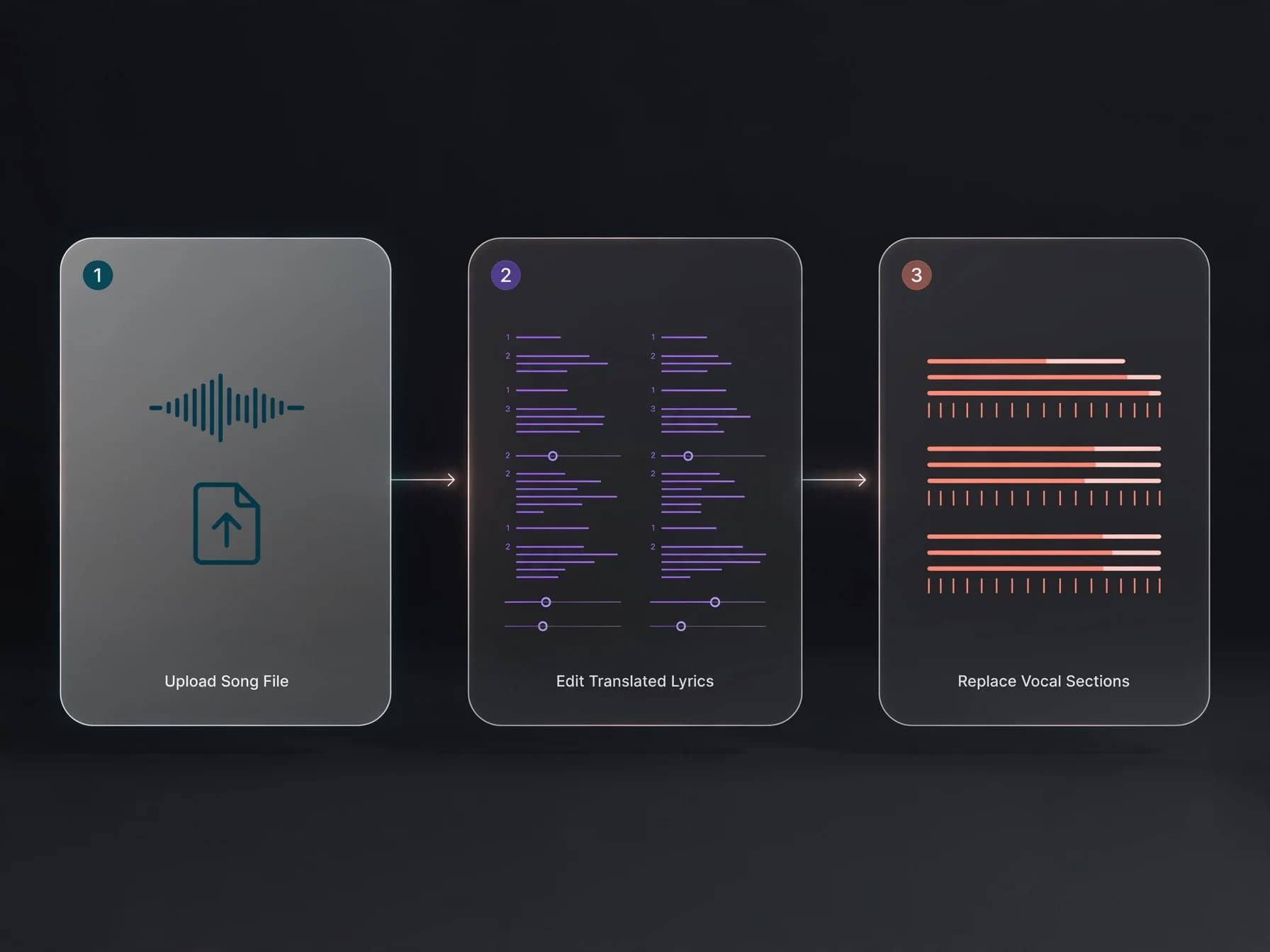
- Pick the song. Upload a file you have the right to use (up to 60 MB and 6 minutes) or choose a song from your OnMusic library. Links from YouTube or streaming sites are not accepted.
- Choose a language. There are 10 target languages: English, Spanish, Portuguese, French, German, Italian, Russian, Chinese, Japanese and Korean.
- Check the lines. OnMusic reads every sung line and writes a singable version. Edit any line that sounds off; this is the step that makes the biggest difference.
- Render. The sung parts are replaced section by section, keeping the singer's voice by default, or a voice you pick. It takes about 5 to 10 minutes.
It is on paid plans: 30 credits per section of about 4 lines (60 credits minimum), plus 10 if you pick a voice. If a job fails, the credits are refunded automatically. If you would rather hear the song in a completely different voice in the same language, an AI song cover generator is the better tool.
Where multilingual AI singing struggles
Can AI sing different languages equally well? Not quite. Some songs are much harder to translate and re-sing than others:
- Fast rap. Dense verses leave almost no room to fit a translated line, and many languages need more syllables for the same meaning.
- Wordplay and puns. A joke built on two words that sound alike rarely survives translation, and the AI may translate it literally.
- Backing vocals and harmonies. Stacked voices are hard to separate cleanly, so ad-libs and harmonies may sound thinner.
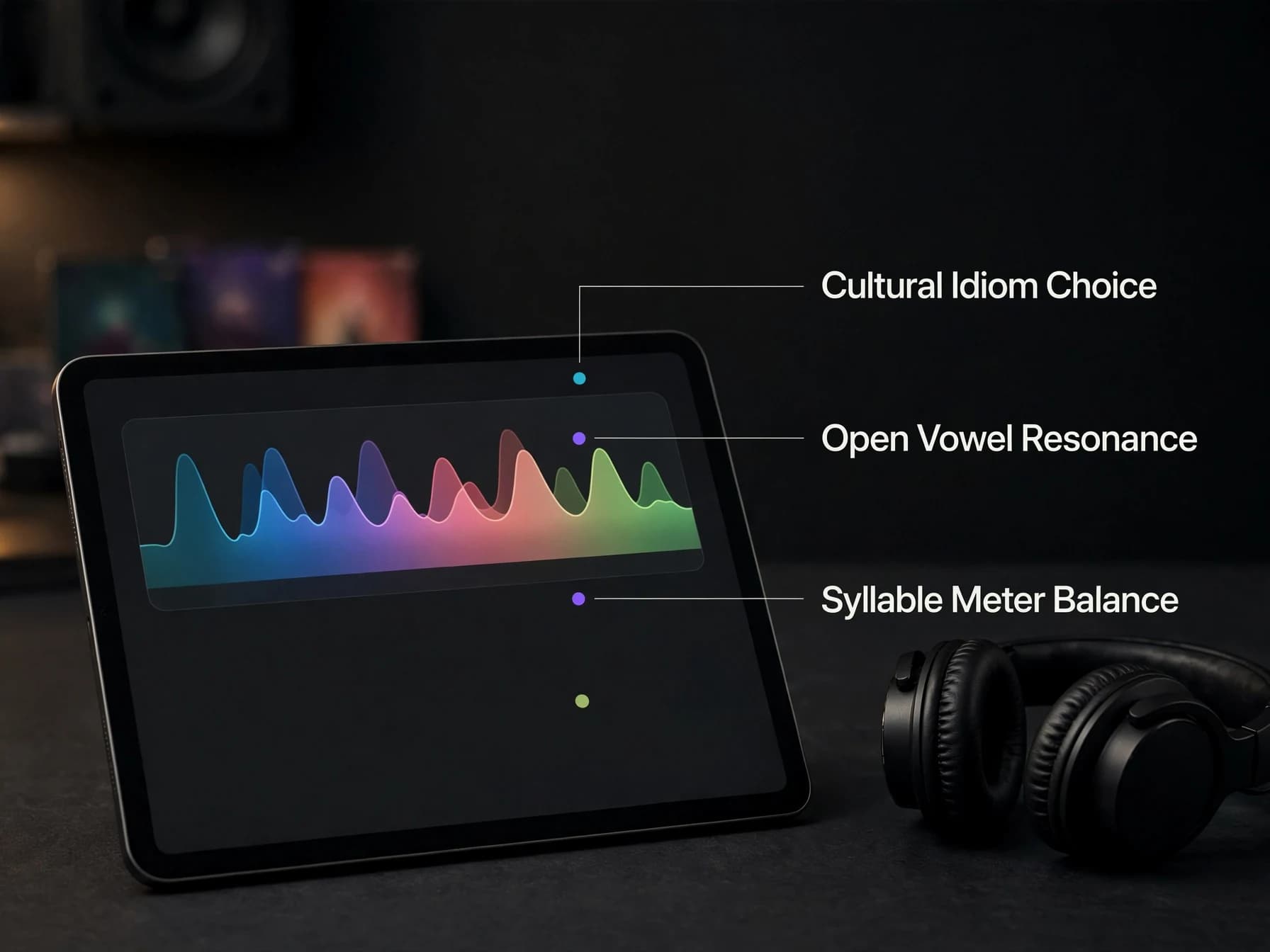
- Long held notes. If the translated word ends in a hard consonant ("night", "stuck"), the singer has nothing to hold. Open vowels sing better.
- Noisy or live recordings. Crowd noise and reverb make the vocals harder to separate and the lyrics harder to read.
None of these make the job impossible, but they are where you should expect to edit lines or try a second take.
Why the lyrics still need a human ear
The weakest link is usually not the voice but the words. An AI-written line can be grammatically correct and still sound wrong: too many syllables, a weak word on a strong beat, or a lost rhyme in the chorus. Fixing that takes a minute per line, and it is the difference between a demo and something you would share.
Before you render, read each translated line out loud in rhythm and ask three questions:
- Does it say the same thing as the original line?
- Does it fit the same number of sung syllables?
- Does the most important word land on a strong beat or a long note?
Rewrite anything that fails, keeping the rhymes listeners notice most, usually at the ends of chorus lines. If you are translating a song by another artist, also think about where it will end up. Translating for yourself is one thing; releasing a translated version usually needs permission from the rights holders. Our guide on whether AI music is legal covers the basics.
Can AI sing in another language well? Pick the right song
So, can AI sing in another language well? It depends on both the language pair and the song itself.
Language pairs. Pairs with similar rhythm and many open vowels, such as Spanish, Portuguese and Italian, tend to swap well. Pairs that sit very differently on the beat, like Korean and English, or tonal languages like Chinese, need more line editing to sound natural.
Song types that work well:
- Ballads and mid-tempo pop, with clear lead vocals and room between lines.
- Songs with a strong, simple chorus that repeats.
- Studio recordings with clean vocals.
Song types that need more work:
- Fast rap and spoken-word parts.
- Songs that depend on puns or a specific cultural reference.
- Live recordings and dense group vocals.
Start with a short, clear song to learn how the tool behaves, then move to the harder ones. To see how different tools compare, read our guide to the best AI song translators.