AI Song Translator

Hear a song sung in another language, by the same singer: lyrics rewritten line by line to fit the melody.

Hear real songs made with OnMusic AI

Preview more

Each song below is real AI music made with OnMusic AI, straight from the explore feed. Tap a cover to play it here.

Why translation matters

Why translating music unlocks a global audience

Music connects people faster than speech, but unfamiliar lyrics often prevent listeners from feeling the core story. Using a modern song translator bridges that divide while keeping melodic rhythm intact. With OnMusic AI's song translator, you can hear a song in another language without rewriting it or booking a singer.

Reach listeners in their native language

Singing in another tongue lets your musical message resonate deeply across different regions. A dedicated song translator adapts vocal lines so local audiences understand every chorus, helping independent artists share their melodies worldwide without hiring full translation teams.

Preserve melodic flow and syllable balance

Direct word-for-word interpretation breaks musical cadence. Practical song translation matches line lengths, rhyme structures, and rhythm patterns so the newly translated verses fit comfortably over the original backing beat while retaining emotional energy.

Expand creative projects with fresh voices

Hearing a song in another language is a fun way to find new ideas for remixes and collaborations. OnMusic AI sings the song again in the language you pick, in the voice you pick, so you can hear how it lands with new listeners.

Save hours of lyric adaptation work

Adapting verses by hand requires hours of trial and error with lyric sheets. An automated song translator transcribes original vocal recordings and writes a singable draft for you, giving producers a solid foundation to refine and finalize in a short session.

Pick the right model for the sound

Each AI music model costs a set number of credits per song, at any length. Play a sample to hear how they differ.

  • ACE-Step

    8

    Quick diffusion model with lyric support. With lyrics.

  • CassetteAI

    12

    Fast instrumentals, up to 3 minutes. Instrumental.

  • MiniMax v2.5

    32

    A great all-rounder for songs with vocals. Vocals + lyrics.

  • Lyria 3.5

    20

    Premium Lyria with full length control. Duration control.

  • MiniMax v2.6

    40

    Our latest MiniMax model, with the best vocal quality. Top vocals.

  • Stable Audio 2.5

    48

    Fast, high-quality audio up to 3 minutes. Fast · HQ.

  • Sonilo v1.1

    60

    Long-form songs with room to build. Up to 10 min.

  • ElevenLabs Music

    160

    Studio-grade music, up to 10 minutes. Studio-grade.

How does a modern song translator work?

Explore how vocal translation follows the melody while adapting lyrics across languages, and see why a reliable song translator keeps rhythm intact for every listener.

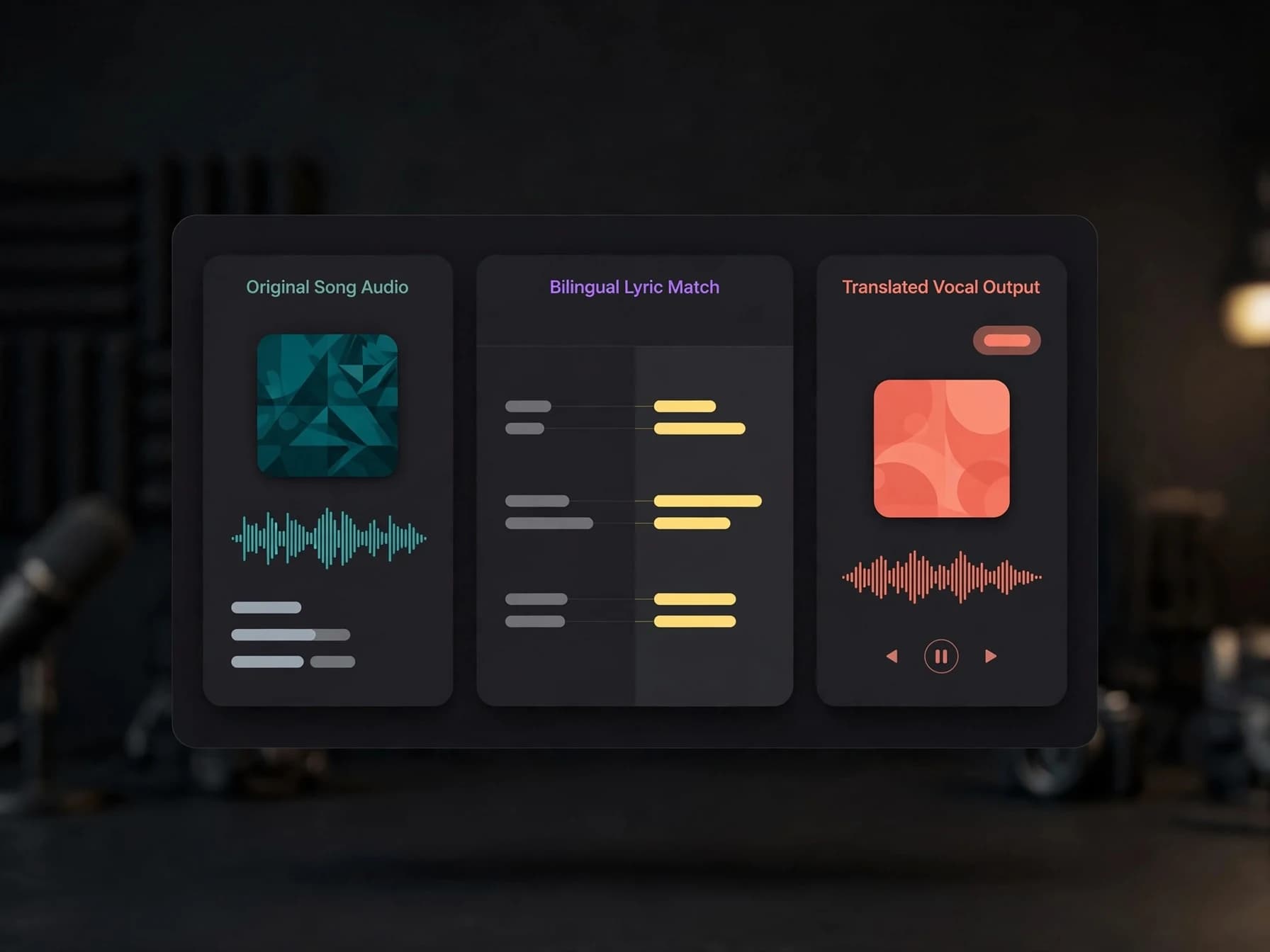
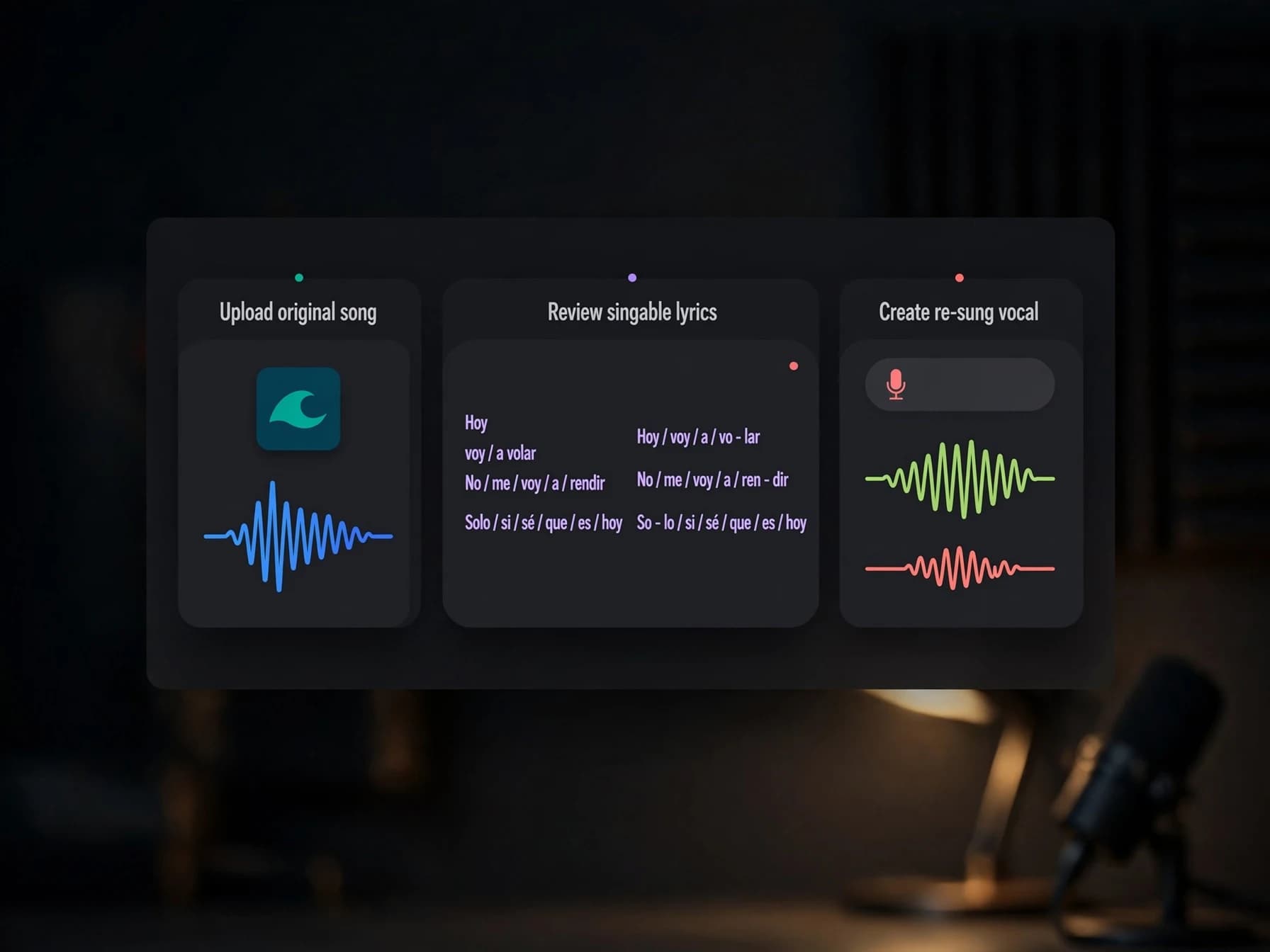
Three-step app workflow showing song upload, side-by-side lyric translation, and the final rendered song player.

How does an online song translator work?

When you want to translate song audio into another language, you start by uploading an MP3, WAV, M4A, or FLAC file up to 60 megabytes or choosing a piece from your library made with an AI song generator. The system reads the sung lines with their timing.

Then you pick one of 10 languages and review a singable version of every line, written to match the original line cadence and chorus repetition. The sung lines are replaced section by section, keeping the original singer by default, and you can optionally choose a different voice from the library. It usually takes 5 to 10 minutes.

Tip: Check and tweak the original transcription before continuing to keep your sung phrasing natural.
Side-by-side song lyric translation interface showing rhyming lines and waveform track

Why does singable song translation require rhyme and meter?

Accurate song translation focuses on rhythm and syllable count rather than word-for-word literal phrasing. Standard machine tools often stretch phrases or break the melodic beat, which spoils the rhythm when a vocalist attempts to sing the translated lines over the original arrangement.

OnMusic AI writes lines side by side with your source lyrics, balancing rhyme, meter, and repeatable hooks much like turning lyrics to song drafts into finished melodies. If you want to experiment with different voices, you can pair your finished piece with an AI song cover generator to explore distinct vocal textures across different genres.

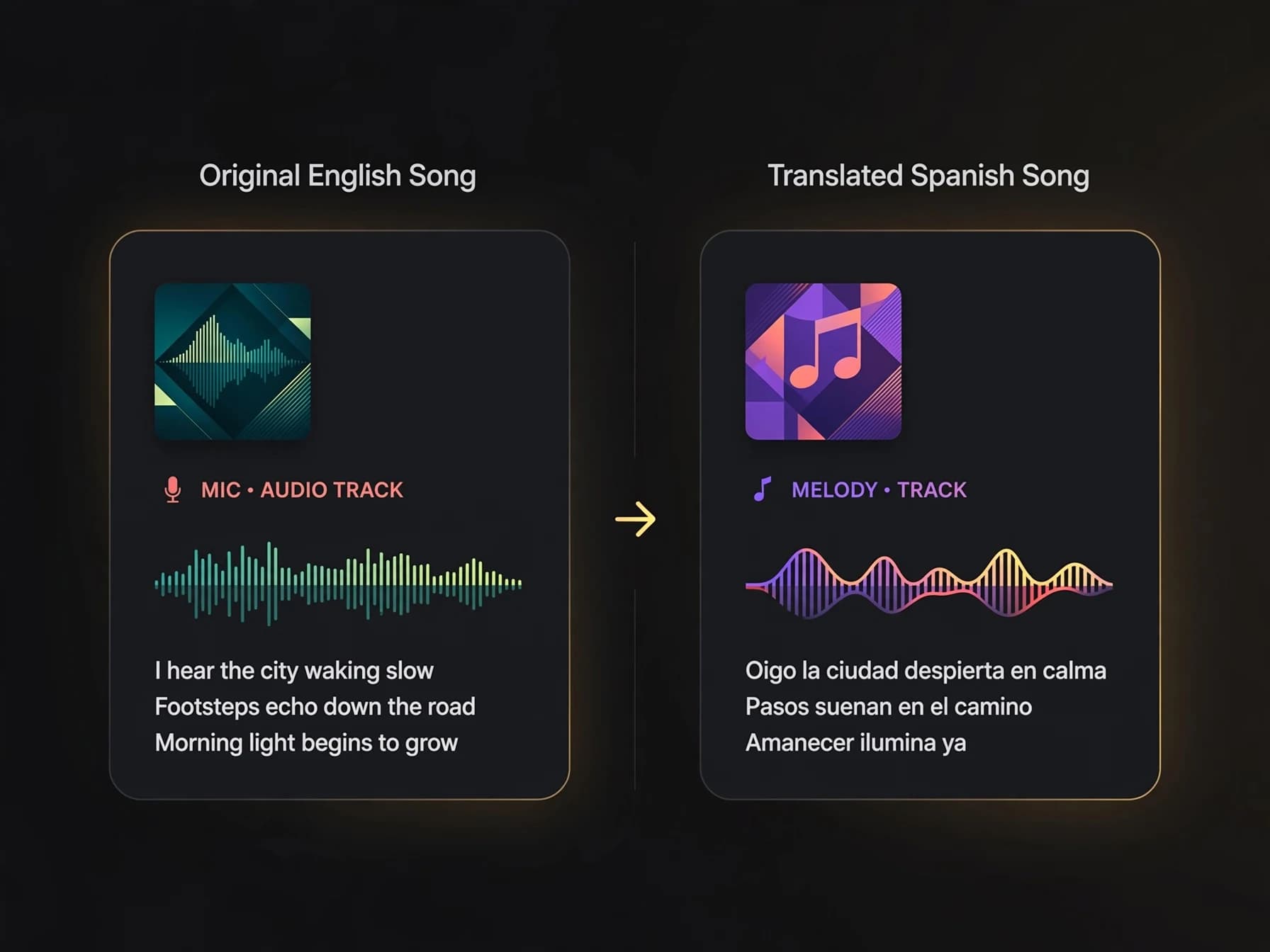
Here is what that looks like with two original lines, English to Spanish:

| Original (English) | Singable Spanish | |---|---| | I left the light on by the door | Dejé la luz junto a la puerta | | In case you find your way back home | Por si vuelves a casa hoy |

The Spanish isn't word for word, but each line has about the same number of syllables, so it lands on the same notes.

Side-by-side comparison of an original song with lyrics and a translated version with singable lines and vocal waveforms.

How can you adapt international music into English?

Using a song translator to english lets you bring popular foreign tracks, folk hooks, or indie projects into clear English vocals without losing melodic timing. The translator transcribes foreign lyrics, writes singable English equivalents with matching syllables, and lets you fine-tune tricky lines before finalizing the song.

For example, upload Luis Fonsi's "Despacito" and pick English: you get English lines written to the same syllable flow, so the chorus still lands on the beat, sung by the same singer, or in a voice you choose. It works the other way too: Ed Sheeran's "Perfect" in Spanish, or Adele's "Hello" in Portuguese. You can also adapt multilingual music to craft a custom song gift for friends and family, then download the resulting MP3 directly to your computer or phone without any extra export steps.

Producer monitoring localized audio tracks and vocal waveforms on laptop screen

What results can you expect from an AI song translator?

You get a finished MP3: the same song with a similar arrangement, sung in the target language, by the original singer unless you picked another voice. Subscribers on paid plans spend 50 credits per section of about four lines (60 credits minimum) on songs up to six minutes long, and credits refund automatically if a processing attempt fails. If you are exploring how copyright applies or asking is AI music legal, keep in mind: Paid plans include commercial use; read the OnMusic AI Terms of Service before you use a song commercially. If you upload a song someone else wrote, make sure you have the rights before you share or release your version.

This workflow lets you translate songs across diverse vocal styles without booking studio sessions or hiring bilingual session singers. Before translating complex multi-track files, some creators use an AI vocal remover to isolate clean stems and evaluate vocal harmonies individually.

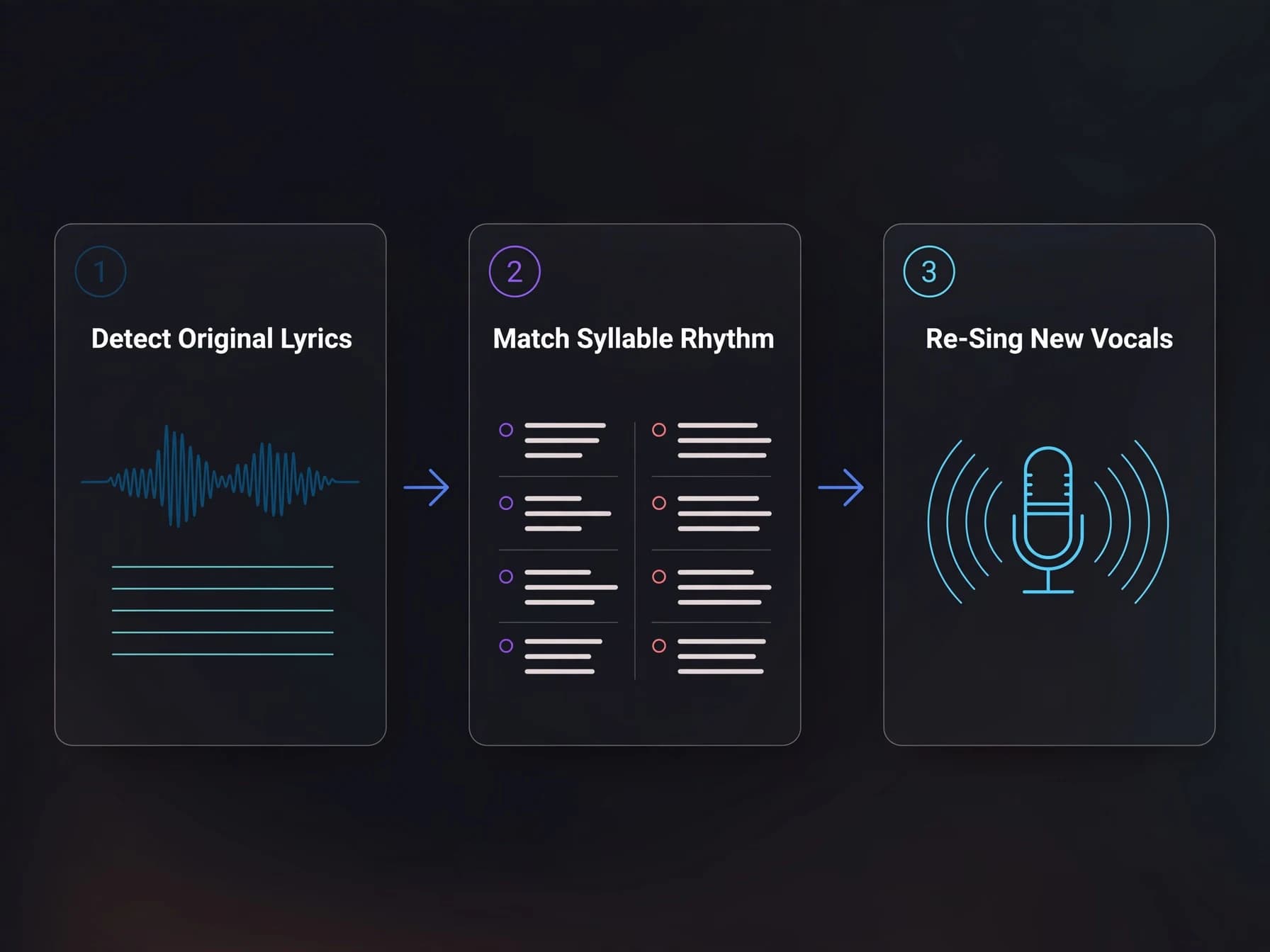
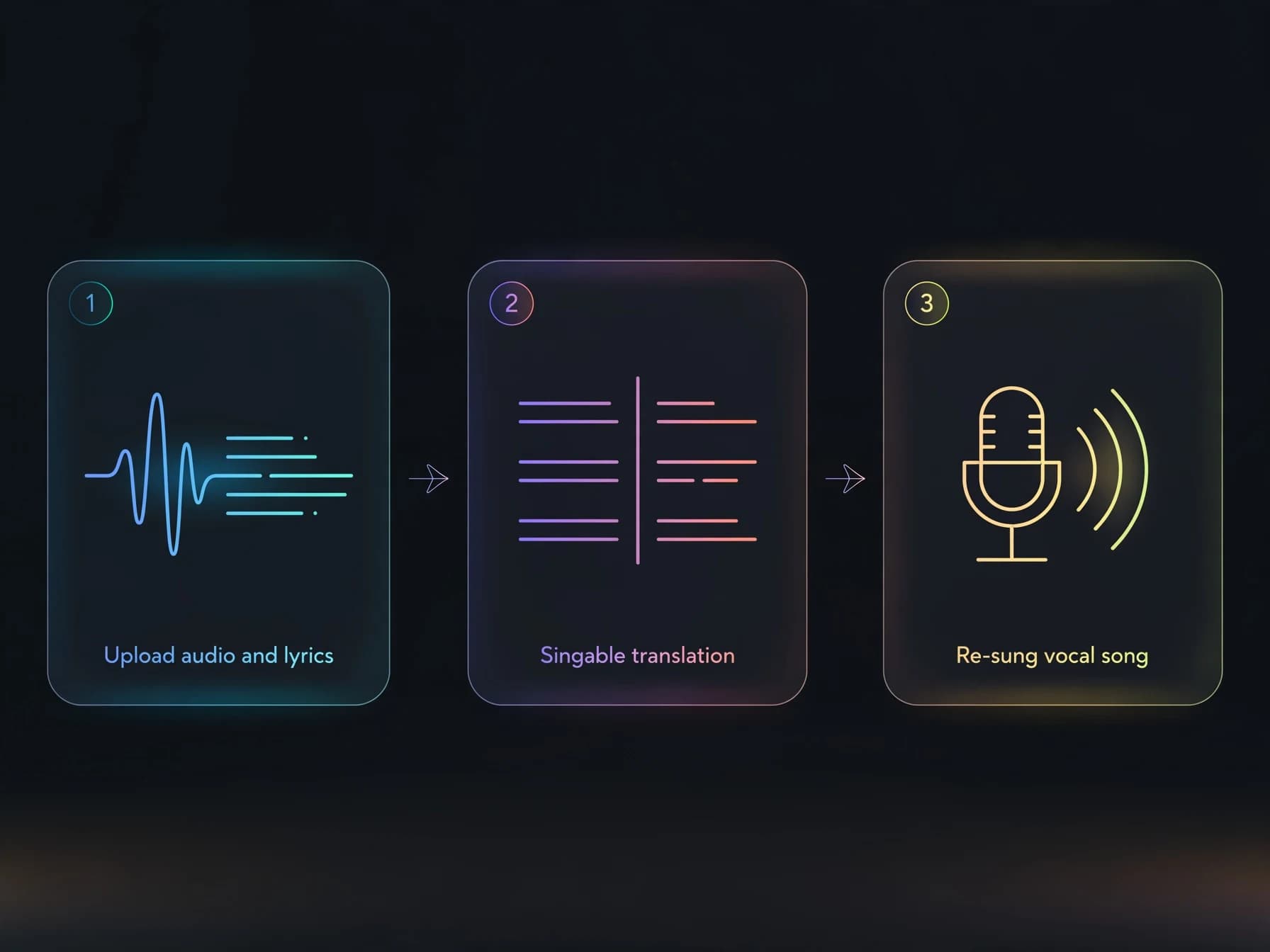
Three-step diagram showing lyric extraction, singable rhythm translation, and re-singing a track in a new language.

Why are artists creating songs in different languages?

Releasing songs in different languages helps musicians reach global streaming listeners, gaming creators, and overseas social media audiences without rerecording instruments from scratch. Adapting your chorus into French, Japanese, or Portuguese opens doors in regional playlists that favor localized vocals.

Because OnMusic AI maintains the primary song structure and rhythm, each localized release feels like an authentic performance rather than an artificial voiceover. Musicians can preserve their signature sound while expanding their international reach across 10 languages.

How to translate a song in three simple steps

Adapting your recorded music into another language takes only three steps when you run OnMusic AI's song translator to adapt each line.

How it works
  1. Step 1: Upload your audio file and check the lyrics

    Upload an MP3, WAV, M4A, or FLAC track up to 60 MB, or choose an existing project from your OnMusic AI library. The system reads the sung lyrics automatically so you can fix any words before proceeding.

  2. Step 2: Choose a target language and refine the lines

    Select from 10 supported languages to translate songs while preserving rhythm and singability. Inspect the side-by-side lyric view, adjust line pacing if desired, and preview the translated phrasing before rendering.

  3. Step 3: Keep the singer or pick a voice, then download

    Keep the original singer, or choose a voice from the library or one you trained yourself. OnMusic AI replaces the sung lines section by section, and you download a complete MP3, usually in 5 to 10 minutes.

Who translates their music across languages, and why they do it

Creators, hobbyists, and global listeners use a song translator to adapt personal tracks, reach international listeners, and hear familiar melodies in completely new styles.

Indie artist using an AI song translator to adapt music for global listeners

Indie artists adapting original releases for global listeners

Independent musicians use a song translator to bring original tracks to international listeners in languages like Spanish, French, or Japanese. You upload your finished audio file, inspect the matched syllable count, and let the tool sing your melody in a new language with a clean studio voice.

Creator working with a music translator to localize music for international videos

Content creators using a music translator for international video audio

Video creators rely on a music translator to adapt custom vocal tracks for regional audiences across social platforms. Converting an English vocal into German or Portuguese keeps the chorus intact while making the music feel native to local viewers.

Songwriter reviewing side by side song translation lyrics on a laptop

Songwriters testing song translation and syllable rhythm across borders

Writers evaluate how vocal cadence and rhyme hold up in other markets by running a song translation before producing final cuts. You compare the translated lines side by side with the original verses, fine-tune the phrasing, and hear the vocal re-sung over the existing melody.

Song Translator Features

Sing in 10 languages with a song translator built for melody

Turn a song into Spanish, Portuguese, English and 7 more languages while keeping its rhythm, meter and mood. Lyrics are written to be sung, and you hear them in a real singing voice.

Translate song lyrics to English seamlessly

Use OnMusic AI's song translator to translate song lyrics to English while following the melody and natural rhythm. The tool reads your uploaded audio file up to six minutes long, extracts the sung words, and generates an accurate English adaptation line by line.

You can inspect the transcription side by side with the new text to adjust rhyming words or fix phrasing before production begins. The resulting song delivers an English vocal performance that fits the tempo without awkward pauses.

Translate Spanish song to English smoothly

When you translate Spanish song to English audio, the translation engine matches syllable counts so the chorus remains memorable and singable. The system isolates musical phrasing across verses so Spanish verses convert cleanly into natural English lyrics.

You can fine-tune colloquial phrases or idioms directly in the interactive lyric editor before rendering the audio. It usually takes five to ten minutes to generate the finished vocal performance.

Preserve melodic cadence with singable lines

Accurate song translation requires preserving meter rather than spitting out literal word-for-word text. The system structures translated lyrics with balanced line lengths, matching verse cadences, and repeatable hook patterns that sit naturally on the backing beat.

If you want to isolate individual parts for a custom mix, you can separate the backing track with an AI stem splitter. Every translated section retains the emotional delivery and energy of the original composition.

Keep the singer or choose a new voice

The original singer stays by default. If you want a different sound, pick from the voice library or a voice you trained yourself as an optional last step, in any of the 10 supported languages.

If you enjoy experimenting with different vocal textures, you can explore the AI song cover generator library to test alternate tones. The output combines natural articulation with pitch-accurate phrasing across every verse.

Review side-by-side edits before rendering

Inspect the source transcription alongside the translated draft to polish every syllable before you spend any credits. Both lyric columns remain fully editable, giving you complete creative control over rhyme schemes, word choices, and emotional emphasis.

You can re-run the translation draft as many times as you like until the lyrical structure matches your artistic vision. Once confirmed, the platform renders the completed audio file as a downloadable MP3 ready to share.

Song translator questions, answered

Find direct answers about how our song translator handles uploaded audio files, lyric transcription, singable phrasing, and vocal output across 10 languages.

What is the OnMusic AI song translator?

The OnMusic AI song translator is a tool that takes an existing audio track, transcribes its lyrics, creates a singable translation, and re-sings the music in another language. You pick from 10 supported languages, and the original singer stays unless you choose another voice.

How does the song translator keep the rhythm of the original music?

The song translator builds a singable translation designed to preserve line counts and syllable cadences so the words fit the melody. You can inspect and edit the translated lines side by side with the original lyrics before the vocal is produced.

What songs can you upload to the song translator?

Upload an MP3, WAV, M4A or FLAC file up to 60 MB and 6 minutes long, or pick a song from your OnMusic AI library. Links from YouTube or streaming apps aren't accepted, so save the audio file first.

Which languages does the song translator support?

10 languages: English, Spanish, Portuguese, French, German, Italian, Russian, Mandarin Chinese, Japanese and Korean. Each translation is written to be sung, with lines that fit the beat.

How much does the song translator cost?

Each section of about four lines costs 50 credits, with a 60-credit minimum per song, and you see the exact cost before you start. Picking a different voice adds the normal cover price for the song's length. The song translator is part of the Pro and Max plans. If a translation fails, your credits come back automatically.

Does the translation process keep the original singer's exact voice?

By default the song is re-sung to sound like the original singer, though it isn't an exact copy. You can also choose a voice from the catalog or one you trained yourself.