
Is AI music legal? The short answer
If you are asking is AI music legal, the short answer is often yes, but it depends on the source material, the tool terms, and how close the result is to existing music. The core issue is not the software itself. It is whether your output uses protected material in a way the law or a license does not allow.
A simple way to think about AI music legality is to split it into three questions. First, how was the model trained or what did you upload into it? Second, does the output copy a melody, lyric, voice, or arrangement from someone else? Third, what rights did the platform give you for personal or commercial use?
That is why the answer to is AI music legal is usually yes in some cases, and not automatically in all cases. Private use is the lowest risk. Public release, ads, streaming, client work, and cover versions need more care. If you treat AI music like any other music asset, and check ownership, permission, and similarity before release, you will avoid most problems.
What matters most under AI music copyright rules
The main thing to know is that copyright protects original expression, not the idea of using AI. In practice, courts and copyright offices often look for meaningful human authorship. If you wrote the lyrics, chose the structure, edited the melody, arranged sections, or combined stems in a creative way, your claim is usually stronger than if you accepted a raw output with no changes.
There are two separate risks here. One is whether you can own rights in the new music. The other is whether the new music infringes someone else's rights. A piece can be hard to register in full and still create infringement risk if it closely copies another work.
That is why AI music copyright questions usually focus on authorship, similarity, and licenses. If you want a deeper breakdown of terms, ownership, and edge cases, the AI music copyright guide is the right next read. Keep in mind that lyrics, melodies, vocal likeness, and uploaded samples can each create different legal issues, even when the final music sounds new.
A simple legal check before you post or sell
For legal AI music for commercial use, run a short check before you upload anything. This does not replace legal advice, but it catches the issues that cause most disputes.
Step 1: List every input you used
Write down whether the music came from a text prompt, your own lyrics, an uploaded sample, a beat loop, or a vocal reference. If any input belongs to someone else, that is your first review point.
Step 2: Read the platform terms for ownership and usage
Check whether the service gives you commercial rights, requires attribution, limits paid distribution, or keeps any claim over outputs.
Step 3: Compare the result against known music
Listen for copied hooks, reused lyrics, obvious interpolations, or a voice that sounds too close to a real artist. If anything feels recognizable, revise or create a new version.
Step 4: Save records
Keep the prompt, export date, edits, and license terms. If a store, client, or platform asks questions later, your paperwork will matter as much as the music itself.
Is AI generated music royalty free, or do licenses still matter?
No, not all AI music is royalty-free, and the phrase can be misleading. Royalty-free usually describes a license model, not a universal legal status. It often means you can use the music without paying recurring fees for each play, but you still need permission from the provider and you still need to follow the license terms.
This matters because one service may let you use outputs on YouTube and podcasts, while another may limit client work, ads, or streaming distribution. If your music includes third party samples, cloned vocals, or a borrowed composition, a royalty-free label may not protect you at all.
It also helps to separate royalty-free from public domain and from fully original ownership. Those are different categories. If you want examples of how licensed catalogs work in practice, read more about royalty-free music. The safe habit is simple: treat every exported file as licensed content until you confirm what rights came with it and whether any outside rights are still attached.
When is AI music legal to sell or post?
AI music is usually safer to sell or post when the output is original, the inputs are cleared, and the platform gives you the needed usage rights. The more human work you add, such as writing lyrics, directing arrangement, editing sections, and mixing versions, the easier it is to explain what is yours and why the music is distinct.
Commercial use gets riskier when you imitate a famous artist's voice, reuse copyrighted lyrics, upload unlicensed stems, or distribute music through stores that ask for stronger ownership warranties than your tool can support. It also gets complicated when brands, film clients, or ad networks require broad indemnity or proof of rights.
Before you monetize AI music, check the rules of each destination platform, not just the generator. A song that is fine for social posting may not be fine for ad sync, fingerprinting systems, or a paid client campaign. When in doubt, create from clean inputs, avoid close imitation, and keep records that show how the music was made.
The biggest legal mistakes people make with AI music
The most common mistakes are easy to spot. People assume a download equals ownership, assume an instrumental version removes all rights issues, or assume a prompt that names a famous artist is safe because the output is new. None of those assumptions is reliable.
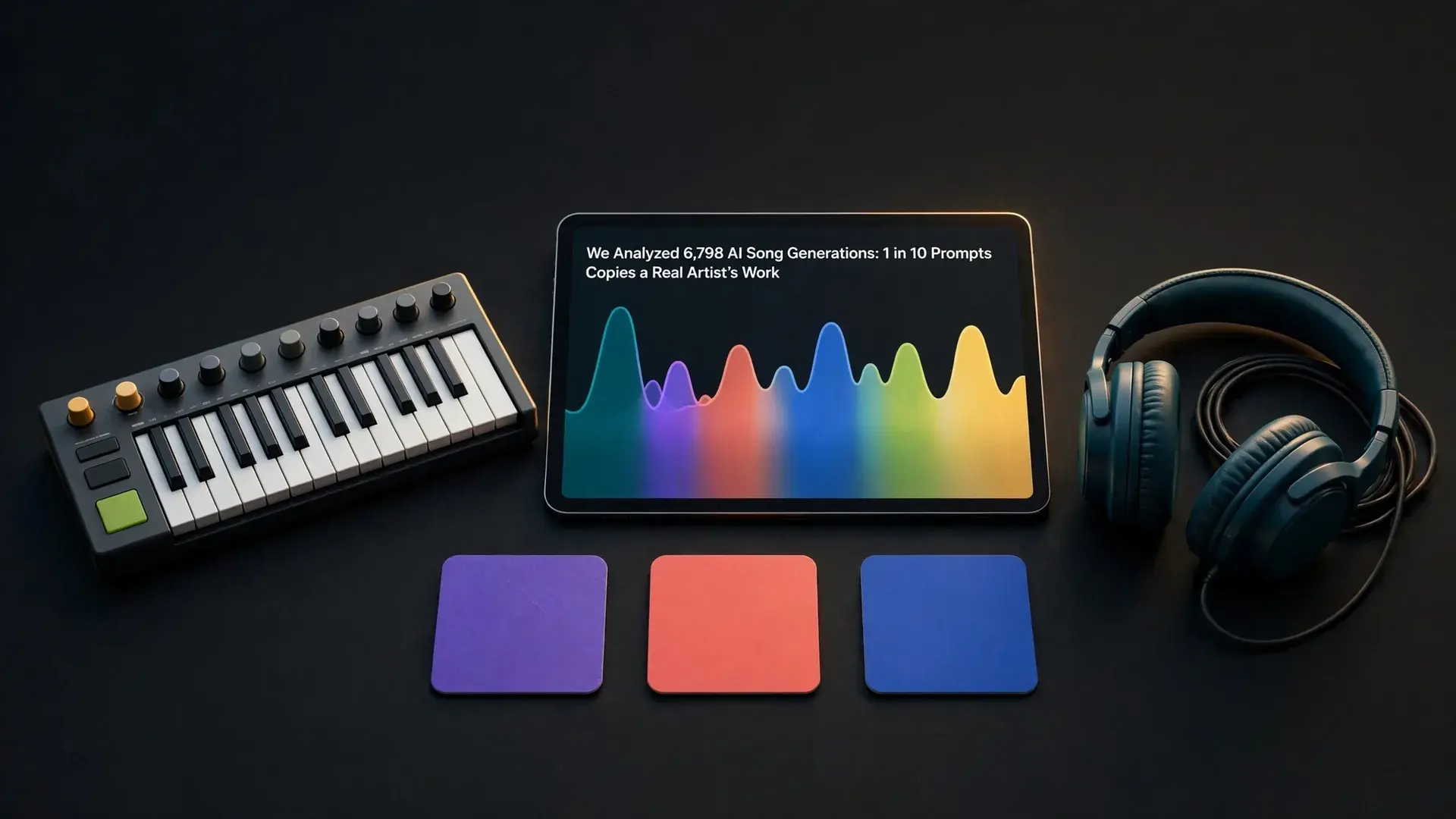
It's a common habit. In our study of 6,798 AI song generations, about 1 in 10 prompts tried to copy a real artist's style, voice or existing lyrics.
Another mistake is ignoring rights outside copyright. A cloned voice can raise publicity or personality rights issues even if the melody is different. Reusing lyrics, uploading commercial samples, or asking for a near copy of a current hit can also create problems fast. Cover versions add another layer, because the composition may still need clearance even if your recording is original. If that is your case, review our guide on AI cover song legality before release.
One more practical mistake is poor recordkeeping. If a platform flags your music, you need prompt history, source notes, and license terms. Good records will not solve every dispute, but they make it much easier to show that you acted carefully and in good faith.