Song Structure Explained: Verse, Chorus and Bridge
A song structure provides the framework that organizes musical sections like verses, choruses, and bridges to guide the listener through an engaging emotional journey. Learning how these core building blocks work together helps you arrange memorable melodies and rhythms with complete confidence.
Why does song structure shape the listener journey?
Song structure provides the architectural framework that organizes musical ideas into a coherent and satisfying listening experience. It guides listeners through shifts in energy, helping them connect with both the melody and the underlying message of your music.
Without an intentional layout, even brilliant hooks can feel disjointed or exhausting over three minutes of music. A thoughtful arrangement sets up clear expectations, delays gratification, and delivers emotional payoffs right when the audience craves them most.
Mastering this craft allows you to communicate your creative vision clearly across any genre. Whether you write acoustic ballads or electronic beats, a solid foundation keeps people listening all the way to the final note.
Essential building blocks from intro to outro
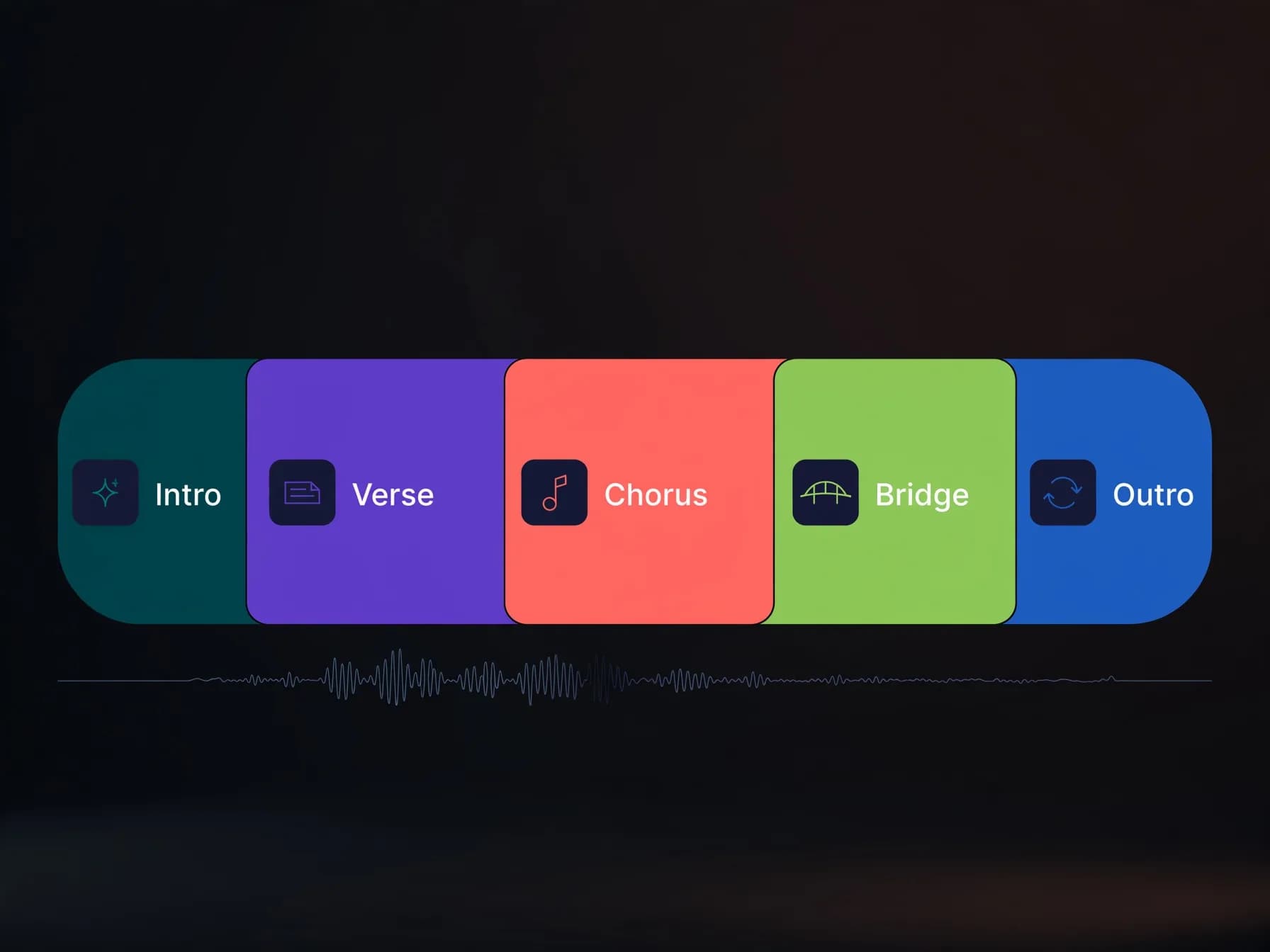
Every memorable track consists of distinct parts of a song that perform specific emotional and musical roles. The verse introduces characters, narrative details, and foundational melodies, while the chorus delivers the core message and the primary melodic hook of the music.
A pre-chorus often bridges the verse and chorus by building harmonic momentum and raising rhythmic tension. Meanwhile, the bridge introduces entirely new chords, rhythms, or lyrical perspectives that break repetition before the grand finale.
Intro and outro sections frame the piece by establishing tone and providing a gentle landing. Understanding how these separate components fit together makes it easy to assemble a polished composition using an AI song generator or traditional instruments.
Song structure timeline with intro, verse, chorus, bridge and outro blocks above a waveform
Proven arrangements in popular music
Studying time-tested song structure examples reveals why certain patterns continue to dominate streaming playlists and radio broadcasts. The classic verse-chorus-verse-chorus-bridge-chorus layout, often abbreviated as ABABCB, remains the gold standard in pop, rock, and country music.
Another enduring approach is the thirty-two bar AABA format, which was perfected in early jazz and golden-age pop music. This traditional song form establishes a strong initial theme across two sections before pivoting into a contrasting eight-bar bridge and returning home. If you want help drafting ideas for these classic parts, an AI songwriter can guide your layout.
Folk and narrative storytelling frequently rely on the strophic AAA form, where repeating chord progressions carry evolving lyrics. Exploring diverse templates gives you the freedom to choose an arrangement that serves your lyrics and musical tempo best.
Balancing tension and release in your arrangement
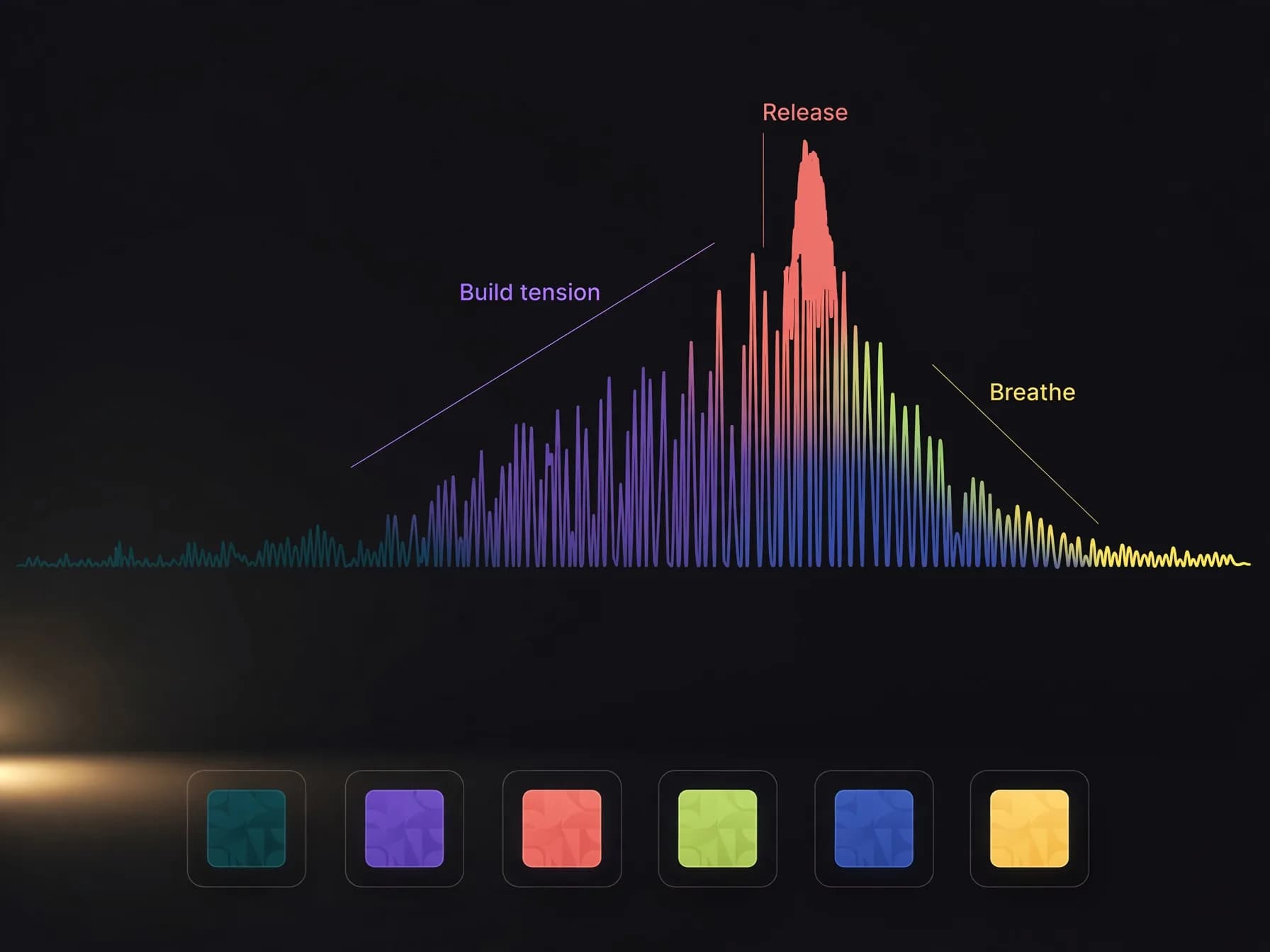
Deciding how to structure a song requires understanding the fundamental balance between tension and release across every transition. Listeners stay engaged when dynamic energy builds steadily toward an explosive chorus and subsides gently during reflective verses.
You can amplify this contrast by adding or subtracting instrumentation between neighboring sections. Dropping the percussion during a pre-chorus makes the subsequent entry of the drums in the chorus feel significantly more impactful.
Vocal density also controls musical pacing. Layering tight harmonies in the hook while keeping the verse delivery sparse ensures your music never feels flat or predictable.
Waveform of a full song annotated where tension builds, where it releases and where it drops back
Creative ways to refine your song structure
Modern song structures allow plenty of room for experimentation once you understand the standard conventions. Starting a track directly with the chorus can hook passive streamers immediately, while extended instrumental outros offer space for ambient exploration.
When writing lyrics feels challenging, turning to an AI lyrics generator can help generate rhythmic phrases that fit your target section lengths. You can also turn lyrics to song format instantly to see how your verses and chorus flow with real music.
Pay close attention to your transitions and test different bar counts to keep the momentum flowing. Trust your instincts, embrace subtle variations, and let the emotional arc guide how your arrangement takes shape.
Mastering song structure for your music
Understanding song structure gives you the blueprint to turn raw musical ideas into memorable, balanced tracks. Whether you stick with a proven verse-chorus pattern or explore unconventional arrangements, deliberate pacing and clear contrast between sections will keep your audience engaged from start to finish.
Common questions about song structure
Explore clear answers to essential arranging questions and discover how balanced song structure helps you shape memorable music.
What is the most common pop song structure?
The standard pop song structure follows an ABABCB pattern, which translates to verse, chorus, verse, chorus, bridge, and final chorus. This layout works well because it introduces the primary melodic hook within the first minute while keeping listeners engaged through dynamic shifts. Modern pop arrangements often trim intro lengths and repeat the hook to maximize immediate listener retention.
How does classical song form differ from modern arrangements?
Classical song form typically relies on multi-movement architectures like sonata form, rondo, or theme and variations that explore complex thematic development. Modern popular songwriting instead favors repeating cycles of verses and choruses designed around immediate vocal hooks and emotional tension. Both styles use repetition and contrast, but modern commercial writing prioritizes quick hook delivery.
What are the essential parts of a song?
The primary parts of a song include the intro, verse, pre-chorus, chorus, bridge, and outro. Verses deliver the core narrative and detail, while choruses state the central emotional theme and title hook. Pre-choruses build rhythmic energy between the verse and chorus, and bridges provide harmonic contrast before the final musical payoff.
What is the guitar part of a song called?
Depending on its role in the arrangement, the guitar part is usually called either rhythm guitar or lead guitar. Rhythm guitar provides chord progressions, strumming patterns, and groove support during verses and choruses. Lead guitar plays melodic riffs, fills, counter-melodies, or standalone guitar solos during an instrumental break.
What is the difference between a bridge and an interlude in music?
A bridge introduces new lyrics, chords, and vocal melodies to give the listener a fresh emotional perspective before the final chorus. An interlude is typically a brief instrumental transition between song sections that resets the mood without introducing new lyrical concepts. While a bridge shifts harmonic tension, an interlude provides breathing room.
How do I add a bridge to an existing song structure?
To insert a bridge into a song structure, write a complementary chord progression that contrasts with your verse and chorus chords, often starting on the subdominant or relative minor. Introduce a distinct vocal rhythm and lyrically reveal a new emotional insight or plot twist. If you need arrangement inspiration, OnMusic AI's AI music generator can quickly draft dynamic transition ideas to test different harmonic shifts.
What are the five elements of a song?
The five foundational elements of a song are melody, harmony, rhythm, lyrics, and song structure. Melody delivers the recognizable vocal lead, harmony supplies emotional color through chords, and rhythm governs tempo and groove. Lyrics communicate the story, while structural architecture organizes these layers into a coherent sonic journey.
What are the 7 elements of a song arrangement?
Arrangers typically define the seven core elements as rhythm, harmony, melody, timbre, texture, dynamics, and musical form. Rhythm and harmony establish the bed, while timbre and texture dictate the instruments and frequency balance. Dynamics and form control the ebb and flow of energy from quiet verses to explosive choruses.
What is the 80/20 rule for songwriting?
The 80/20 rule in songwriting suggests that 80 percent of a track's commercial impact comes from 20 percent of its elements, primarily the chorus hook and the rhythmic groove. Focusing creative energy on perfecting the vocal melody and lyrical hook yields the highest return on listener engagement. Applying this rule helps writers avoid overcomplicating verses when the central hook needs polishing.
What is the 35 year rule in music copyright?
The 35-year rule refers to Section 203 of the United States Copyright Act, which allows songwriters to terminate copyright assignments and reclaim ownership of their catalog after 35 years. Songwriters who signed away publishing rights to record labels or publishers can file formal notice within a specific five-year window to regain their master and publishing shares.
How much does a songwriter make on a number one hit song?
Earnings for a chart-topping track vary widely depending on streaming volume, radio performance royalties, sync licensing, and songwriter splits. A sole writer on a global hit can earn anywhere from several hundred thousand dollars to over a million dollars across multiple years. If songwriting splits are divided among six or eight co-writers and producers, each individual share is proportionally smaller.
What are the 7 habits of highly effective songwriters?
Successful songwriters consistently write daily, capture voice notes immediately, study classic song forms, collaborate with other creatives, and edit lyrics ruthlessly. They also finish rough ideas without harsh judgment and actively analyze modern arrangement techniques. Developing these routines ensures a steady flow of creative output rather than waiting for inspiration to strike.
Can an AI music generator help arrange different song sections?
Yes, an AI music generator can rapidly create complete tracks that feature clear transitions between verses, choruses, and instrumental breakdowns. You can experiment with different tempos, chord changes, and section lengths to audition arrangements before recording final instruments. Exploring our guide on how to generate a song with AI provides detailed workflow tips for mapping section markers.
How does strophic form differ from standard verse chorus bridge song structures?
Strophic form, also known as AAA structure, repeats the same chord progression and melody across every verse without a separate chorus or bridge. Common in folk ballads and blues, it relies heavily on evolving lyrical storytelling to maintain interest. Verse-chorus-bridge arrangements, by contrast, use distinct contrasting sections to deliver melodic hooks and dynamic peaks.
What is through-composed song structure?
A through-composed song structure features continuous, non-repeating musical material from beginning to end rather than relying on repeating verses or choruses. Popularized in art songs, progressive rock, and film scoring, this design mirrors a narrative story arc where the music evolves as the lyrics unfold. It prioritizes dramatic momentum over predictable radio-friendly repetition.
Why is dynamic contrast important when learning how to structure a song?
Dynamic contrast prevents listener fatigue by alternating between calm, intimate sections and dense, high-energy payoffs. In OnMusic AI's AI music generator, varying the intensity across sections mirrors how live bands build energy from quiet verses into punchy choruses. Mastering this balance of tension and release ensures your overall song structure keeps listeners engaged from start to finish.