

October 21, 2026
10 min read
Guide

How to Tell If a Song Is AI-Generated

Checking for unnatural vocal phasing, robotic breath patterns, and generic lyrical rhymes helps listeners evaluate how to tell if a song is AI or human-crafted. Paying attention to muddy high frequencies and ghost artist profiles on streaming platforms reveals automated music production within seconds.

By Reviewed by Tomás ReyesHow we review
Studio headphones and a magnifying loupe beside a tablet showing an audio spectrogram

Listen for spectral phase issues and metallic vocal textures

Using a dedicated AI song detector can help spot synthesis patterns, but your ears remain the best tool for spotting unnatural vocal artifacts. Synthetic singers often display a metallic sheen across the upper frequencies, especially around four to eight kilohertz. These frequencies can sound muffled or comb-filtered because diffusion models sometimes blur phase relationships across complex harmonics.

Listen closely to the tail end of sustained notes where natural vibrato should wobble slightly in pitch and volume. Machine algorithms tend to render vibrato with mechanical precision or let it dissolve into digital hiss. If the singer transitions between high and low registers without audible throat movement or resonance shifts, software likely rendered the vocal performance.

Background instruments in synthetic music can also bleed into each other in unnatural ways. Cymbals might fizzle out abruptly instead of decaying smoothly over several seconds in a natural stereo field. When you want to spot AI music, or understand the foundations of what is AI music, focusing on how drum transients interact with the vocal track reveals instant clues.

How to tell if a song is AI by examining vocal breathing?

Listeners checking a track often start by isolating vocal breaths and phrase transitions. Human singers must inhale oxygen before belted lines and exhale subtly during pauses. While modern synthesizers can insert artificial gasps, these breath samples rarely match the physical energy demanded by the musical phrase.

Pay attention to whether the performer takes a breath in the middle of a continuous lyrical phrase without pausing the rhythm. Algorithms frequently generate three long, high-energy vocal lines in a single burst without giving the singer time to inhale. The vocal dynamics often stay completely flat from the first syllable to the final word.

Pronunciation quirks also give synthetic vocal tracks away under critical listening. Consonants like s, t, and p may sound smeary, truncated, or excessively sharp without genuine mouth articulation. When an energetic pop verse transitions directly into a soaring chorus without any audible change in chest resonance, an algorithm likely produced the performance.
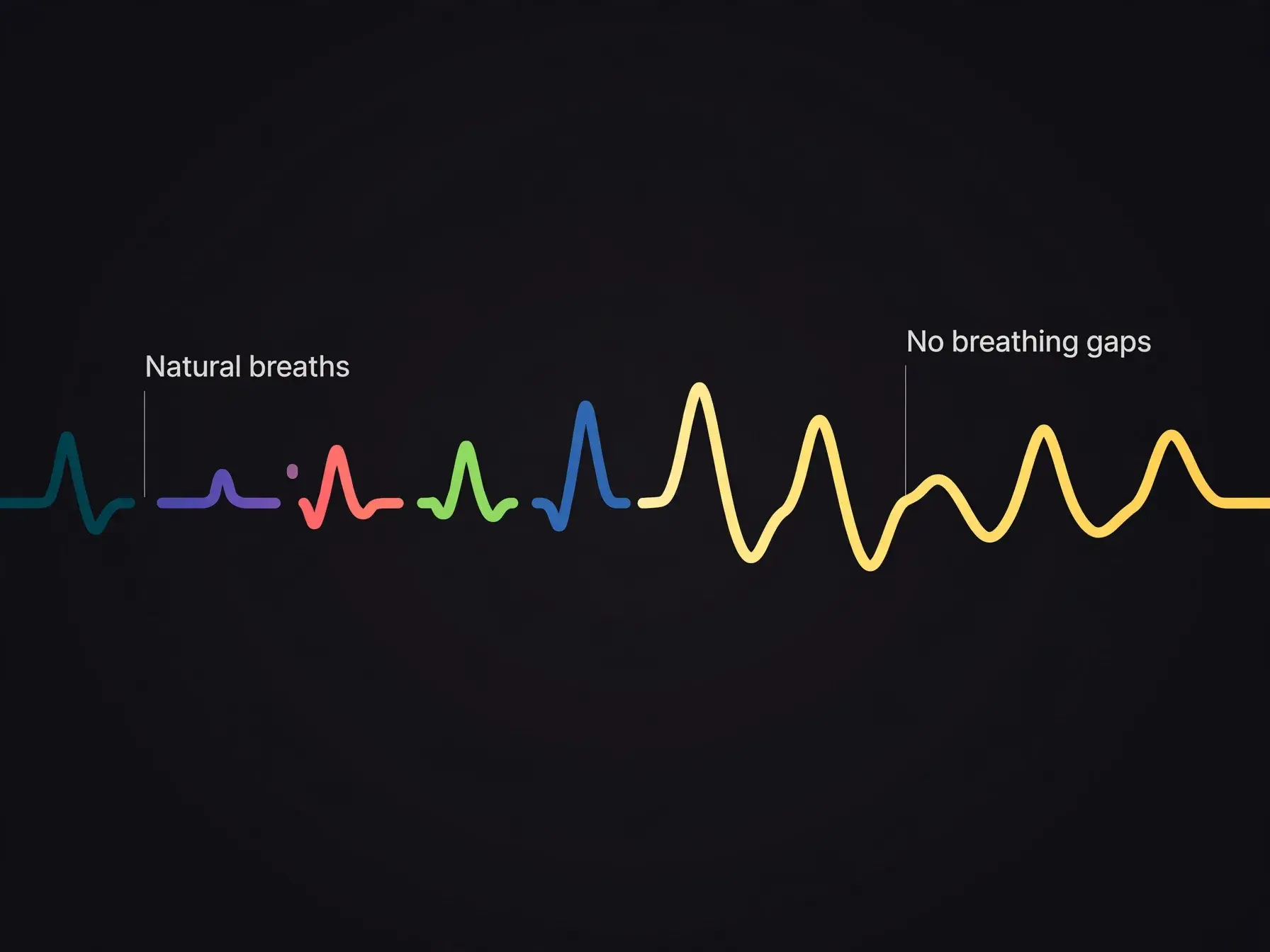
Vocal waveform comparing natural breath gaps with phrases that run together without breaths

Four steps to inspect suspicious audio tracks

Running audio through an online AI song checker provides a fast baseline before you examine the stems manually. If you suspect an upload is synthetic, following a structured evaluation process helps you gather clear evidence.

  1. Download the clearest available audio file and open it in a basic spectrogram viewer.
  2. Zoom into the ten to twenty kilohertz band to inspect whether the high frequencies show hard cutoff shelves or smeared noise blocks.
  3. Use an audio stem splitter to isolate the vocal stem from the backing track, which makes hidden robotic phase glitches obvious.
  4. Cross-reference the lyrical phrasing against online rhyming engines and search engines to check if the verses were written by a text generator.

Testing an online AI song generator can give you helpful hands-on experience with these synthetic structures. Following these concrete steps lets anyone detect AI music with dependable precision.

Why automated tools struggle with newer audio models

Every modern AI music detector relies on probability scores that become less reliable as generative models advance. These scanner applications analyze audio files for mathematical compression artifacts that older diffusion engines left behind. As neural networks learn higher sample rates and cleaner phase modeling, automated scanners produce frequent false positives and false negatives, as examined in our AI song generation study 2026.

A human producer using vintage distortion plugins or tape saturation can accidentally trigger an alert from an automated scanner. Conversely, modern commercial synthetic models can generate pristine forty-eight kilohertz audio that sails right past automated filters without raising a flag. You should treat automated scorecards as helpful indicators rather than definitive proof.

Combining mechanical scanners with critical human listening delivers the most accurate verdict. Listening for emotional nuance, lyrical logic, and rhythmic pocket still outperforms algorithms that merely inspect raw waveform density.
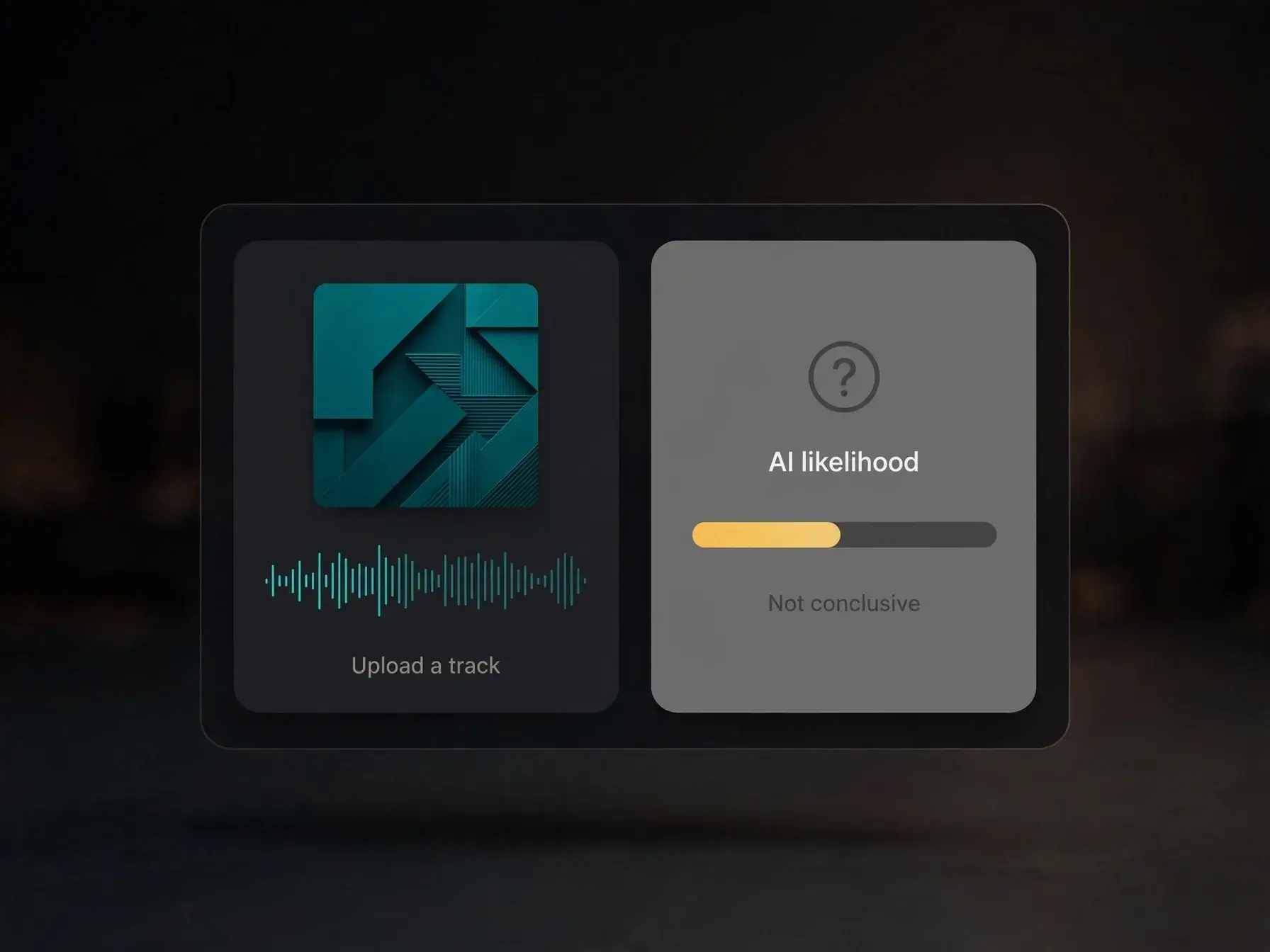
Generic AI music detector showing an uploaded track with an inconclusive AI likelihood result

Investigate artist profiles and release history

Investigating the creator behind the music often answers your questions faster than analyzing waveform decibels. Digital streaming platforms now host millions of ghost accounts managed by automated distributor bots that upload dozens of instrumental tracks every single week, a trend detailed in recent AI music statistics 2026.

Check the artist profile on Spotify, Apple Music, or YouTube to see if they possess any verified social media presence or live performance history. Genuine independent musicians usually link to Instagram, TikTok, or personal band websites where they show studio sessions, behind-the-scenes clips, or live tour dates. An artist profile featuring an AI-rendered stock avatar with zero external web presence is a major warning sign.

Release cadence also offers unmistakable context. If a brand-new profile with no past catalog suddenly publishes ten full-length albums across eight different genres in two months, automated software is driving the output. Checking release dates and production credits helps you identify AI songs before you even press play.

Spotting synthetic audio when lyrics sound generic

Lyrical themes provide another immediate clue when you evaluate unfamiliar audio while streaming a trending playlist. Generative language models lean heavily on predictable metaphors, dramatic cosmic phrasing, and rhyming pairs like fire and desire or shadows and light. The verses often sound grammatically flawless while expressing zero personal lived experience or specific narrative details, raising common questions about is AI music legal when copyrighted styles are emulated.

Song structure in synthetic music also tends to drift or repeat without intentional tension and release. Human songwriters place strategic pre-choruses, rhythm drops, and vocal ad-libs that build emotional momentum toward a hook. In algorithmic tracks, verses often wander through identical chord progressions for minutes without developing the melodic theme.

Understanding how these tracks are constructed helps you appreciate real songwriting craft, and if you want to experiment yourself, OnMusic AI's AI music generator lets you test how text prompts turn into melodies firsthand. Exploring prompt generation directly makes spotting machine patterns in the wild second nature.
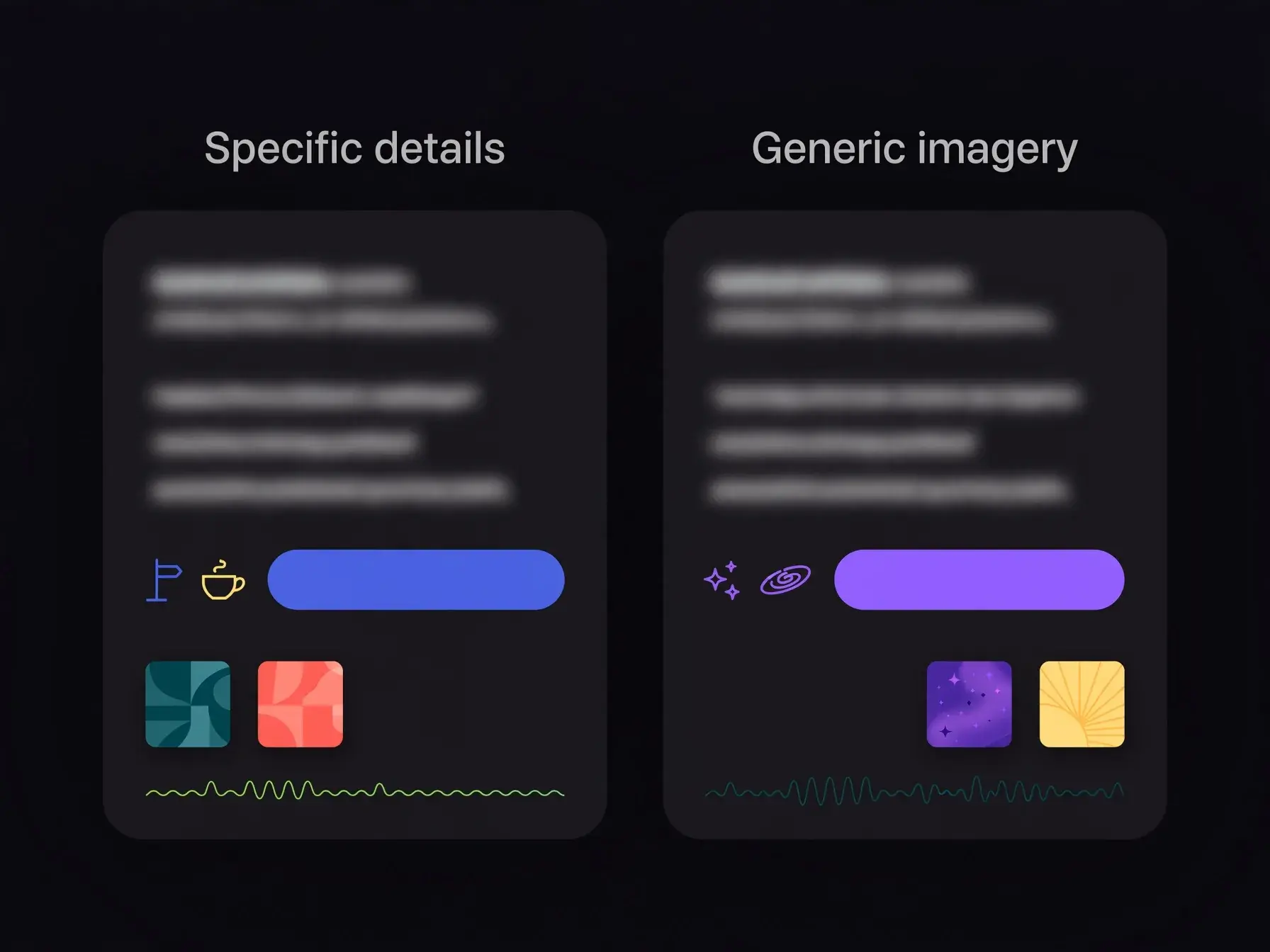
Comparison of lyrics with specific details versus generic cosmic imagery

The bottom line on spotting artificial audio

Spotting AI music comes down to balancing technical ear training with quick background checks. Listen closely for phase issues, unnatural vocal breathing, and metallic artifacts in the high frequencies, while also checking the artist catalog and streaming metadata. Synthetic tools will continue to improve, but combining critical listening with basic profile verification remains the most dependable way to identify generated audio.

Common questions about how to tell if a song is AI

Find straightforward answers to technical audio questions and learn to spot AI music across streaming services and social platforms.

How to tell if a song is AI?

Spotting an AI song starts with listening closely for unnatural vocal textures and blurry instrument separation. Synthetic vocals often lack authentic breath cadence, while cymbals and high frequencies may carry a watery, metallic swish. Checking production credits or catalog history on streaming profiles will quickly reveal whether a human artist or an automated pipeline produced the audio.

How can you identify synthetic tracks when listening on Spotify?

When checking whether a track is computer-made on Spotify, inspect the artist profile for missing tour dates, generic cover art, and sudden mass uploads of ambient or lo-fi music. Many fully synthetic projects put out dozens of songs weekly under randomized pseudonym names. If the song lacks detailed songwriter credits and exhibits perfectly locked micro-timing without human variation, algorithmic tools are likely involved.

How to spot AI music using audio cues and frequency checks?

Learning how to spot AI music involves training your ear on high-frequency distortion, phasing artifacts, and missing room acoustic noise. Neural audio synthesizers frequently smear drum transients, making snare hits and hi-hats sound muffled or unnaturally merged with the vocal track. An abrupt ending or unresolved harmonic chord progression also points strongly toward an algorithmic origin.

Can an AI generated music detector reliably confirm synthetic tracks?

An AI generated music detector uses spectral analysis and watermark scanning to calculate the probability of synthetic origin, but it is rarely infallible. Rapid updates in neural synthesis mean newer models can bypass detection algorithms that search for older compression artifacts. While detection software offers a strong clue, combining digital scans with manual lyric and metadata inspection yields the most reliable verdict.

How does an AI music generator work behind the scenes?

An AI music generator works by training deep learning models on vast libraries of audio recordings, MIDI arrangements, and descriptive text prompts. When a user inputs a text description, the neural network predicts musical patterns, synthesizing instruments, rhythms, and synthesized vocals into a cohesive audio file. Modern tools like OnMusic AI's AI music generator transform text prompts directly into finished compositions with distinct verses and hooks.

Does autotune count as AI in modern music production?

Traditional autotune is pitch-correction digital signal processing, not artificial intelligence. It shifts incoming audio pitches to the nearest semitone according to algorithmic math rather than generative neural training. Newer vocal tools sometimes incorporate machine learning for natural vibrato preservation, but conventional pitch correction alone does not make a song synthetic.

Can you identify automated lyrics based on writing structure?

Lyrics created by language models often rely on predictable rhyming schemes, cliché emotional tropes, and repetitive metaphors about shadows, neon lights, or digital horizons. Human songwriters introduce quirky personal references, cultural slang, and asymmetrical phrasing that language models rarely invent spontaneously. If every stanza shares identical syllable counts and surface-level emotional depth, machine writing may be the source.

Is AI music illegal on Spotify or other streaming services?

Distributing synthetic music on streaming services like Spotify is completely legal, provided the track does not infringe on registered copyrights or unauthorized vocal likenesses. Platforms actively remove fraudulent plays, bot streaming farms, and unapproved impersonations of celebrity artists to protect system integrity. Many digital distributors now ask uploaders to declare whether an AI music generator created the track.

What famous songs were written by AI or gained mainstream notoriety?

Notable mainstream tracks include Heart on My Sleeve by the pseudonymous creator Ghostwriter, which simulated Drake and The Weeknd, sparking global industry debates before streaming platforms removed it. Earlier research benchmarks include Daddy's Car in 2016, composed using Sony's Flow Machines software. In commercial pop, artists increasingly use assistive algorithms to draft structural ideas and chord progressions rather than releasing fully synthetic vocals.

What is the number 1 AI generated song in commercial charting history?

Tracks like Heart on My Sleeve attracted hundreds of millions of social views, but country parody song Walk My Walk reached notable independent chart positions in early 2024. Because charting platforms and labels frequently flag or filter pure synthetic uploads, official number-one records remain dominated by human performers using software tools. Industry trends suggest hybrid collaborations will hit mainstream countdowns more frequently.

Who is the most famous AI singer or virtual artist right now?

Hatsune Miku stands out as the most historically influential virtual singing synthesizer, performing sellout hologram concerts worldwide since 2007. In contemporary generative music, virtual personas like Miquela and synthetic groups created by major entertainment agencies represent the modern wave of algorithmic celebrity. These projects combine human creative direction with synthetic vocal modeling to release regular commercial singles.

How can listeners detect deepfake vocal clones of real artists?

Deepfake vocal clones typically stumble on micro-inflections, emotional dynamics, and authentic vocal strain during high notes. Cloned vocals often sound strangely smooth, with words fading abruptly into background reverb without natural vocal cord vibration. You can also spot vocal clones by monitoring an artist's official social channels, as legitimate major releases are always announced across verified accounts first.

Why do synthetic songs often have strange or muddy cymbal sounds?

High-frequency transients like hi-hats, tambourines, and crash cymbals require substantial acoustic detail that generative audio models struggle to synthesize cleanly. Compression and diffusion models often blend high frequencies into a swishing, metallic hiss resembling a low-bitrate MP3 encoding artifact. Human-engineered mixes maintain sharp, isolated cymbal attacks that sound distinct from adjacent vocal tracks.

Can stem separation tools help confirm whether a song is synthetic?

Isolating individual tracks using stem splitting technology helps expose synthetic artifacts that normal multi-track mixes conceal. When you strip the backing track and isolate the solo vocal, synthetic tracks reveal phase cancellations, unnatural robotic undertones, and absent inhalation sounds between sung lines. Human vocal recordings preserve distinct throat noises, natural vibrato fluctuations, and authentic room reverberation.

How do virtual performer social accounts differ from real musicians?

Synthetic artist accounts generally lack candid behind-the-scenes studio videos, live performance clips, and spontaneous community interactions. Their social media feeds usually feature repetitive digital graphics, stock promotional clips, and automated bio links pointing directly to streaming playlists. If an artist with hundreds of thousands of monthly listeners has zero live concert footage or verified interviews, they are likely an artificial persona.

Can anyone make their own track using an AI music generator online?

Yes, modern creative platforms make it straightforward for everyday listeners to compose songs from simple text prompts. With OnMusic AI's AI music generator, users can choose styles, generate custom lyrics, and produce complete songs with full vocals in minutes. Anyone can start making songs online without purchasing recording hardware or mastering complex audio workstations.

See similar blogs

More from the blog

Turn your musical ideas into finished songs today

Describe your favorite style, add custom lyrics, and let OnMusic AI create complete songs with vocals in minutes.

Create Music Free
  • Free to start, no signup required
  • MP3 downloads included on every plan
  • Dozens of genres with custom vocals