
Two kinds of Spanish song translation
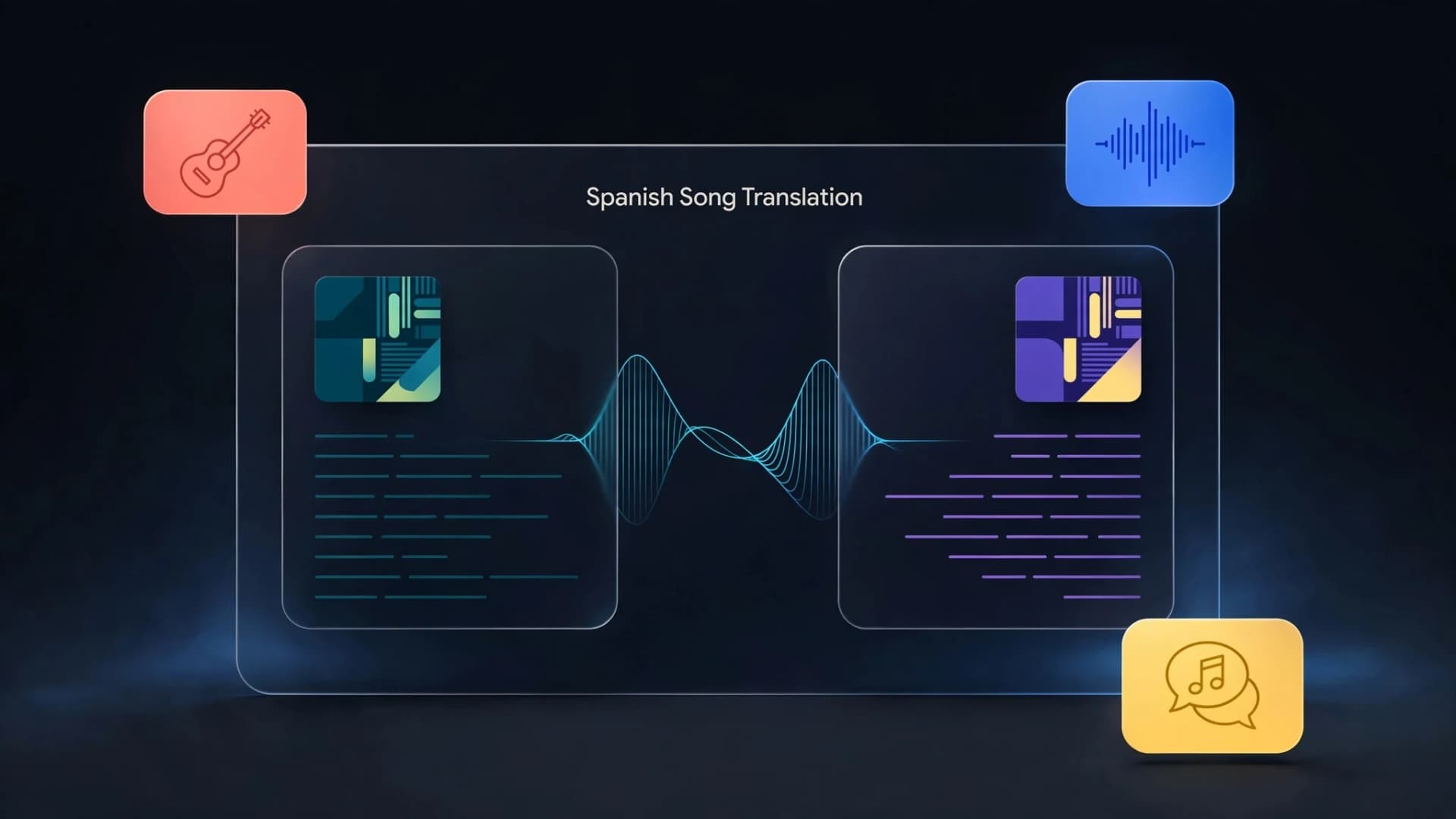
People who search for a Spanish song translation usually want one of two things, and it helps to know which one you need before you start.
A translation to understand the song. You want to know what a reggaeton hit, a bolero or a corrido is really about. Here, accuracy matters more than rhythm. A line-by-line translation that keeps every image and explains the slang is the goal, even if it would be impossible to sing.
A translation to sing the song in English. You want an English version for a cover, a school performance, a video or a gift. Here the melody is fixed and the English words must fit it. You will change words, swap images and even move ideas between lines, as long as each section still says the same thing.
Most problems in Spanish music translation come from mixing the two: a singable version that drifts too far from the meaning, or a literal version someone tries to sing. Whenever you translate Spanish song lyrics, start with the literal version. It is the map you will keep coming back to while you rewrite.
Why word-for-word Spanish lyrics do not fit the melody
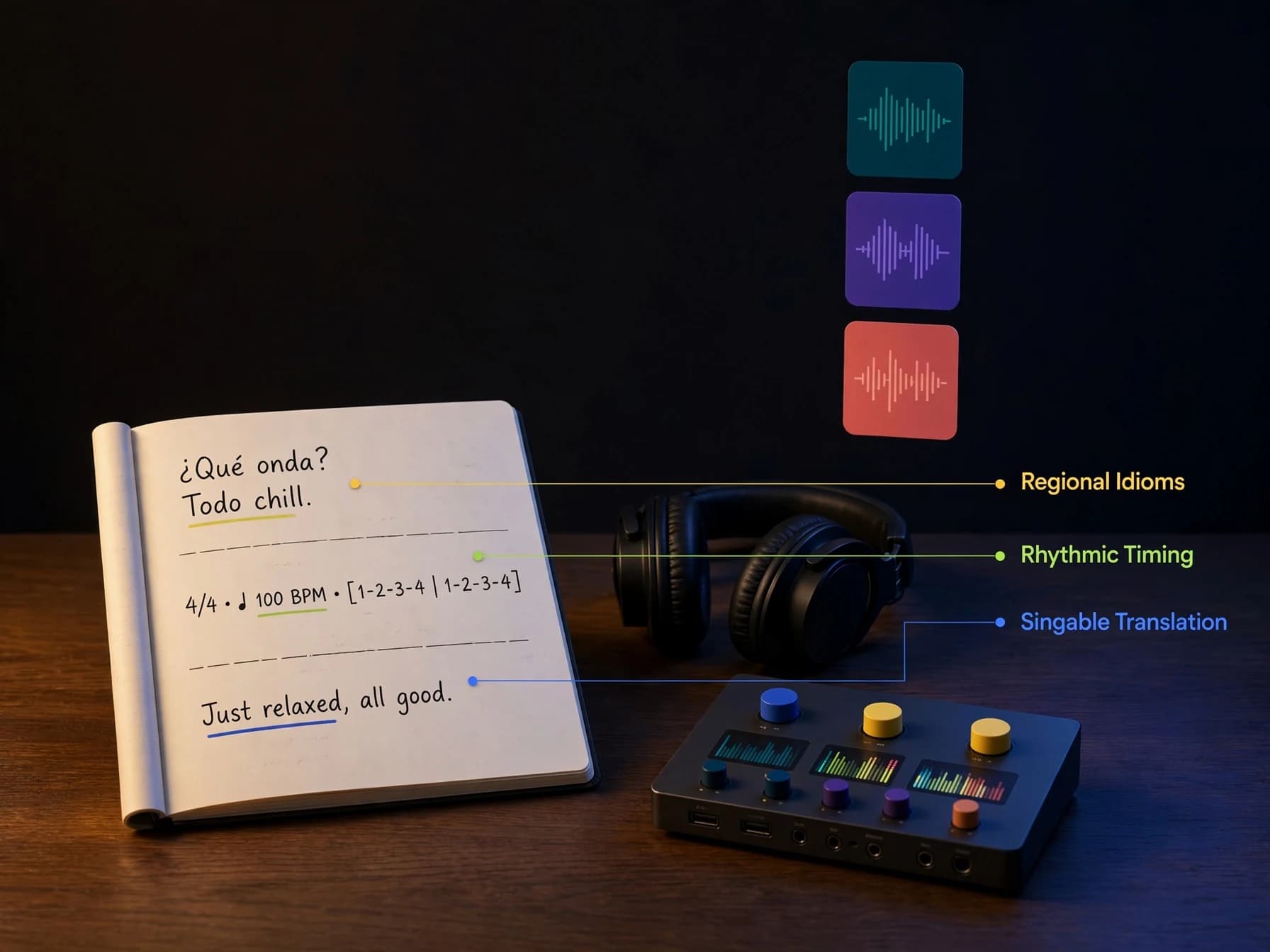
Spanish and English sit on the beat very differently, which is why a correct translation can still sound wrong when sung.
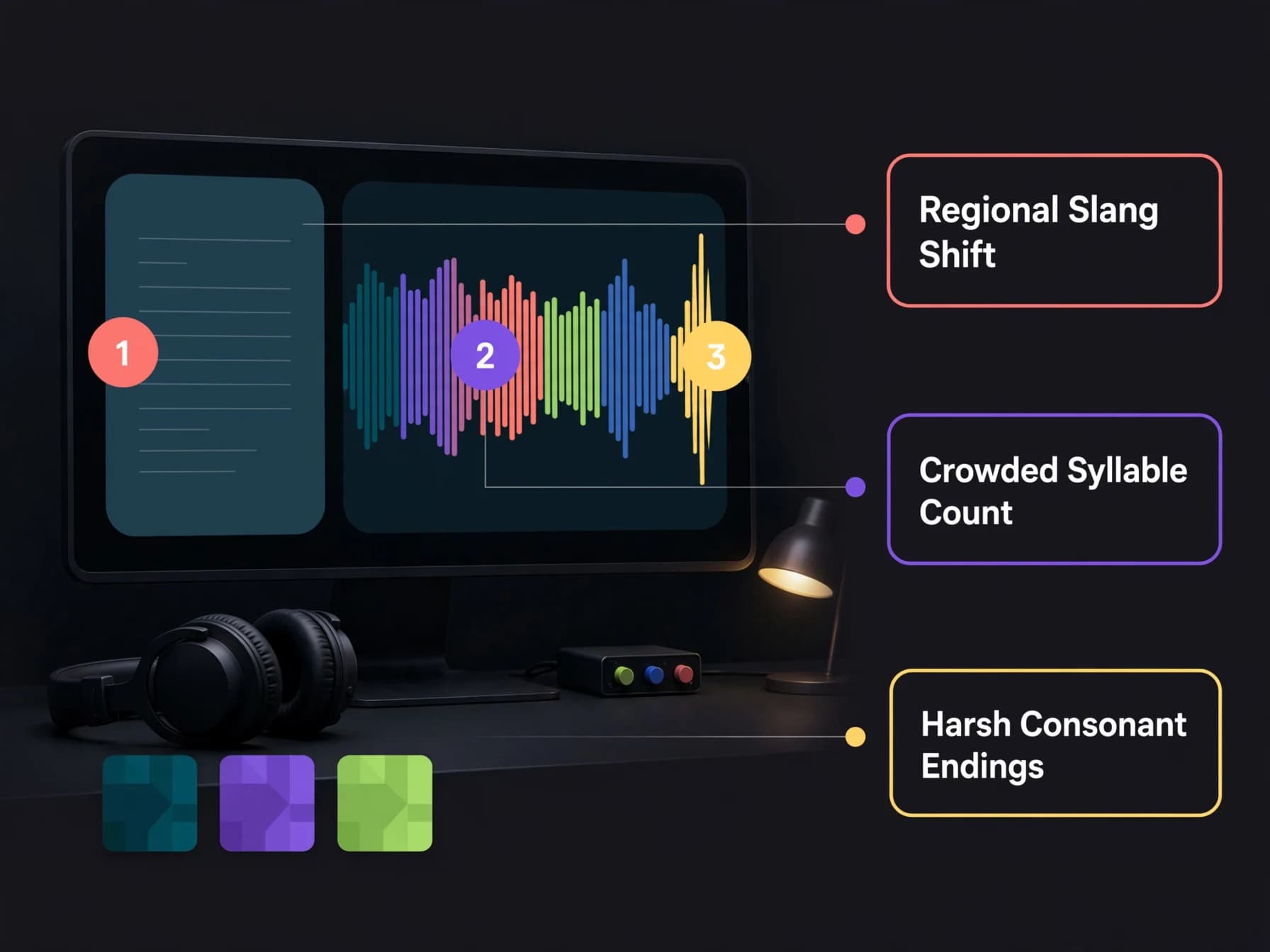
- Spanish words end in vowels. Words like corazón, vida, noche and luna end on open sounds that a singer can hold. English words often end in consonants (heart, night, love), which are harder to sustain on a long note.
- Spanish singers merge vowels. In a sung line, the end of one word and the start of the next often blend into one syllable (te_espero, la_orilla). Count the syllables you hear, not the ones on the page.
- Spanish lines carry more syllables. Many everyday Spanish phrases need more syllables than their English meaning. That is good news for English versions: you usually have room to spare, so you can add a word for rhythm instead of cutting meaning.
- Stress moves. Spanish often stresses the last or second-to-last syllable of a line. Your English line has to put a strong word in that same spot.
The fix is to rewrite each line against the melody, not against the Spanish text. Keep the rhyme scheme pattern of the original where you can, especially at the end of chorus lines.
How to translate a Spanish song to English in four steps
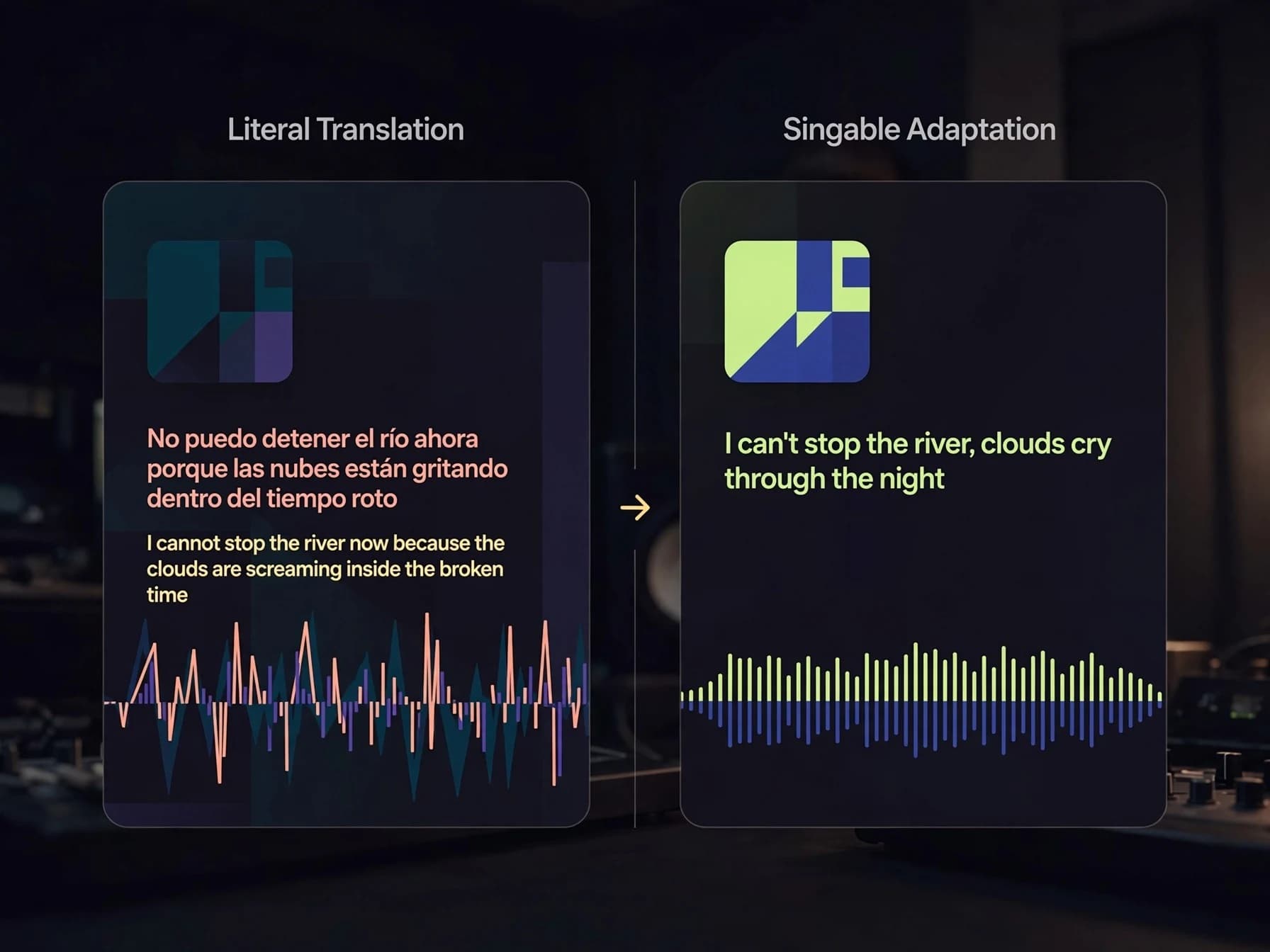
This method works for any genre, from ballads to dembow:
- Get a clean literal version. Paste the lyrics into a line-by-line lyrics translator (no account needed), then read it next to the Spanish and correct anything that sounds off.
- Write a one-line summary per section. "Chorus: he says he is done with her, but he keeps calling." This keeps the meaning on track when the words change.
- Rewrite line by line to the melody. Match the sung syllable count, put strong words on strong beats and choose open vowels for held notes.
- Sing it over the track. Fix any line that rushes, stretches or trips.
A worked example (an invented line):
"I'm done with you" is not a literal translation of ya me cansé, but it keeps the feeling, the length and the punch of the line.
Can AI translate and sing a Spanish song in English?
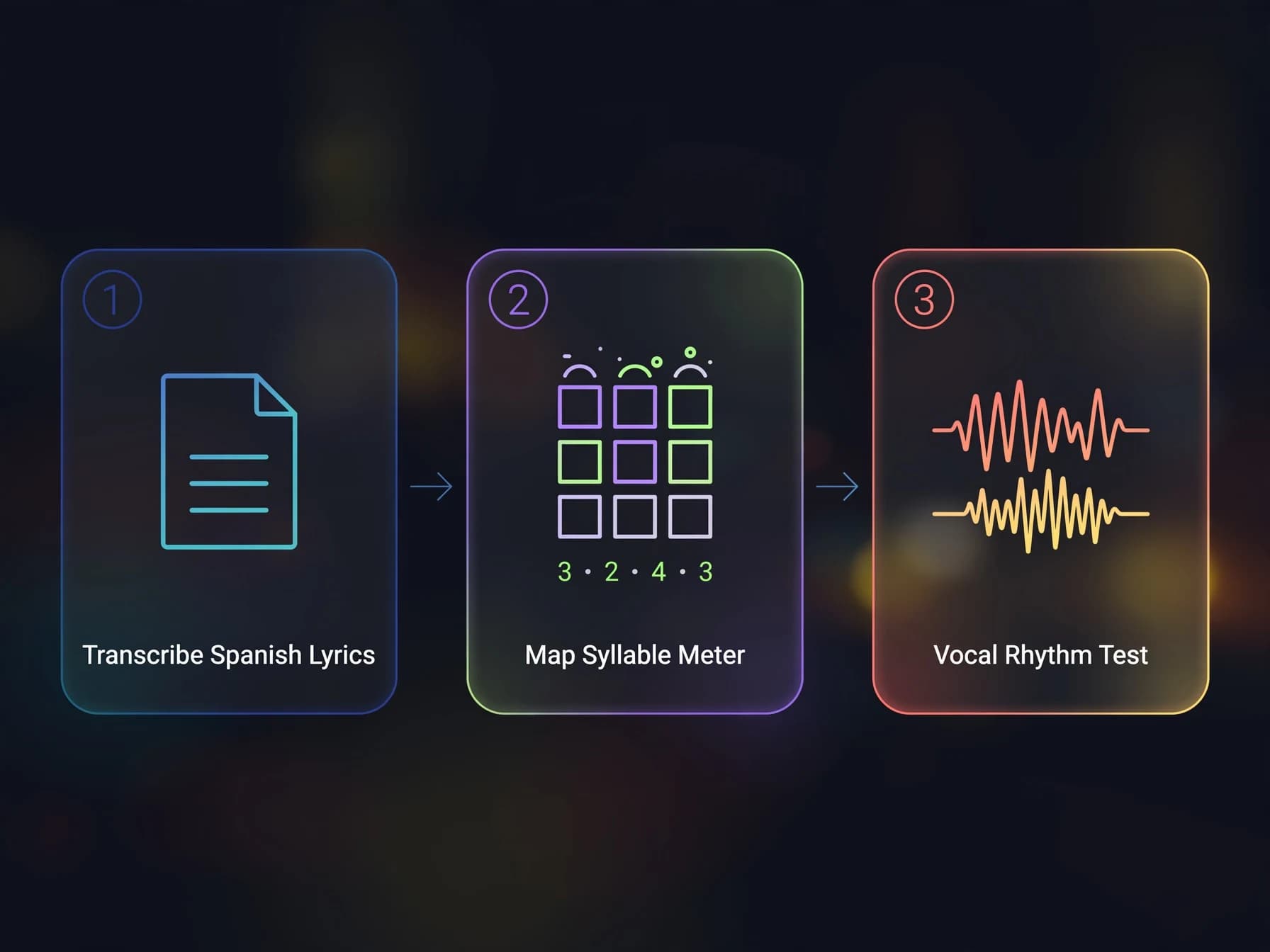
AI can now do both halves: write singable English lines and sing them over the original music. The result is a draft you should review, not a finished translation.
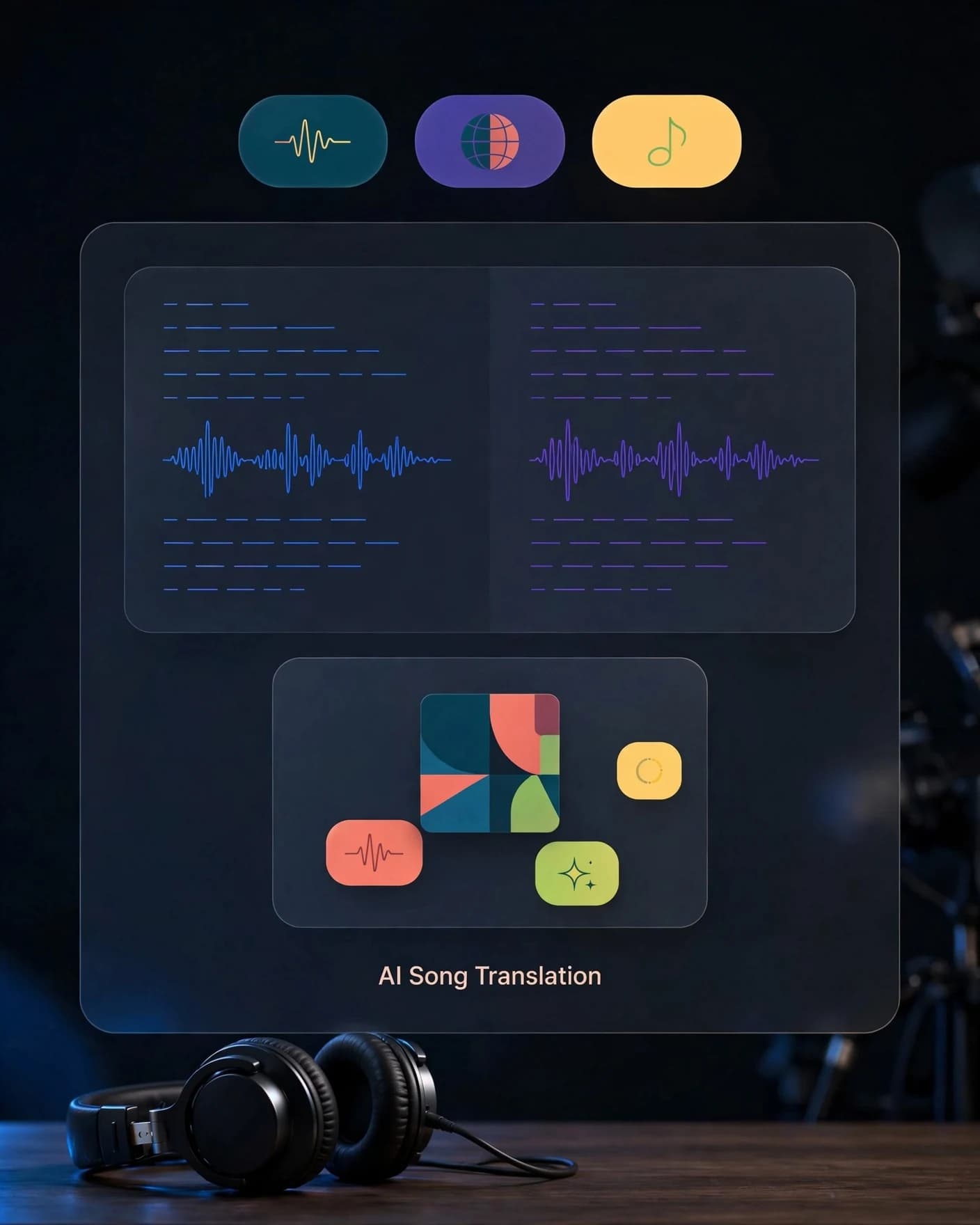
With the OnMusic Song Translator, you upload a Spanish song (up to 60 MB and 6 minutes) or pick one from your OnMusic library and choose English as the target language. OnMusic reads each sung line with its timing and writes an English line meant to fit the same notes. Before anything is sung, you can edit every line, which is where the steps above come in: fix slang the AI read too literally, restore a rhyme or swap a word that lands badly on a long note. The sung parts are then replaced section by section, keeping the singer's voice by default.
It also works the other way, from English into Spanish, and covers 10 languages in total. Song Translator is on paid plans (30 credits per section of about 4 lines, refunded automatically if a job fails). To compare options, see our list of the best AI song translators.
Slang and double meanings to watch for
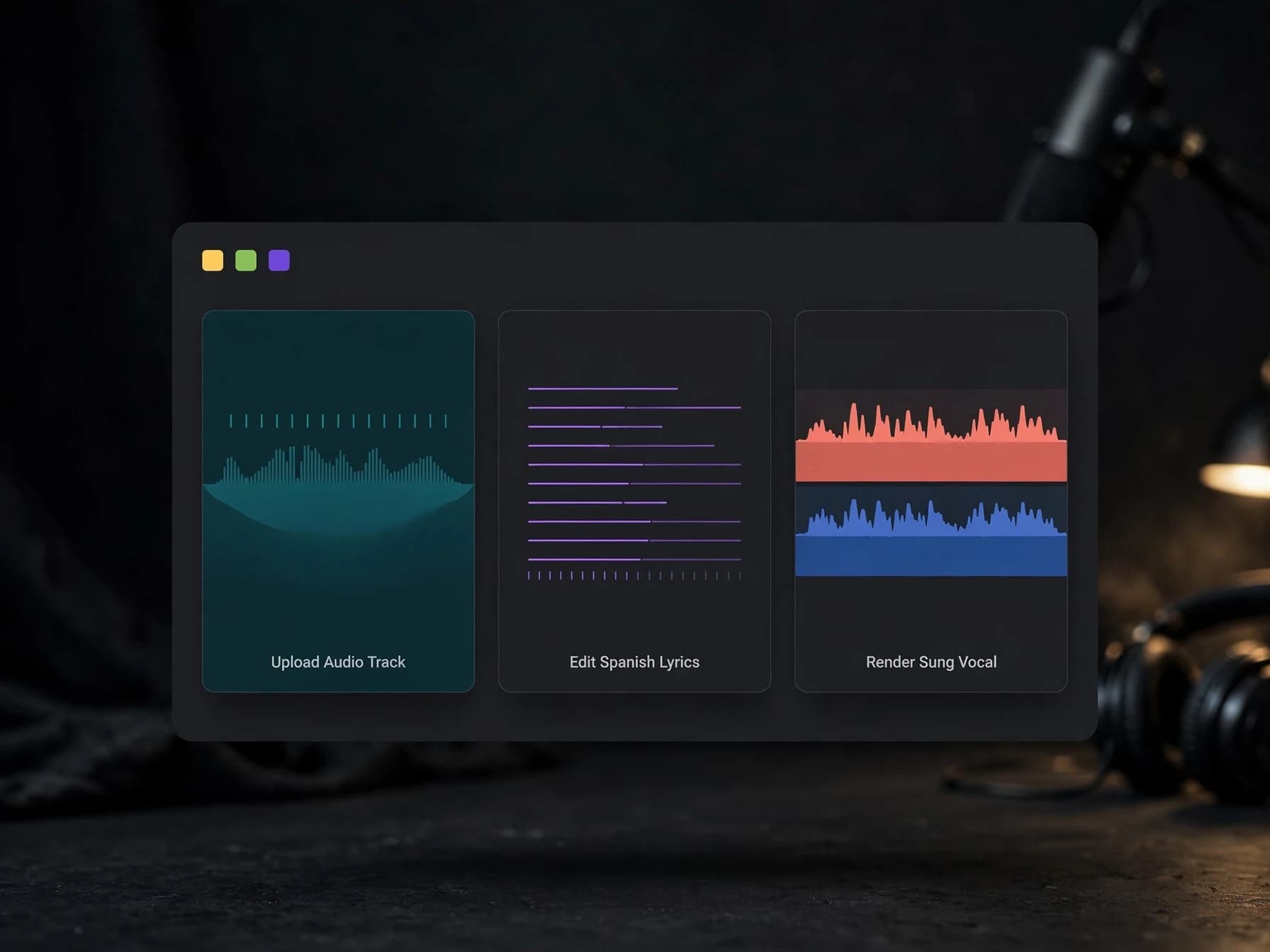
Spanish is spoken in more than 20 countries, and song lyrics lean hard on local slang. Before you translate a tricky phrase, find out where the artist is from; the same word can mean different things in Mexico, Puerto Rico, Colombia, Argentina or Spain.
Watch for these:
- Terms of endearment. Words like mami, papi, bebé and mi amor are everyday affection in many songs. Translating them literally can sound odd or much stronger in English; "baby" or "babe" is often closer.
- Regional slang. Words for work, money, friends or partying change from country to country. Look the word up with the country in mind instead of trusting one general dictionary.
- Double meanings. Reggaeton and urban songs often hide a second meaning in an innocent word. Decide whether your English version keeps the wink, explains it or drops it.
- Spanglish. Many songs already switch between Spanish and English. Keep the English parts as they are; they are part of the song's sound.
- Tú and usted. English has only "you", so the difference between casual and formal address has to come through in tone instead.
What you can do with an English version
Once you have a singable English version, there is a lot you can do with it:
- Learn the song properly. Singing the English and Spanish versions side by side is a fun way to learn the language behind your favourite tracks.
- Make a cover. Record your own take, or use an AI song cover generator to hear the song in a different voice.
- Make a bilingual version. Keep the Spanish chorus and sing the verses in English, or the other way round. Many Latin hits already mix languages this way.
- Share it as a gift. A favourite song translated for someone who does not speak Spanish can mean a lot.
If you plan to publish or sell an English version of someone else's song, check the rights first. A translation is a new version of the original work, and releasing it usually needs permission from the rights holders. Our guide on whether AI music is legal explains what to look out for.