
Why K-pop lyrics in English are hard to get right
A K-pop song can switch languages several times in one verse. Rap parts, the hook and the title are often in English, the verses in Korean, and a few lines mix both. On top of that, Korean grammar, honorifics and fan culture all shape what a line really means.
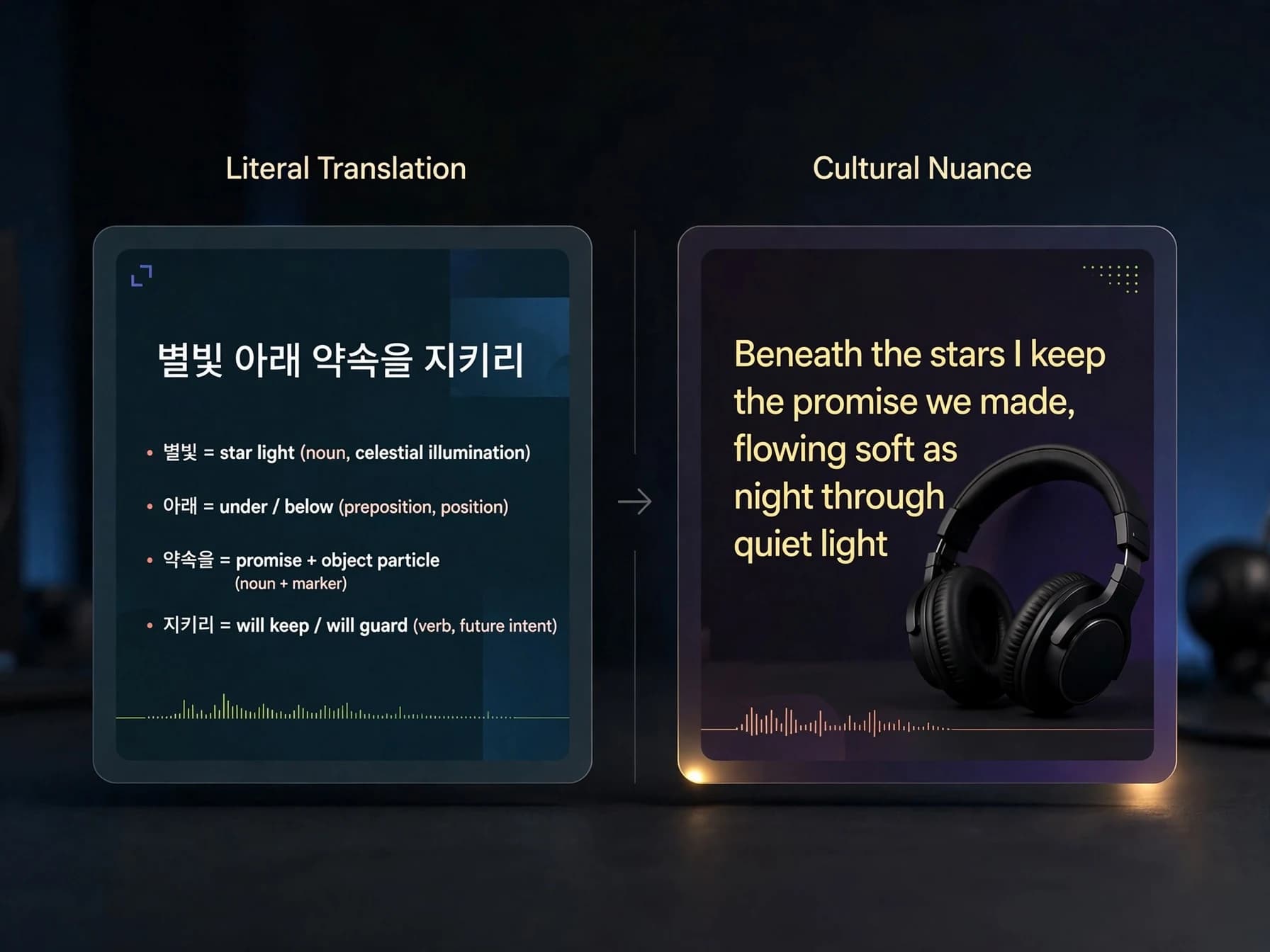
A literal translation of the Korean parts gets you the dictionary meaning, but it often misses:
- Word order. Korean usually puts the verb at the end of a sentence. In a song, that means the strongest word of a line often comes last, right on the held note. A literal English line moves it to the middle.
- Who is talking to whom. Korean can drop "I" and "you" entirely, because the verb ending and context make it clear. English needs a subject, so you have to decide who it is.
- Tone. Verb endings show whether a line is casual, polite, playful or cold. English has to carry that tone through word choice.
That is why fan-made K-pop English lyrics for the same song can differ so much, and why no K-pop lyrics English translation is the only correct one. Each translator makes small decisions about meaning, tone and rhythm. The good news: once you know the decisions, you can make them on purpose.
Konglish, honorifics and wordplay
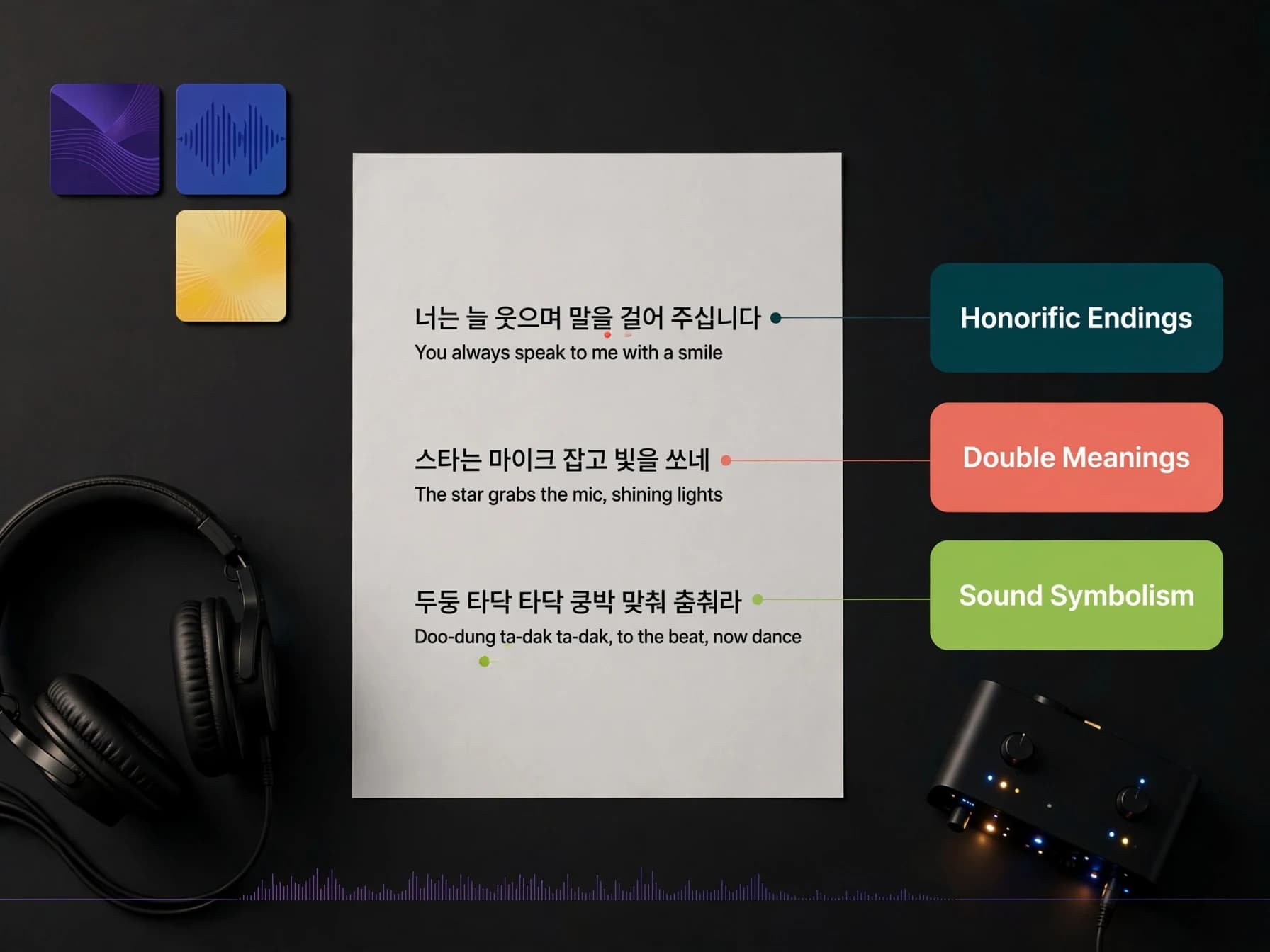
Three features of K-pop lyrics need a decision every time you meet them.
Konglish and English lines. Many songs use English words inside Korean lines, or full English hooks. Keep the English as it is. If an English word is used in a Korean way (Konglish), translate the meaning, not the word: a word that looks English may mean something slightly different to a Korean listener.
Honorifics and family words. Words like oppa, unnie, hyung and noona show age and closeness between people. There is no single English match. For a lyric translation, keep them and explain them once in a note. For a singable English version, replace them with what they mean in that line: affection, teasing or respect.
Wordplay. Korean lyrics often play on words that sound alike, or on the shape of syllables. These puns almost never survive translation. Either explain the joke in a note or write a new pun in English that does the same job.
If you are writing your own K-pop song from scratch, our guide on how to make a K-pop song covers structure, hooks and language mixing from the start.
How to get K-pop lyrics in English, step by step
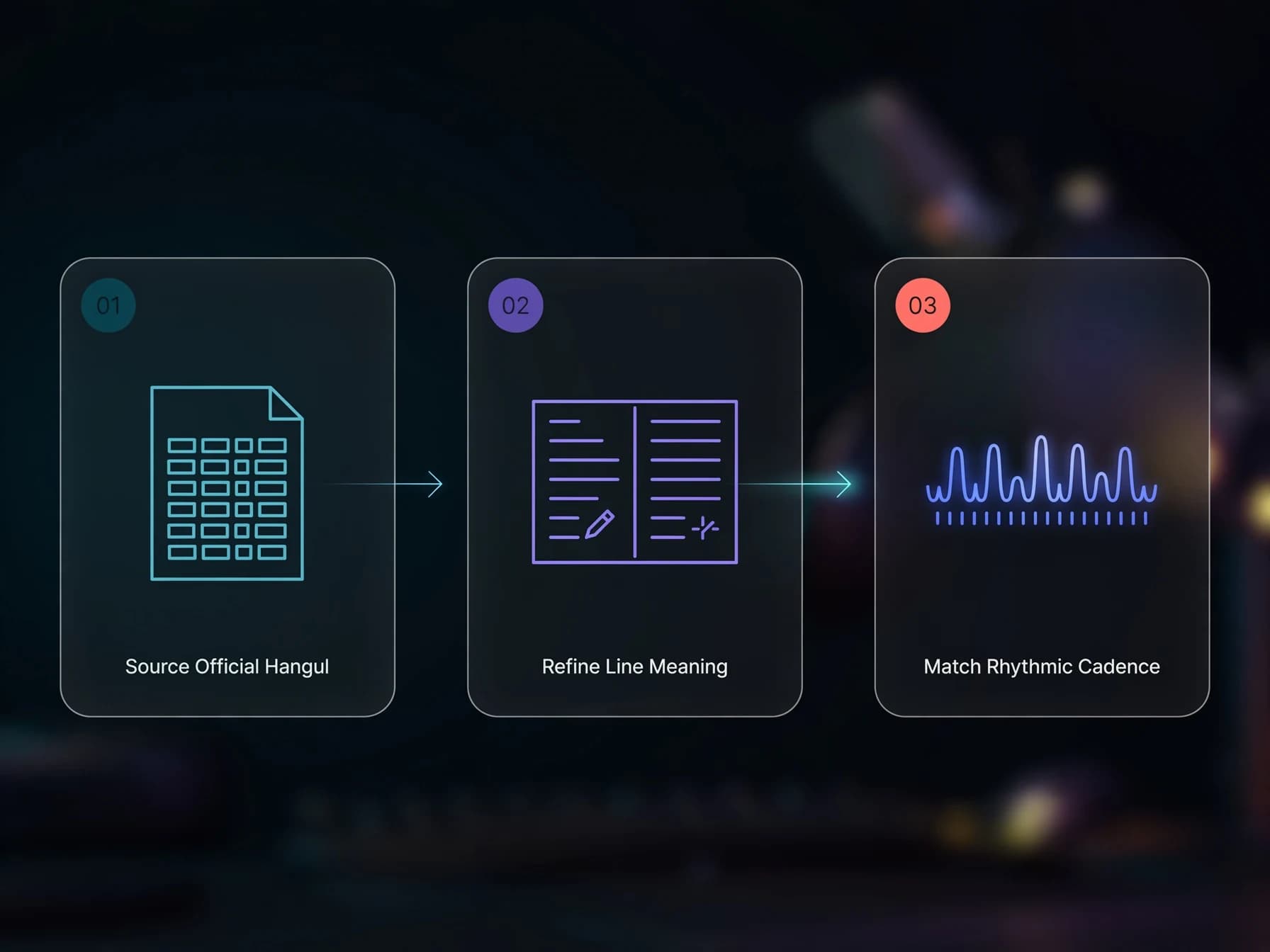
Use this method for a lyric translation or for singable K-pop lyrics in English:
- Split the lyrics by language. Mark which lines are already English and leave them alone.
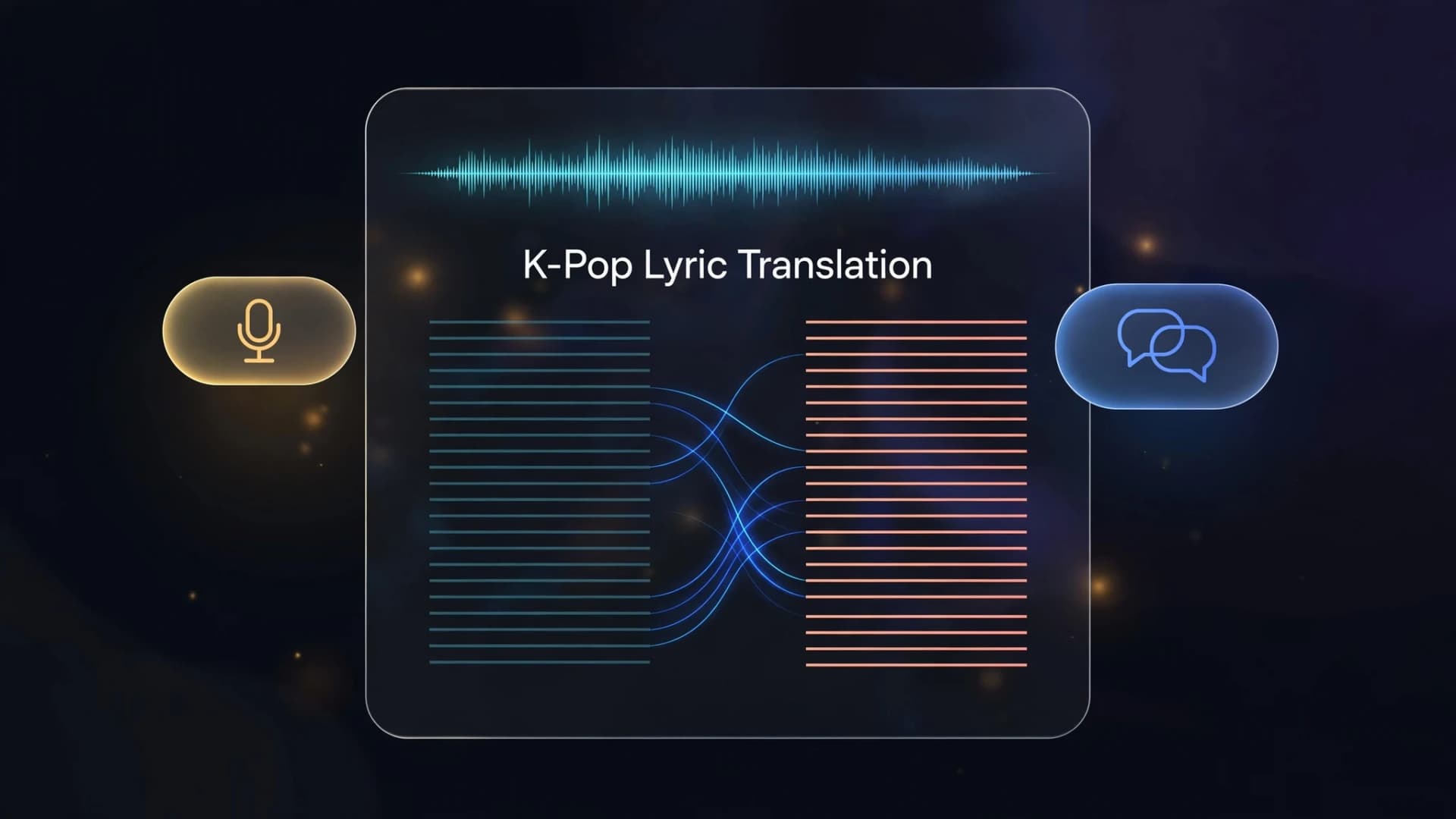
- Translate the Korean literally, line by line, with notes for honorifics, slang and puns. A line-by-line lyrics translator is a quick start and needs no account; check its output against fan translations you trust.
- Summarise each section in one sentence, so you know what the verse, pre-chorus, chorus and bridge are saying.
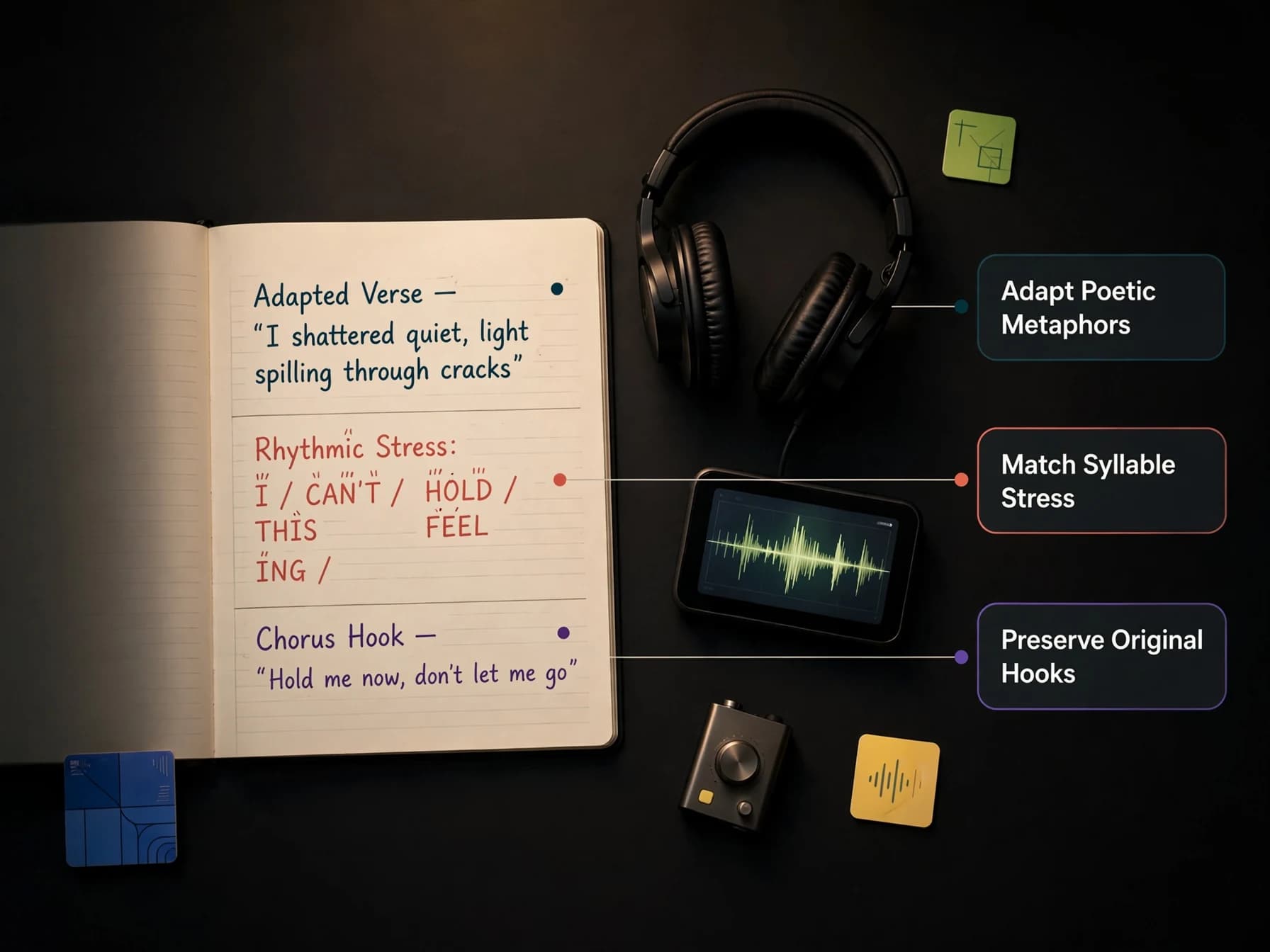
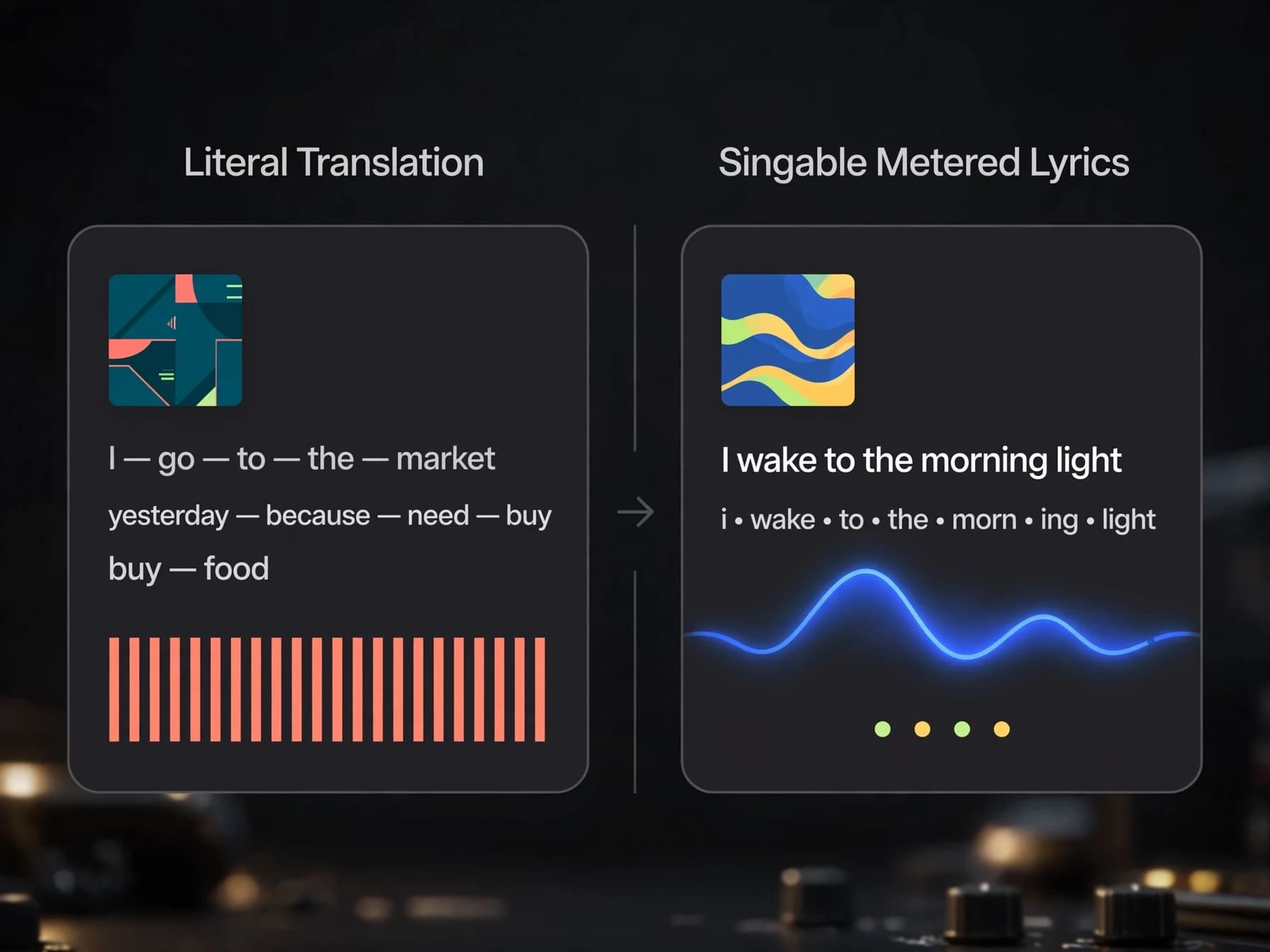
- For a singable version, rewrite to the melody. Count the syllables the idol actually sings (Korean syllables are short and quick), place strong English words on strong beats and keep the key word of the line near the end, where Korean put it.
- Sing it over the instrumental and fix anything that rushes.
A worked example (an invented line):
Hearing a K-pop song sung in English
Once your English lines are ready, the fastest way to check them is to hear them sung in the original melody.
The OnMusic Song Translator does this for the sung parts of a track. Upload a song (up to 60 MB and 6 minutes) or pick one from your OnMusic library and choose English, or one of the other 9 target languages, Korean included. OnMusic reads each sung line with its timing and writes a singable line for it. You can edit every line before anything is sung, which matters for K-pop: fix honorifics the AI translated too literally, keep the English hook word for word, and move the key word back to the end of the line. The sung parts are then replaced section by section, keeping the singer's voice by default.
Fast rap verses and dense group vocals are the hardest parts for any AI, so expect to edit those lines most. It is on paid plans (30 credits per section of about 4 lines, with credits refunded if a job fails). For a side-by-side look at other tools, see the best AI song translators.
Making your own group instead? Our K-pop group name generator is a fun place to start.
Common mistakes in K-pop lyric translation
These are the mistakes that make English K-pop lyrics sound off:
- Translating the English parts again. If the hook is already in English, keep it exactly. Fans know it by heart.
- Forcing a subject everywhere. Adding "I" and "you" to every line makes the English heavy. Use them only where the meaning needs them.
- Losing the tone. A playful, teasing line translated into flat, formal English loses the character of the song. Read the Korean verb endings and match the mood.
- Keeping the Korean word order. "You, I, forever, will love" is accurate but unsingable. Rebuild the line in natural English and keep the strongest word at the end.
- Ignoring who sings which line. In group songs, different members sing different lines with different voices. A line given to a rapper can carry more syllables than one given to a main vocalist on a high note.
- Over-explaining in the lyric itself. Put cultural notes outside the song. Inside the lyric, every syllable has to earn its place.
Translate for the listener who will hear it once, not for a reader who can stop and look things up.