

How do Suno prompts shape pop and electronic songs?
Finding the best Suno prompts starts with balancing genre tags, tempo indicators, and vocal energy to build radio-ready hooks. OnMusic AI does not run Suno, but the same habits (genre first, then instruments, tempo and vocal) work with the models it does run, so you can try these prompts in its text-to-music tool too. If you are comparing tools, see the Suno alternatives roundup.
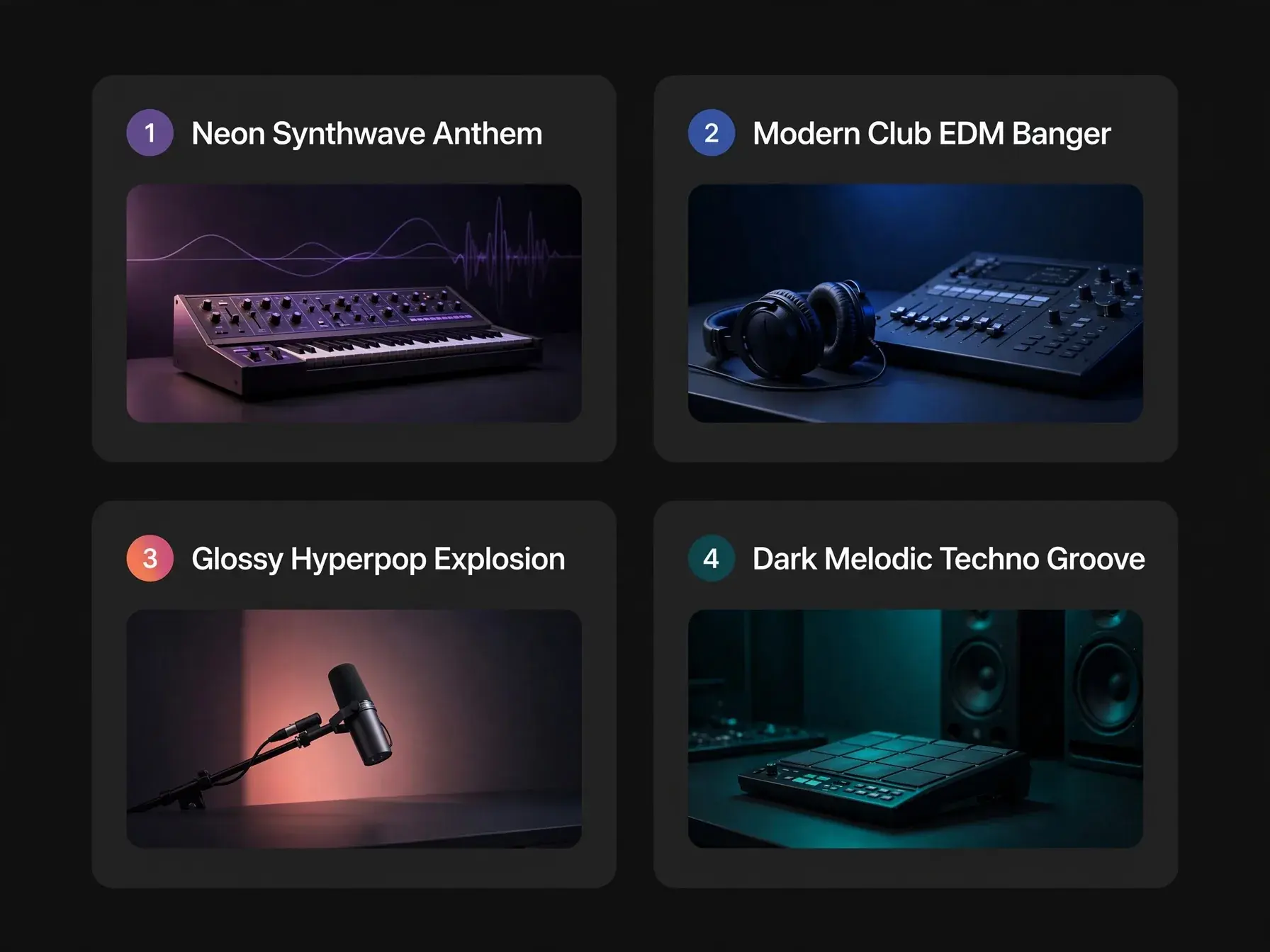
1. Neon Synthwave Anthem
Bright analog synthesizers carry a driving retro beat. Crisp electronic snare hits build momentum into an energetic chorus.
2. Modern Club EDM Banger
Heavy sub-bass pulses under sharp vocal chops and rising synth risers. A massive festival drop creates instant dancefloor power.
3. Glossy Hyperpop Explosion
Fast tempos and pitch-shifted vocal melodies combine with distorted bass hits. Playful electronic textures switch rapidly between verses.
4. Dark Melodic Techno Groove
Rolling bass sequences and hypnotic percussion loops create a late-night warehouse mood. Minimalist vocal echoes float across spacious reverb.
Suno style prompts for rock and alternative songs
Mastering Suno style prompts for guitar-driven music requires dialing in distortion levels, live drum dynamics, and raw vocal textures. These work well when testing tracks on Suno v5.5.
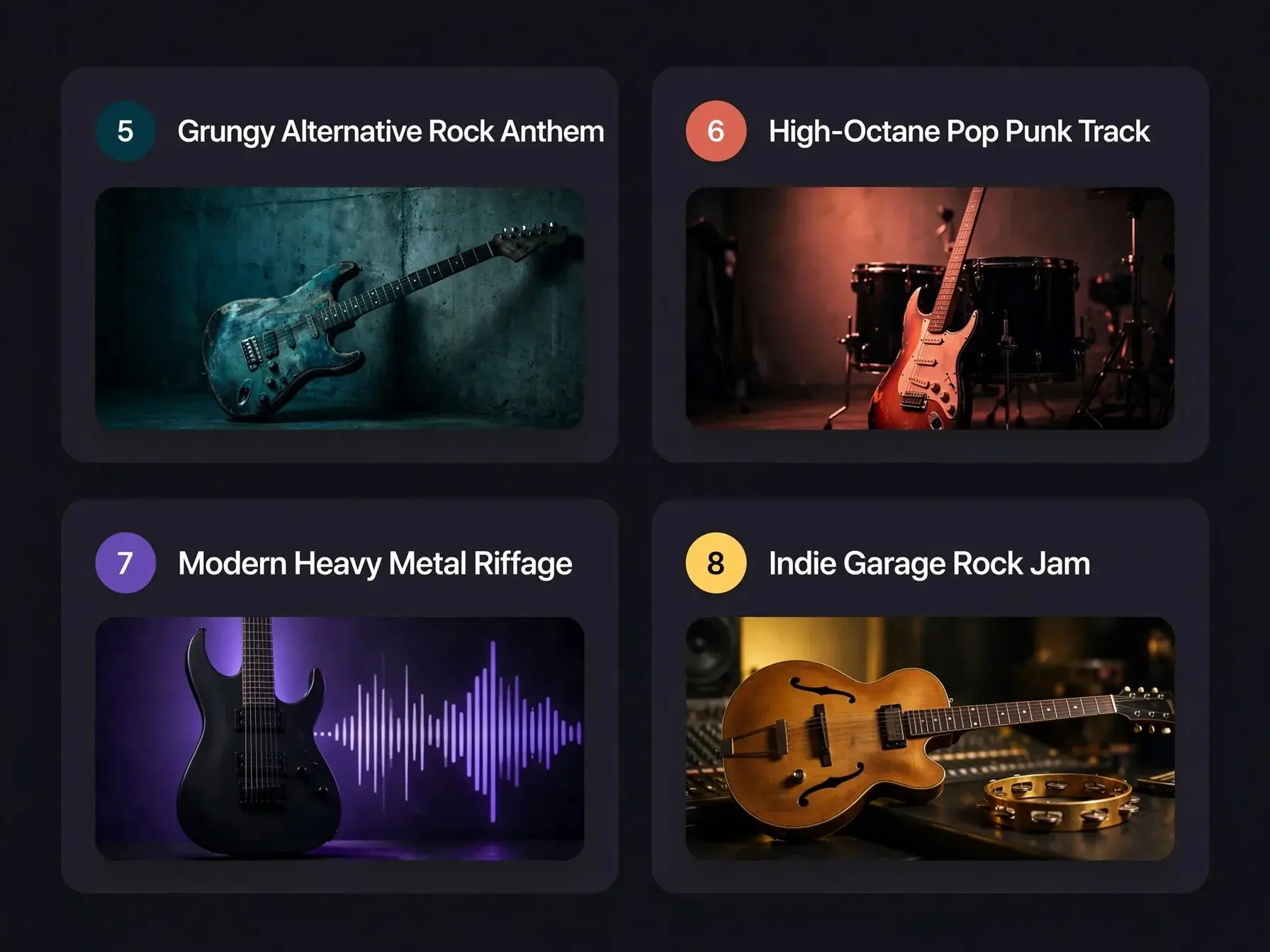
5. Grungy Alternative Rock Anthem
Overdriven guitars and punchy basslines lead into an explosive chorus. Distorted rhythm tracks provide grit and authentic garage energy.
6. High-Octane Pop Punk Track
Bouncy power chords and driving kick drums bring youthful rebellion to life. Melodic vocal hooks stay fast and bright throughout the runtime.
7. Modern Heavy Metal Riffage
Down-tuned seven-string guitars deliver rhythmic chugs alongside double-bass pedal bursts. Aggressive vocal delivery alternates between rhythmic screams and clean harmonies.
8. Indie Garage Rock Jam
Jangly rhythm guitars and vintage tambourine hits produce a breezy lo-fi groove. Casual vocal phrasing keeps the song warm and approachable.
Hip-hop and trap prompts with heavy basslines
Writing impactful hip-hop prompts requires locking in 808 sub-bass warmth, sharp hi-hat rolls, and crisp vocal cadences.
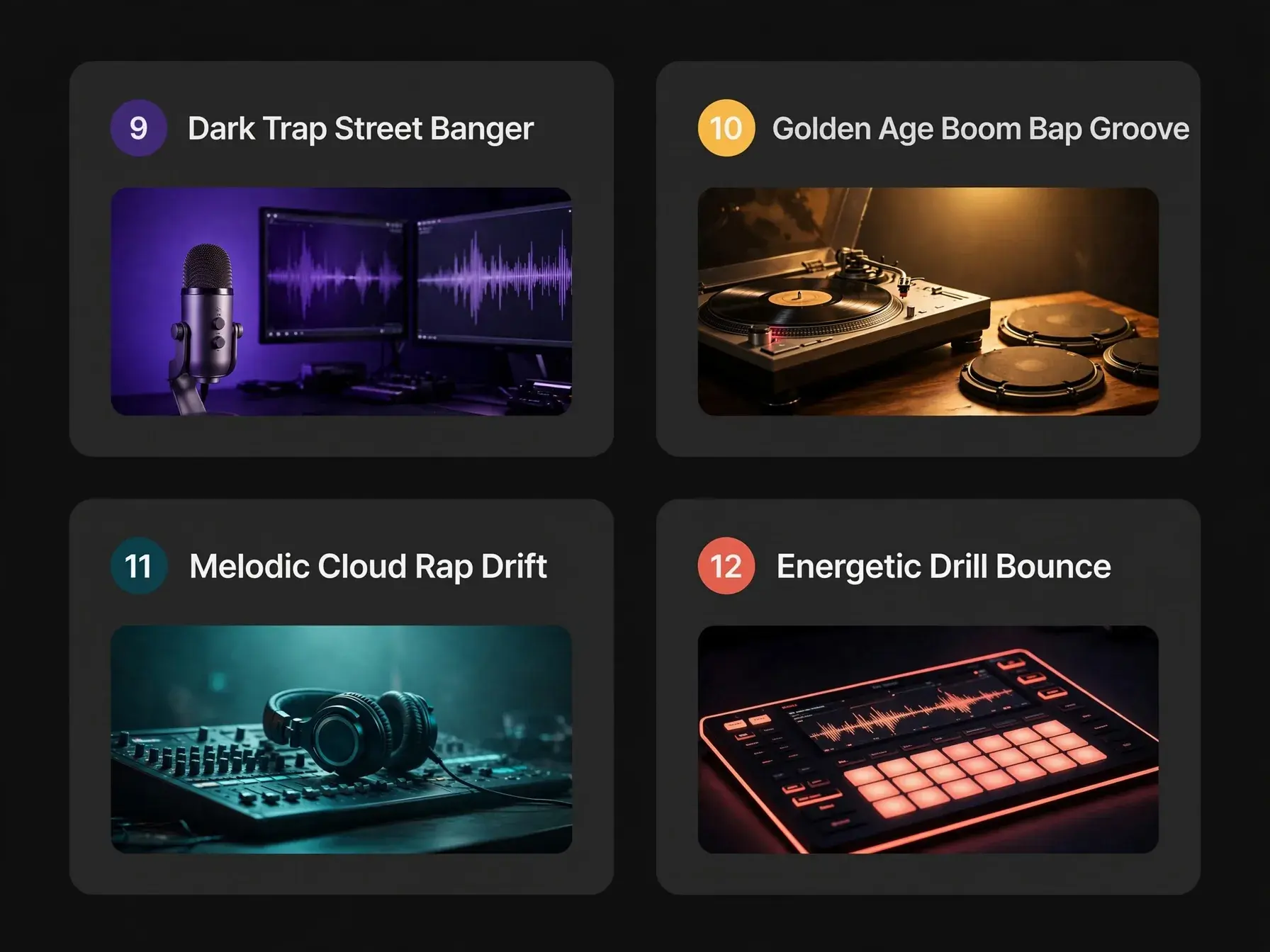
9. Dark Trap Street Banger
Rolling triplet hi-hats and booming sub-bass carry an ominous synth bell loop. Confident vocal flow rides directly in the center pocket.
10. Golden Age Boom Bap Groove
Chopped soul samples and dusty vinyl kicks create an authentic boom-bap rhythm. Expressive storytelling flows cleanly over a steady snare crack.
11. Melodic Cloud Rap Drift
Ambient reverb pads and filtered drum loops float behind auto-tuned vocal lines. Gentle bass warmth anchors the hazy atmospheric production.
12. Energetic Drill Bounce
Sliding bass glides and off-beat snare hits establish intense forward momentum. Aggressive vocal delivery cuts sharply through sparse melodic textures.
Lo-fi and chillout prompts for background beats
Crafting mellow instrumental textures relies on specifying dusty vinyl crackle, tape saturation, and warm Rhodes chords.
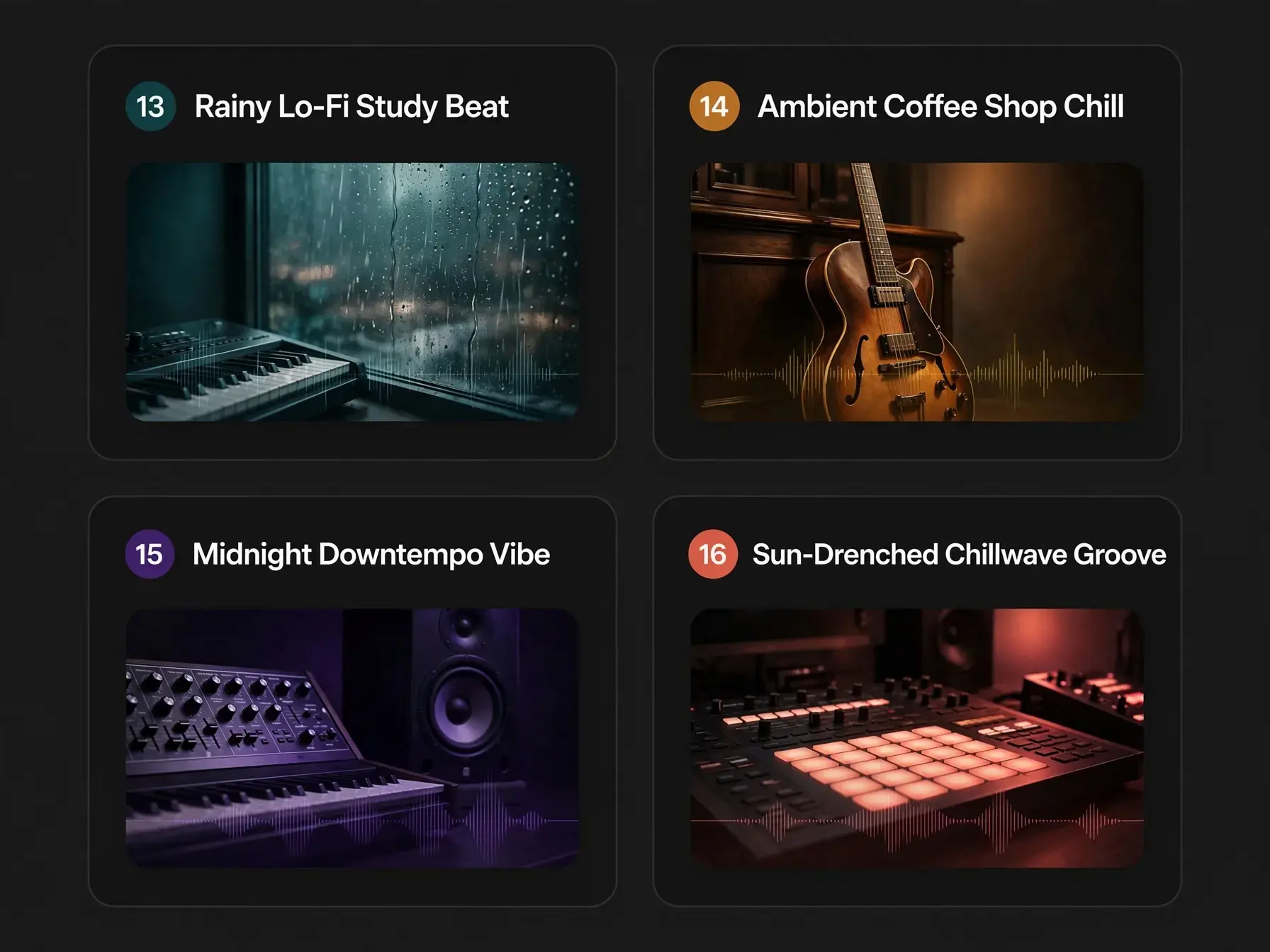
13. Rainy Lo-Fi Study Beat
Soft electric piano chords repeat beneath gentle rainfall sounds and muted snare hits. A lazy bassline creates relaxing study music.
14. Ambient Coffee Shop Chill
Mellow jazz guitar chords blend with soft shaker loops and brushed drums. The music feels easygoing and ideal for daytime focus.
15. Midnight Downtempo Vibe
Deep sub-bass and slow rimshots anchor spaced-out synthesizer arpeggios. Minimal vocal hums add subtle emotion without distracting from the groove.
16. Sun-Drenched Chillwave Groove
Nostalgic synth pads and sidechained white noise create breezy beachside feelings. Gentle drum programming keeps the rhythm floating effortlessly.
Acoustic and folk prompts with natural instruments
Creating intimate acoustic songs works best when you emphasize organic fingerpicking, wooden resonance, and close-mic vocals.
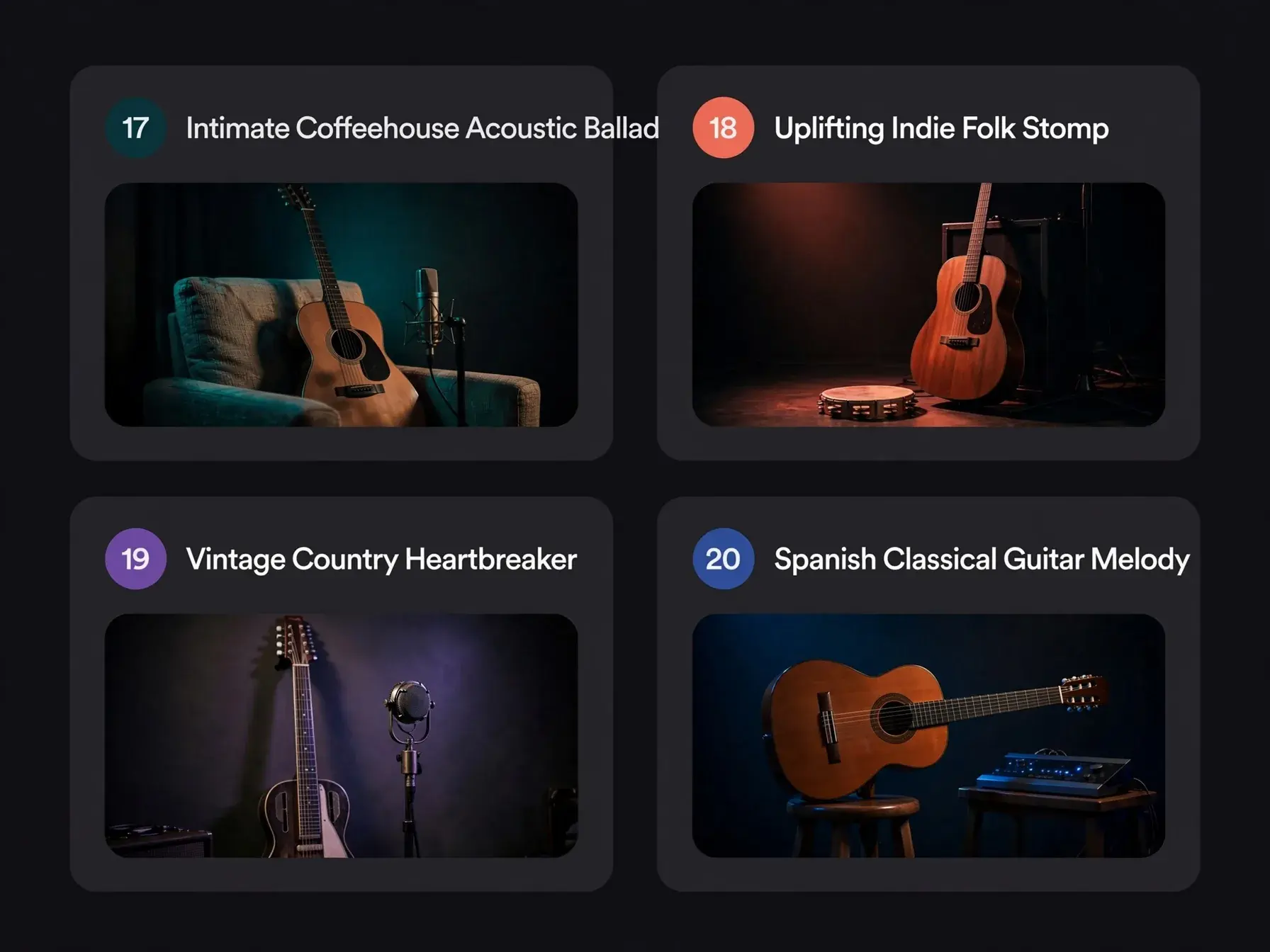
17. Intimate Coffeehouse Acoustic Ballad
Gentle nylon-string guitar picking supports an honest vocal performance. Subtle cello counter-melodies add emotional weight in the final chorus.
18. Uplifting Indie Folk Stomp
Handclaps, acoustic strumming, and foot stomps drive a communal chorus forward. Group vocal harmonies make the hook catchy and inviting.
19. Vintage Country Heartbreaker
Cry of a pedal steel guitar echoes behind a steady acoustic rhythm. A traditional vocal performance delivers classic heartbreak themes.
20. Spanish Classical Guitar Melody
Fast fingerpicking flourishes and wooden body taps establish dramatic rhythm. Warm nylon strings sing without electronic processing.
Cinematic and orchestral prompt ideas
Scoring an epic scene requires layering sweeping string sections, brass crescendos, and dynamic percussion hits. You can also explore how Suno prompt ideas translate to an AI song generator when testing theatrical cues.
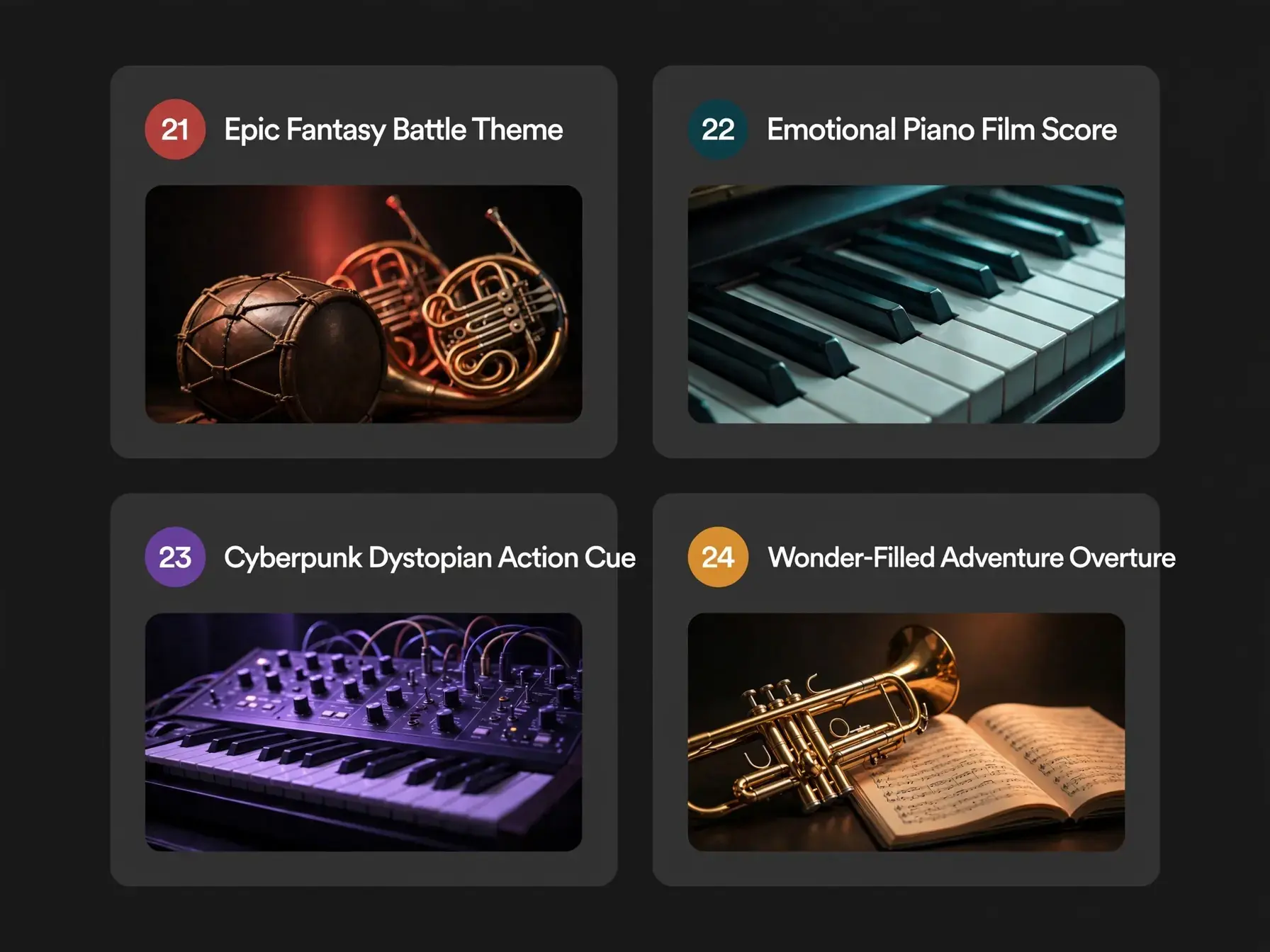
21. Epic Fantasy Battle Theme
Thundering taiko drums and blazing French horns drive heroic choir chants. Massive orchestral swells build intense theatrical suspense.
22. Emotional Piano Film Score
A fragile grand piano melody develops alongside swelling string quartets. The arrangement moves from solitary reflection into broad emotional warmth.
23. Cyberpunk Dystopian Action Cue
Heavy industrial synthesizers pulse against aggressive tribal percussion. Distorted metallic basslines create high-stakes tension for futuristic scenes.
24. Wonder-Filled Adventure Overture
Playful woodwinds and sparkling glockenspiel notes introduce an uplifting orchestral melody. Brass fanfares expand the feeling of epic discovery.
Learning how to place Suno meta tags like verse and chorus brackets gives you direct control over song pacing and vocal transitions. Put the tags inside your lyrics when you turn lyrics to song, and see the song structure guide for standard arrangements.
25. R&B Midnight Slow Jam
Smooth electric keys and clean 808 snaps support layered falsetto runs. Arrangement brackets guide the track from sensual verses into a rich chorus.
26. Soulful Gospel Pop Anthem
A gospel organ introduces handclaps before soaring lead vocals take flight. A sudden key change elevates the final triumphant chorus.
27. Tropical Reggae Dub Groove
Bouncing off-beat guitar skanks and melodic basslines create an effortless island bounce. Horn sections accent each chorus drop.
Experimental Suno prompts for hybrid music styles
Testing unusual genre pairings with experimental Suno prompts unlocks fresh rhythms and unexpected sonic blends across contrasting musical worlds. Testing these combinations in a text to music tool helps you hear how conflicting instruments merge.
28. Electro-Swing Speakeasy Riot
Vintage 1920s clarinet loops pair with punchy modern house kicks. Upbeat brass solos keep listeners dancing between electronic bass drops.
29. Cyber-Folk Acoustic Glitch
Fingerpicked acoustic guitars clash against stuttering digital glitch percussion and processed vocal snippets. Organic strings meet futuristic sound design.
30. Celtic Punk Rock Shanty
Distorted bagpipes and aggressive electric guitars turn a traditional sea shanty melody into an energetic pub anthem. Roaring gang vocals shout the chorus.
Once a hybrid track works, you can pull the vocals and instruments apart with an AI stem splitter to remix them. If you plan to export many versions, check the Suno download limits first.