A rhyme scheme is the ordered pattern of end rhymes across lines in a stanza or verse. Understanding this rhyming pattern gives your songwriting steady rhythm, emotional impact, and natural lyrical flow.
A song rhyme scheme is the ordered pattern of end rhymes that gives lyrics their musical balance and predictability. Musicians use capital letters to map out how lines correspond with one another phonetically. The first rhyming sound introduced is labeled A, the second distinct sound is labeled B, and subsequent new sounds receive subsequent letters of the alphabet.
When two lines share the same terminal sound, they receive matching letters. For instance, a verse where lines one and two rhyme while lines three and four introduce a new rhyme forms an AABB stanza. This notation provides a visual blueprint of lyrical sound design before an artist ever steps in front of a microphone.
Using a conscious rhyming scheme prevents repetitive arrangements and shapes how anticipation builds across a verse. Listeners instinctively recognize these phonetic landmarks, creating satisfaction when expected sounds land right on beat.
Core patterns every songwriter should know
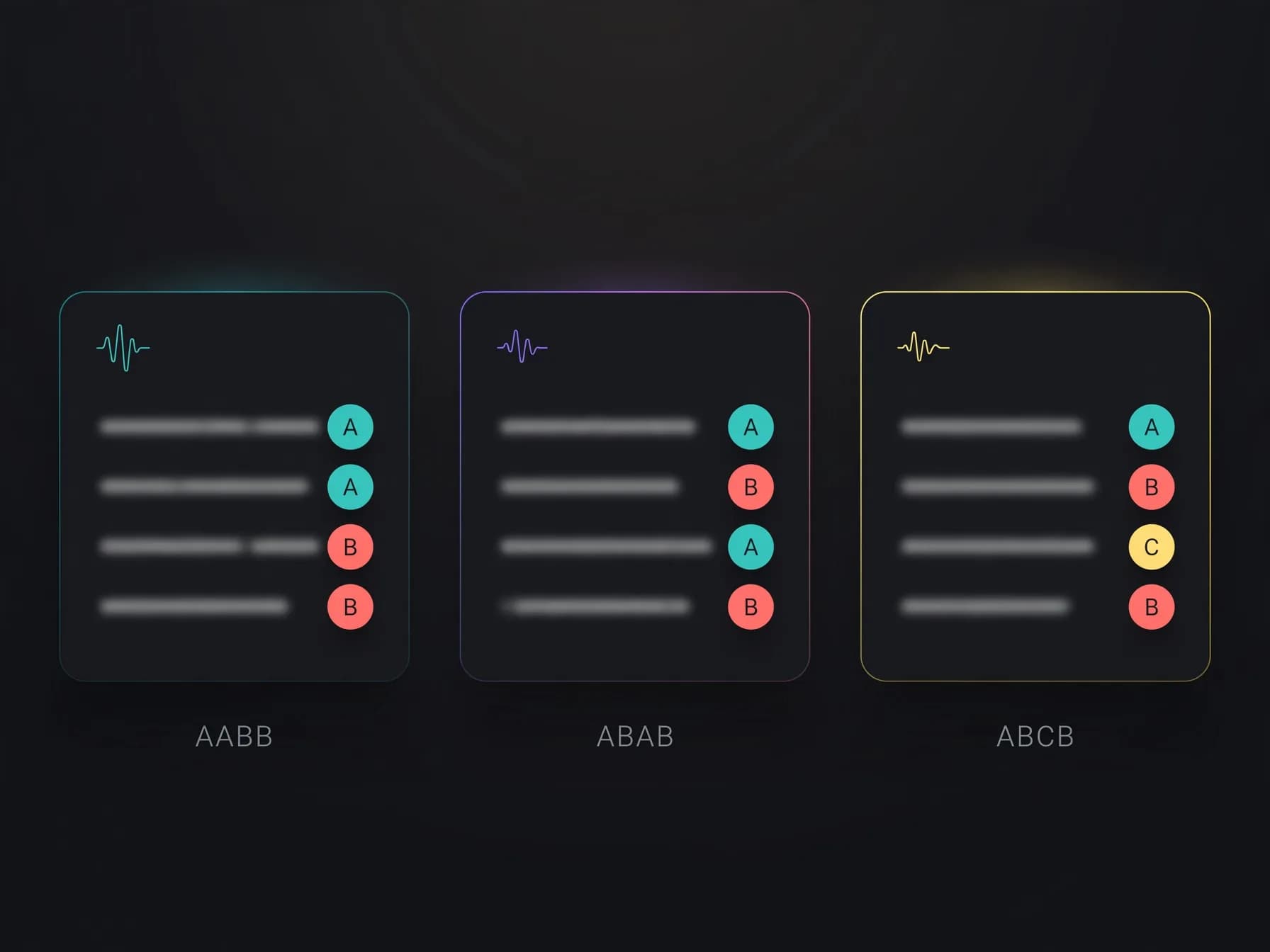
Every songwriter relies on a few fundamental arrangements to build memorable choruses and verses. The most common blueprint in popular songwriting is ABAB, also known as alternate rhyme. In an ABAB structure, the first and third lines rhyme together, while the second and fourth lines create a separate rhyming pair.
Another staple is the ballad or ABCB layout, where only the second and fourth lines rhyme while the first and third remain open. This loose framework gives lyrics room to tell detailed stories without forcing artificial sound pairings into every measure. In contrast, AABB couplets deliver quick, punchy payoffs that make pop choruses and nursery songs easy to memorize.
Knowing how to rotate between these foundational shapes keeps lyrical momentum moving forward. You can use an AI songwriter to experiment with fresh stanza structures. Changing from an ABCB verse into an AABB chorus provides an immediate shift in energy that cues listeners that the hook has arrived.
Three rhyme schemes shown as colored line tags: AABB, ABAB and ABCB
Why rap rhyme schemes break traditional rules
Modern rap rhyme schemes push far past simple end rhymes by packing rhymes inside measures and across line breaks. While classic verse forms wait for the final beat of a line to resolve a sound, hip-hop lyricists embed internal rhymes in the middle of bars to build syncopated bounce.
This technique creates layered cadence, where multiple rhyming syllables hit rapidly over percussion loops. If you want to explore complex rhythm without losing your flow, an AI lyrics generator or a dedicated rap lyrics generator can help sketch out syncopated meter and multi-line arrangements fast, or you can try an AI rap generator to hear your cadences spoken over hard-hitting beats.
Modern emcees also lean heavily on chain rhymes, where the final rhyme sound of one couplet carries over into the middle of the next sentence. This fluid motion eliminates rigid line boundaries, turning vocal delivery into an elastic instrument that locks directly into drum grooves.
Writing multisyllabic rhymes to elevate your flow
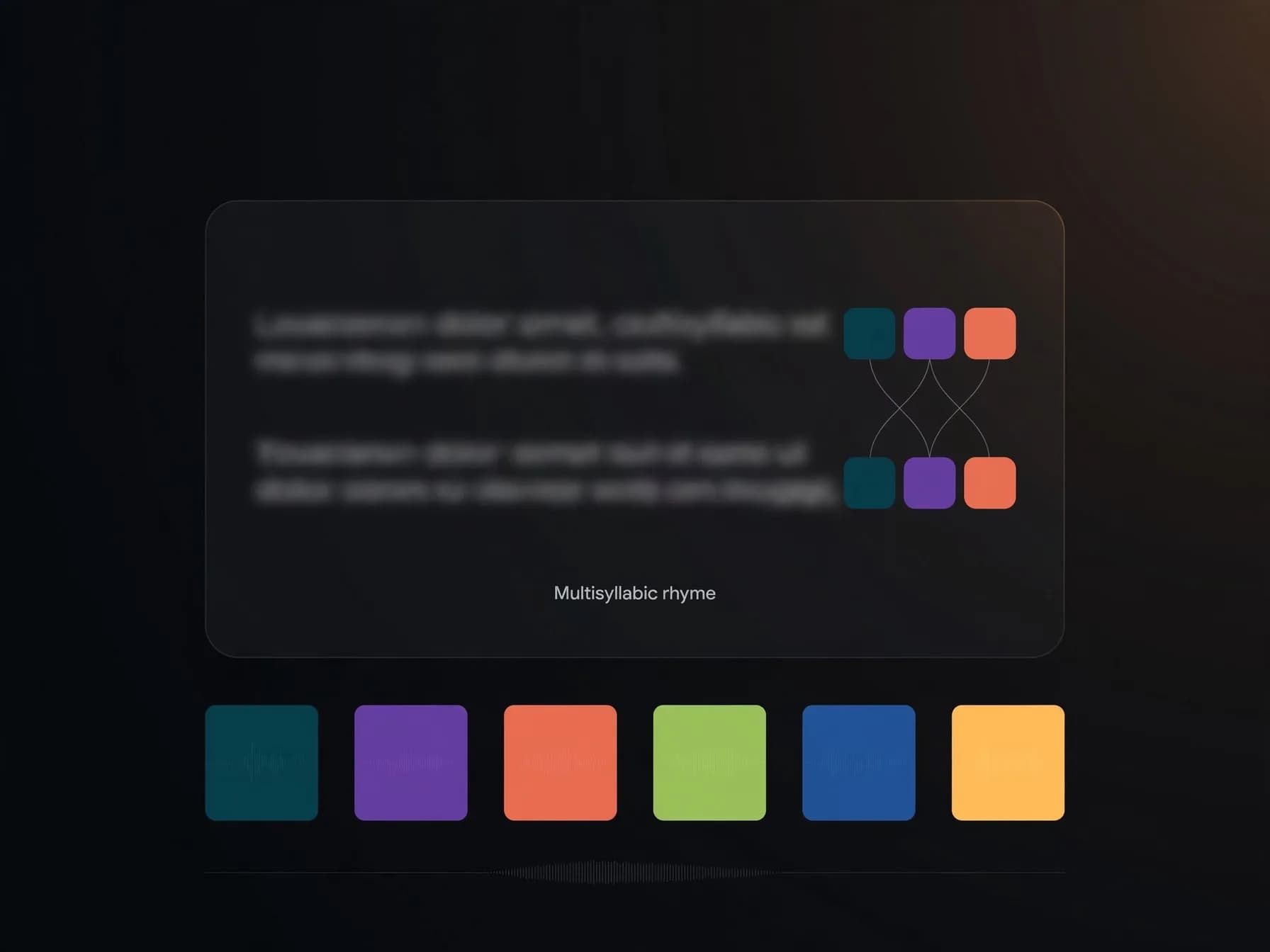
Using multisyllabic rhymes allows you to match compound phrases instead of relying on basic single-syllable endings. Rather than rhyming simple words like cat and hat, multisyllabic writing pairs entire clauses such as historic battle and melodic travel. This technique expands your sonic vocabulary and prevents predictable lyric choices.
Slant rhymes, also known as off-rhymes or near rhymes, play a crucial role when assembling multisyllable lines. By matching dominant vowel sounds while varying ending consonants, words like time and shine flow naturally without sounding forced. Great lyricists treat vowel resonance as the primary anchor for harmony.
Mixing slant sounds with an intricate rhyme pattern brings conversational realism to your storytelling. Audiences focus on the imagery and emotion of the vocal performance because the rhymes sound natural rather than rigid.
Two lines where three-syllable chunks are matched block by block to show a multisyllabic rhyme
How to identify a rhyme scheme in three steps
Step 1: Write down the final word of each musical bar or vocal line from the verse you w
Step 2: Read through each subsequent line in sequence and listen closely to the primary
Step 3: Read the resulting letter sequence aloud in order from top to bottom to decode t
Putting your lyrical patterns into finished music
Testing how words bounce against a real tempo helps you discover whether your rhymes actually groove. Reading written lyrics silently on a page misses crucial elements like breath control, rhythmic syncopation, and harmonic pitch.
You can bring your drafts to life using a lyrics to song tool that pairs vocal delivery with customized backing instrumentation. Hearing your text rendered into genuine vocal lines lets you pinpoint awkward meter and refine phrasing quickly.
With OnMusic AI's AI music generator, testing new rhyming patterns is simple to explore directly in your browser. You can experiment across pop, rap, and acoustic styles to hear how your lyrical structures transform into polished songs.
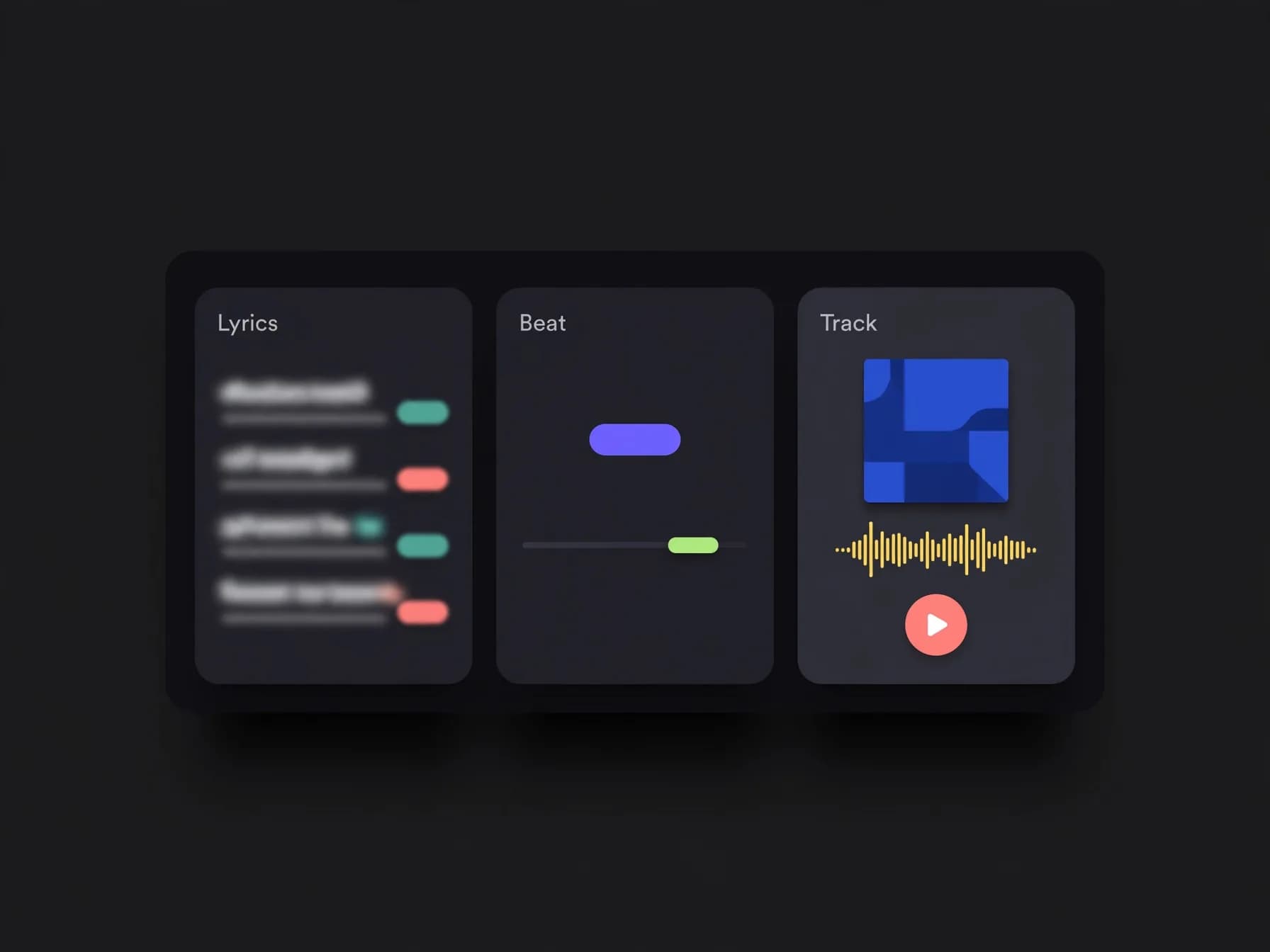
Generic app turning tagged lyrics and a chosen beat into a finished track
Finding the right rhythm for your lyrics
Choosing the right rhyme scheme gives your lyrics structure, pacing, and emotional weight. Whether you lean on balanced AABB couplets for a catchy chorus or break expectations with an ABCB ballad stanza, matching your pattern to your melody makes every line land harder.
Experimenting with slant rhymes and unexpected line lengths keeps your writing fresh across any genre. Great song structure is not about strict rules, but about giving your listener a groove they can easily follow and remember.
Frequently asked questions about rhyme scheme
Find clear answers to common questions about choosing an effective rhyme scheme, identifying patterns in verse, and applying them across song lyrics.
What is a rhyme scheme and why does it matter in songwriting?
A rhyme scheme is the ordered pattern of end rhymes across lines in a poem or song verse. Lyricists mark these patterns with letters like AABB or ABAB to establish rhythm and emotional predictability. Choosing the right rhyme scheme helps guide the listener's ear through chord changes and chorus resolutions.
What are some classic rhyme scheme examples in modern music?
Five common rhyme scheme examples include AABB couplets, ABAB alternating rhyme, AAAA monorhyme, ABBA enclosed rhyme, and ABCB ballad stanzas. Pop songs frequently rely on AABB and ABAB because they balance familiarity with forward momentum. Exploring different structures lets writers keep verses dynamic while maintaining listener engagement.
What is the most common song rhyme scheme used in commercial pop?
The most common song rhyme scheme in commercial pop is AABB, closely followed by ABAB. Couplets provide rapid satisfaction because the rhyming word resolves immediately on the next measure. Alternating patterns create slightly more suspense, keeping listeners locked in until the chorus arrives.
How does the aabb rhyme scheme work across a verse?
The aabb rhyme scheme pairs lines into consecutive rhyming couplets, meaning lines one and two rhyme together, while lines three and four share a separate rhyme. This predictable cadence builds quick momentum, making it ideal for uptempo pop songs and punchy choruses. It gives lyrics an energetic bounce that casual listeners anticipate easily.
When should a songwriter choose an abab rhyme scheme over couplets?
An abab rhyme scheme works best when a song needs lyrical breathing room and subtle narrative suspense. By delaying the resolution of line one until line three, you keep listeners leaning forward across full musical phrases. This alternating layout suits emotional ballads and complex storytelling where immediate rhymes might feel overly simplistic.
How does internal rhyme differ from standard end rhyme?
While end rhyme occurs at the final syllable of a poetic line, internal rhyme places rhyming sounds within the middle of a single line or across adjacent bars. Hip-hop artists use this technique to accelerate lyrical cadence and pack multiple rhythmic hits into a single beat. It adds dense texture without disrupting the overarching line progression.
Why are rap rhyme schemes generally more complex than traditional pop verse patterns?
Rap rhyme schemes often incorporate off-beat cadences, multi-syllable pairings, and internal rhymes that span multiple bars rather than stopping at the end of each line. Rappers treat consonants and vowels as percussive elements that interact directly with the drum groove. This flexibility allows emcees to tell elaborate stories while varying their rhythmic pocket continuously.
How do multisyllabic rhymes improve the flow of a song?
Multisyllabic rhymes match two or more consecutive syllables across phrases, such as pairing elevator with hesitating. Songwriters and rappers use them to avoid clichéd single-syllable pairings like cat and hat. This practice adds sophisticated musicality and smooths transitions between distinct rhythmic bars.
Can an AI music generator help me test different verse patterns?
Yes, OnMusic AI's AI music generator allows you to paste written lyrics and instantly hear how different line structures sound over a produced instrumental. Testing words against real tempos and melodies shows you whether your cadence feels natural or needs editing. It bridges the gap between text on a page and a finished song.
How do I identify a rhyme scheme in an existing song?
To identify a pattern, write down the lyrics and assign the letter A to the final sound of the first line. For each subsequent line, give matching end sounds the same letter, or move to the next alphabetical letter whenever a new sound appears. Once you chart a full stanza, read the resulting sequence to see your layout clearly.
What are the three types of rhyme schemes most widely taught in music theory?
Traditional theory often groups lyrical structures into continuous rhyme schemes, alternating rhyme schemes, and enclosed rhyme schemes. Continuous patterns like AABB provide instant momentum, alternating layouts like ABAB create rhythmic balance, and enclosed patterns like ABBA frame ideas in a thoughtful loop. Modern songwriters frequently combine these frameworks within a single song.
What is a 3 line stanza called and how does it rhyme?
A three-line stanza is called a tercet or a triplet. In songs, tercets frequently follow an AAA monorhyme layout or an ABA pattern where the middle line creates tension before resolving. Songwriters use three-line stanzas to disrupt standard four-bar symmetry, giving pre-choruses an unexpected urgency.
What are the three R's of poetry and how do they apply to songwriting?
The three R's of poetry are rhyme, rhythm, and repetition. In modern music composition, these three elements work together to turn plain words into memorable hooks. Rhyme establishes phonetic connections, rhythm locks words to the tempo, and repetition ensures the main lyrical message sticks in the listener's head.
What is the hardest type of poetry to write with strict rhyming rules?
Many writers consider the sestina or the villanelle to be the hardest forms because of their rigid repetition requirements. The villanelle requires two repeating refrain lines across nineteen lines with an ABA structure, demanding total vocabulary precision. Songwriters rarely follow these strict classical rules, favoring flexible modern patterns instead.
What is Edgar Allan Poe's darkest poem and what rhyme scheme does it use?
Critics often cite The Raven or The Conqueror Worm as Edgar Allan Poe's darkest poem. The Raven uses an intricate ABCBBB pattern heavily augmented by internal rhymes, trochaic octameter, and the haunting repetition of the word nevermore. The rigid cadence creates an inescapable, hypnotic mood that mirrors the narrator's grief.
Can I create music with an AI music generator if I only have a basic lyric draft?
Yes, you can paste unrefined verses directly into OnMusic AI to create complete songs with custom vocals and instruments. The platform accepts whatever pattern you write, letting you experiment with tempos and musical genres before finalizing your verse arrangement. Paid plans include commercial use; read the OnMusic AI Terms of Service before you use a song commercially.